




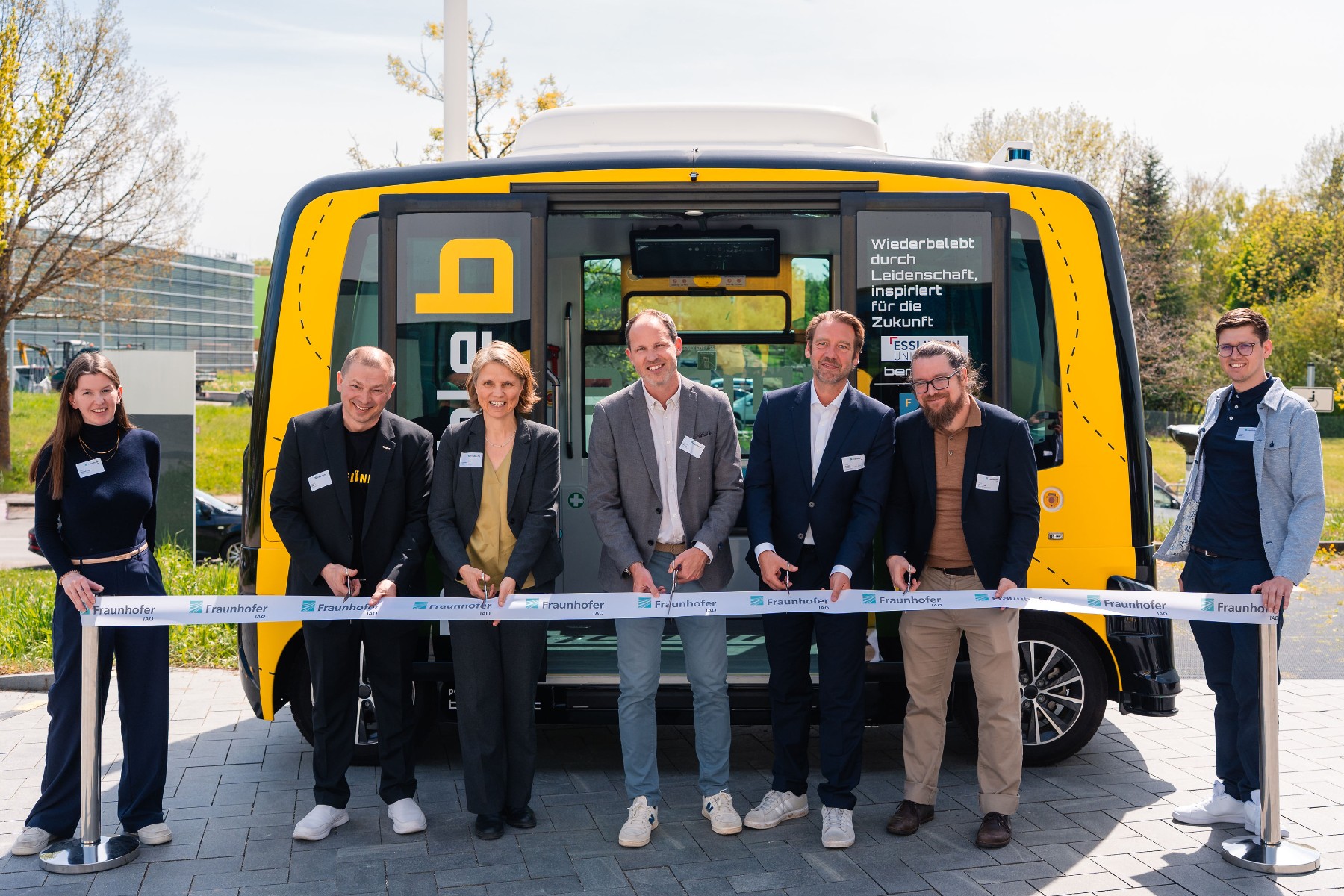
An autonomous electric shuttle developed by Bertrandt has entered real-world testing in Stuttgart as part of a research initiative aimed at transforming corporate mobility and reducing reliance on private cars.
The shuttle, named BumbleB, is being deployed within the IZSMO (Institutszentrum Stuttgart Mobility) project, led by Fraunhofer Institute for Industrial Engineering IAO in collaboration with Esslingen University. The project focuses on improving commuting options for employees at the Fraunhofer IZS campus by integrating multiple transport modes into a more sustainable system.
See also: Bertrandt Unveils ‘BumbleB’ Autonomous Shuttle for Rural Mobility
As part of the initiative, approximately 700 parking spaces on the campus are being partially repurposed into a central mobility hub. The redesigned area will include shared bicycles, cargo bikes, e-scooters, and “Hopper” cabin bikes, along with charging infrastructure, maintenance facilities, and storage options. Carpooling will also be encouraged through designated parking areas and the “Stuttgart fährt mit” ride-sharing platform.
The BumbleB shuttle, first introduced by Bertrandt last year, has been operating on a trial basis since mid-April, connecting the Fraunhofer campus with the nearby ‘Universität’ S-Bahn station. The service is free to use for employees and visitors and is intended to reduce reliance on private vehicles while improving access to public transport. Over time, the shuttle is expected to operate fully autonomously in open, real-world conditions.
See also: Moia and Beep Team Up to Scale Shared Autonomous Shuttle Networks in the U.S.
“The IZSMO project is the first to deliver a groundbreaking component for the future type approval of autonomous shuttles in public transport,” said Christopher Legner, research associate at Esslingen University.
Ministry of Transport Baden-Württemberg said the project also aligns with broader regional goals to scale autonomous mobility solutions. “Our goal is clear: Baden-Württemberg is taking the next step in autonomous driving – moving away from individual projects towards widespread application,” said Philipp Franke, Head of Department at the ministry. “Given the impending shortage of drivers in public transport, it is crucial to advance new mobility solutions,” he added.
See also: Lenovo Partners With WeRide to Deploy 200,000 Autonomous Vehicles Globally
The IZSMO project is funded by the Federal Office for Logistics and Mobility as part of the “mobil gewinnt” initiative under Germany’s Federal Ministry of Transport, supporting efforts to modernise corporate mobility and reduce emissions across commuter networks.


