
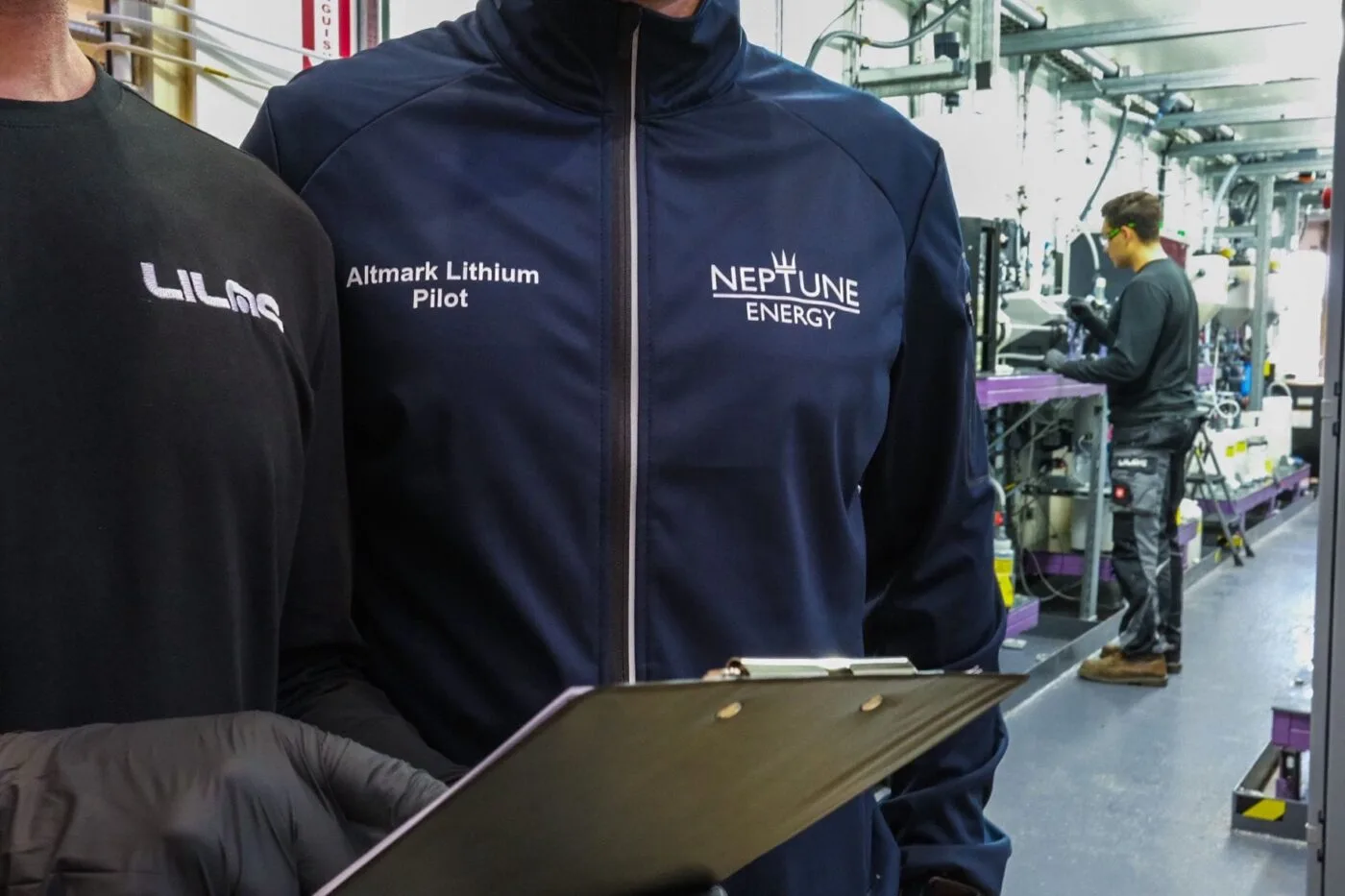
Neptune Energy said on Thursday it has confirmed resources of 43 million tons of lithium carbonate equivalent (LCE) in Germany’s Altmark region, a discovery that could position the area as one of Europe’s largest potential sources of the critical battery material.
The independent assessment, carried out with energy consultancy Sproule ERCE, establishes Altmark as a significant project-based lithium deposit, although the new figure falls short of the 70 million tons of LCE Neptune cited earlier this year in preliminary estimates. Still, the confirmation strengthens Germany’s ambitions to secure a domestic supply of lithium at a time when automakers and policymakers are seeking to reduce reliance on imports from China and South America.
Neptune Energy said the resource could support commercial extraction of around 25,000 tons per year, enough to provide battery materials for approximately 500,000 electric vehicles annually. “This new assessment underscores the great potential of our licence areas in Saxony-Anhalt. This enables us to contribute significantly to the German and European supply market for the critical raw material lithium,” said Andreas Scheck, Neptune Energy CEO.
The company has been advancing pilot projects in the Altmark, including a trial at Steinitz launched earlier this year. The pilot is testing direct lithium extraction (DLE) technology, using brine from existing gas wells in cooperation with U.S.-based Lilac Solutions. Neptune has since commissioned a second pilot plant to evaluate multiple DLE processes and reported that it has successfully produced battery-grade lithium carbonate using ion exchange techniques.
Alongside pilot development, Neptune has expanded its licensing footprint. It currently holds three exploration licences in the Altmark basin – Mile A-L, Milde C-L and Milde B-L – as well as the Jeetze-L production licence, which could pave the way for larger-scale operations. The pilot phase is expected to continue into early 2026, after which Neptune aims to transition toward commercial output.
Germany is pushing to secure strategic raw materials as part of its industrial policy, with lithium regarded as a linchpin in the country’s electric vehicle and energy transition strategies. Besides Altmark, two other major lithium projects are under development in Germany: Zinnwald Lithium in the Ore Mountains, expected to begin production by 2030, and projects in the Upper Rhine Graben being developed by Lithium Energy.