
Mazda has delayed the debut of its first model based on its planned proprietary electric vehicle platform, pushing the launch of the “Skyactiv EV Scalable Architecture” back by several years from its original target, according to a report by Britain’s Auto Express.
The Japanese automaker first unveiled the platform in 2021 as part of a technology roadmap extending to 2030, with an initial market introduction scheduled for 2025. That timeline was later revised to 2027, but Auto Express reported that Mazda now expects the platform to reach production no earlier than 2028, citing an internal company presentation, though still before the end of the decade.
See also: Mazda Brings China-Built CX-6e Electric SUV to Europe, Starting at €49,990 in Germany
The Skyactiv EV Scalable Architecture was designed to underpin a wide range of battery-electric vehicles across different sizes and body styles and to serve as a core pillar of Mazda’s longer-term electrification strategy. Despite the delay, the company says its electric vehicle ambitions remain unchanged, even as it relies on external partners in the near term.
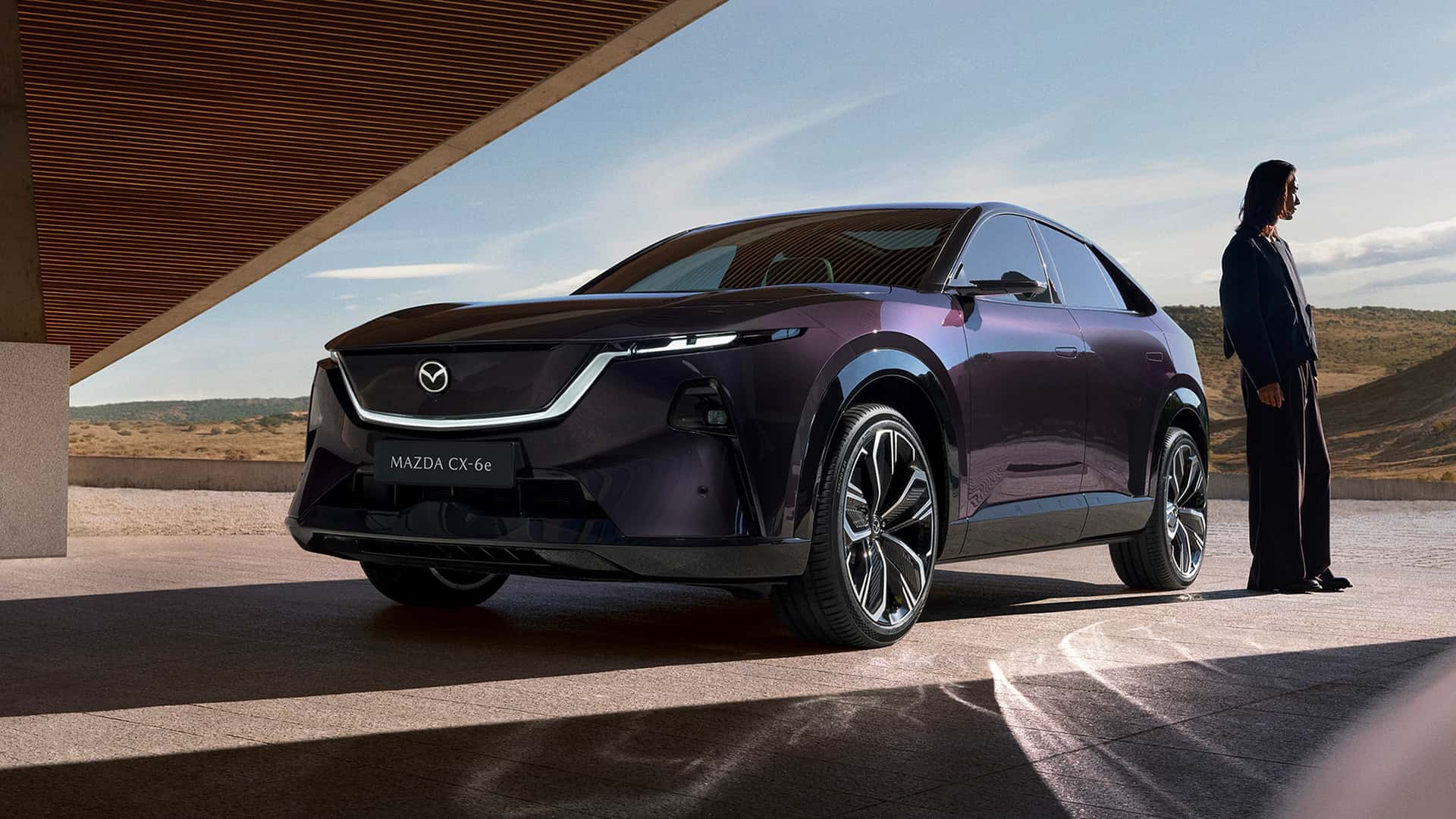
Mazda is currently prioritising models such as the Mazda6e and the recently unveiled CX-6e SUV, both of which are based on a platform supplied by China’s Changan and produced through the Mazda-Changan joint venture. While the platform does not yet provide Mazda with full flexibility across all vehicle segments, it delivers what the company describes as an appropriate solution for current market needs.
See also: Mazda Begins Testing First Dedicated EV for North American Market
“EV technology is not something stable. So while you’re developing, things are changing [and advancing],” said Christian Schultze, deputy head of research and development at Mazda Europe. He added that Mazda, as a relatively small and independent manufacturer, faces constraints in terms of “availability of resources and expertise” when developing a fully in-house electric architecture.
Schultze said the decision to extend the development timeline reflects lessons learned from other automakers whose platforms were developed rapidly but later proved to be too heavy or too expensive. “We give ourselves some more time to prepare the best possible solution,” he said.
See also: Mazda and Changan Form EU Carbon Credit Pool to Avoid Emissions Fines
Mazda has reiterated that it still intends to introduce its own scalable EV platform before the end of the decade, while continuing to leverage partnerships with automakers such as Changan and Toyota as part of its broader electrification strategy.