
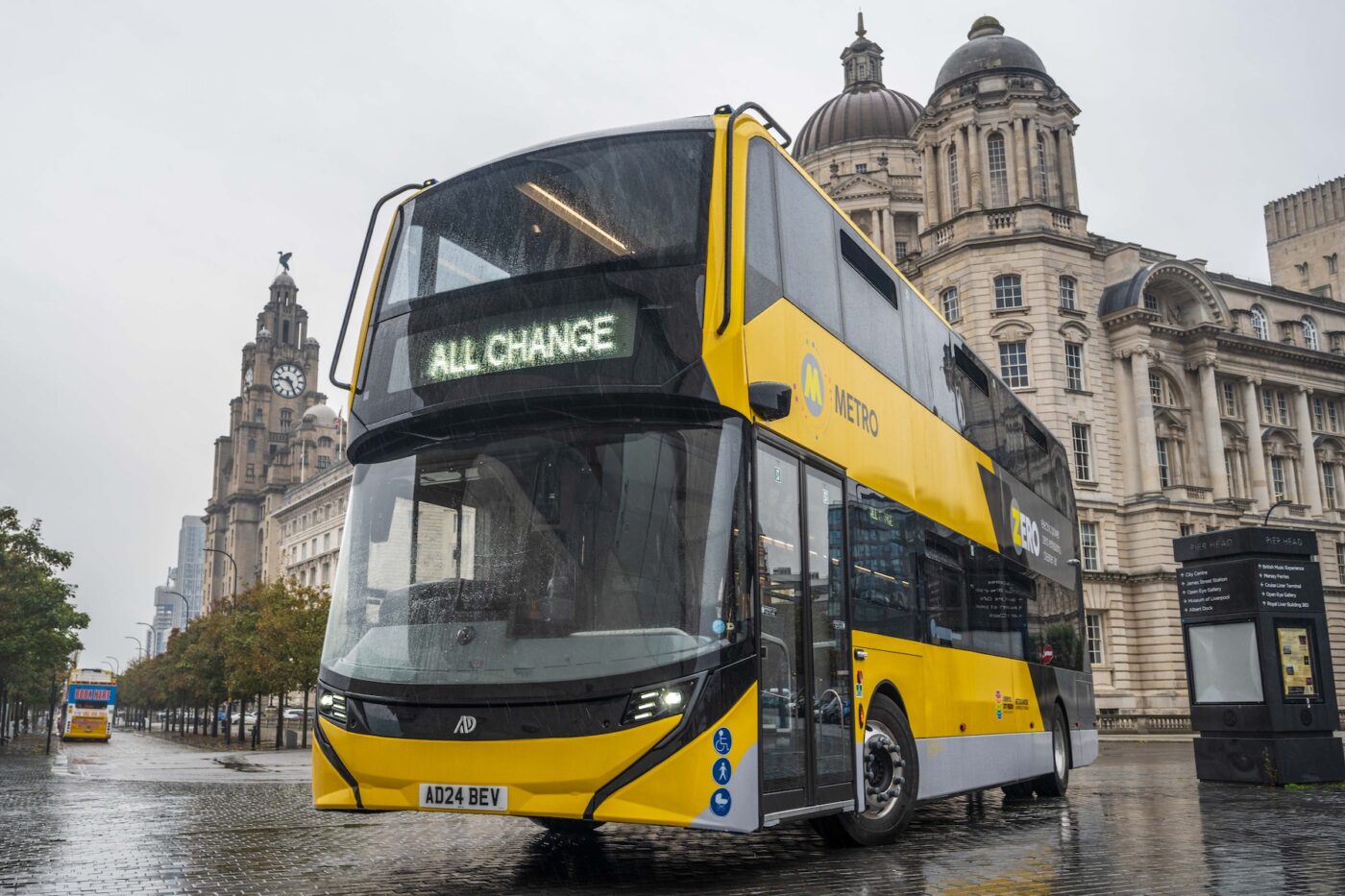
The first electric double-decker buses have arrived in Liverpool as part of a programme to introduce around 100 zero-emission vehicles across the city region’s public transport network.
Dozens of additional battery-electric buses from British manufacturers Wrightbus and Alexander Dennis Limited (ADL) are expected in the coming months. Before entering passenger service, drivers are undergoing training on the new vehicles, according to the Liverpool City Region Combined Authority.
The buses carry a yellow, grey and black “Metro” livery. Initial deliveries appear to be Enviro400EV models from ADL, a type capable of travelling up to about 440 kilometres on a roughly 90-minute charge. ADL introduced the model in 2022 as the successor to earlier double-decker electric buses developed in partnership with China’s BYD.
Liverpool is scheduled to receive 58 Enviro400EV buses from an order placed in early 2025. Additional units will be supplied by Wrightbus, bringing the total fleet to roughly 100 electric double-deckers, with full deployment expected by the end of 2027.
The procurement forms part of a broader overhaul of public transport in the Liverpool City Region, which is transitioning from a deregulated system dominated by private operators to a franchised model similar to those in London and Manchester. Under this structure, public authorities set routes, fares and timetables, while private companies bid to operate services.
See also: Liverpool to Install 300 On-Street EV Charge Points Selected by Residents and Businesses
Major investments are planned to support the transition, including upgrades to depots and ticketing systems. Funding comes from the £1.6 billion Transport for City Regions programme, and the new buses will be publicly owned by the combined authority.
Mayor Steve Rotheram described the initiative as a significant shift for local transport policy. “This year will be remembered as a turning point for public transport in the Liverpool City Region,” he said. “The arrival of our new publicly-owned electric fleet is a tangible example of that change.”