



Lenovo has entered a strategic partnership with WeRide to deploy up to 200,000 autonomous vehicles worldwide over the next five years, including robotaxis, the companies said.
The collaboration was announced at Auto China in Beijing, underscoring ambitions by both firms to accelerate the commercialization of autonomous driving technologies at scale.
Founded in 1984, Lenovo has expanded beyond its core personal computer business to become a broader technology provider, while Guangzhou-based WeRide has emerged as a developer of autonomous driving systems with operations spanning robotaxis, shuttle buses, delivery vehicles and sanitation services.
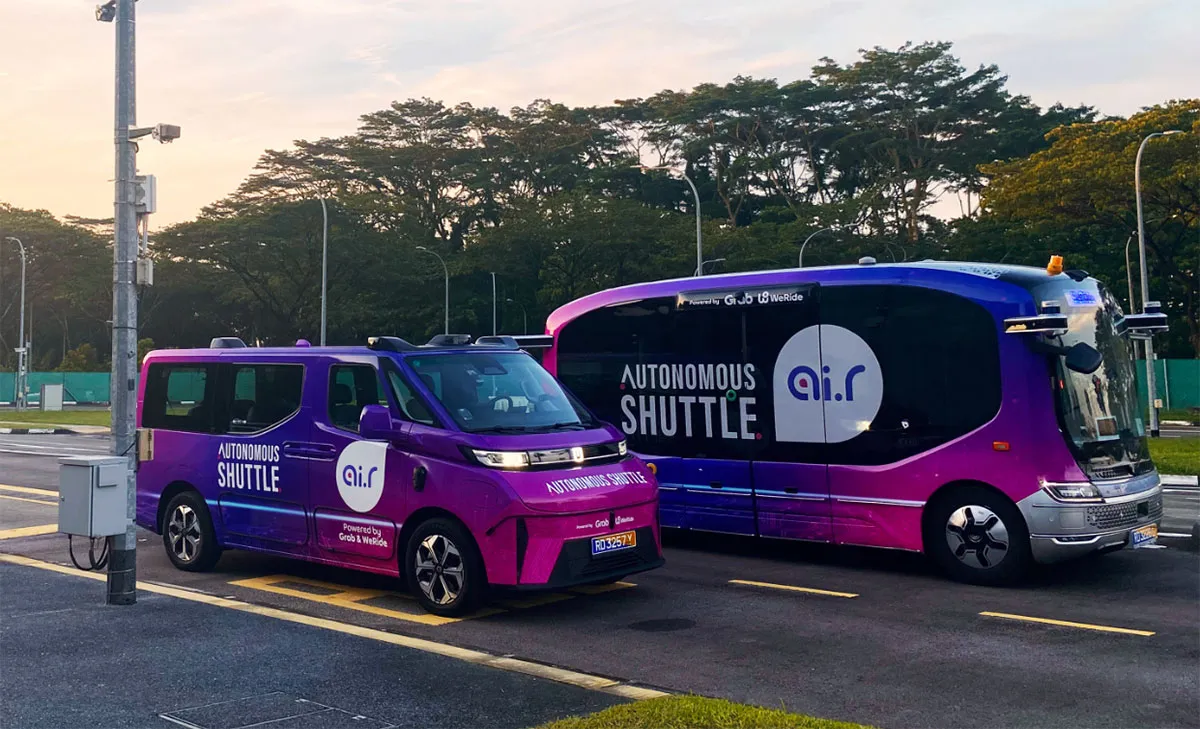
WeRide has previously drawn attention for its robotaxi partnerships with companies such as Uber and Grab, as well as for autonomous shuttle projects with Renault. The company also develops systems supporting Level 2 and Level 3 driver-assistance features.
Under the agreement, the two companies plan to build a global ecosystem for autonomous driving by integrating computing infrastructure, artificial intelligence and supply chain capabilities. The partnership extends beyond robotaxis to include multiple autonomous vehicle applications.
Lenovo will contribute its expertise in vehicle computing, hybrid artificial intelligence and global manufacturing networks to support large-scale deployment. Central to the collaboration is the AD1 domain controller, designed to combine high-performance AI computing with automotive-grade engineering for stable operation in complex driving environments.
“Scalability is the defining challenge for autonomous driving, and computing is the foundation,” said Peter Xu, Vice President and General Manager for Vehicle Computing at Lenovo. “Lenovo will continue to advance automotive-grade computing platforms while leveraging our global manufacturing and supply chain strengths to deliver replicable, large-scale capabilities for the industry,” he added. Xu said deepening cooperation with WeRide would help accelerate commercialization and expand robotaxi services globally.
The partnership also introduces a new high-performance computing platform, HPC 3.0, powered by the Nvidia Drive Thor chip. The platform delivers more than 2,000 TOPS (trillions of operations per second), enabling real-time processing of large data volumes generated by Level 4 autonomous driving systems.
According to the companies, the new platform reduces the cost of autonomous driving systems by 50% and lowers total cost of ownership over the vehicle lifecycle by 84% compared with previous generations.
“Autonomous driving is entering a critical phase of commercial deployment, with industry competition shifting from pure technological capability to cost efficiency and scalable deployment,” said Tony Han, founder and chief executive of WeRide. “This expanded collaboration will further integrate WeRide and Lenovo’s core strengths… creating a strong foundation for the planned global deployment of 200,000 AVs over the next five years,” he added.


