




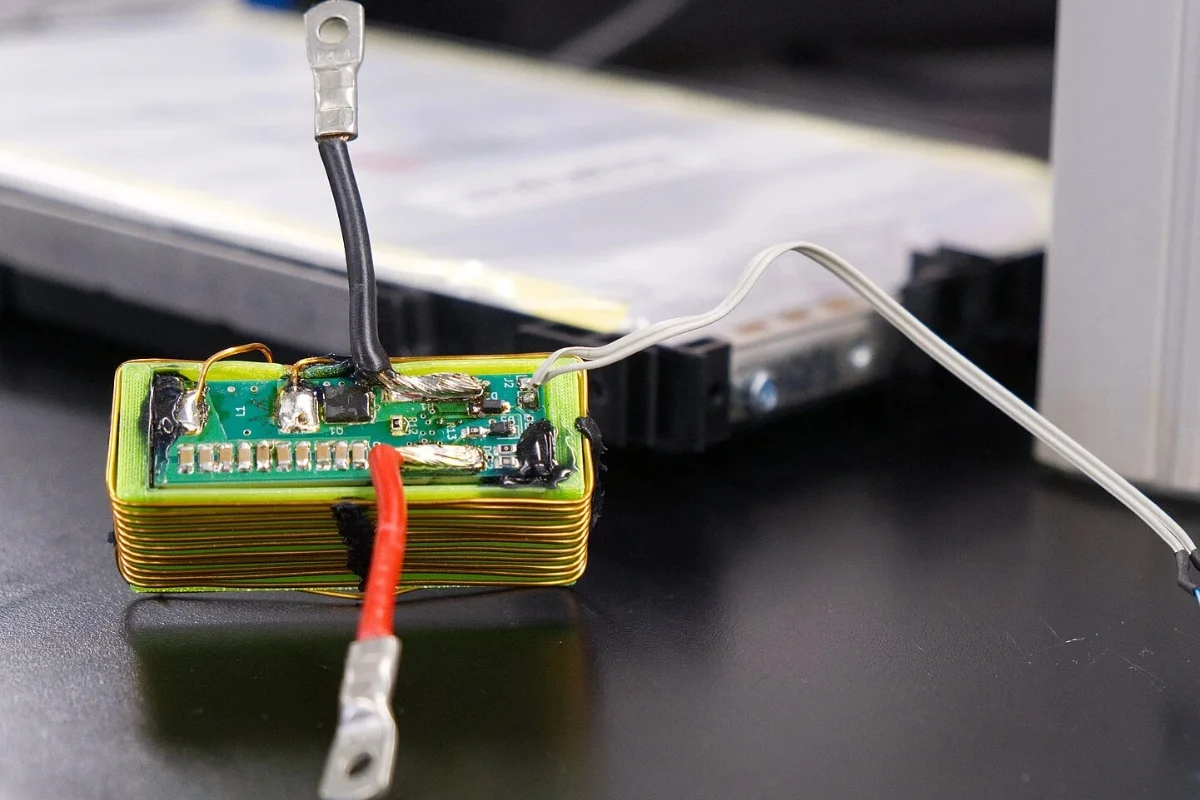
Researchers at Kiel University have developed a new communication system that enables sensor data from inside battery cells to be transmitted through existing power connections, eliminating the need for dedicated communication cables.
The technology, described by the research team as a “talkative battery,” allows measurement data from internal sensors to be sent to external monitoring systems using the same electrical connections employed for charging and discharging the battery.
The findings have been published in the journal Communications Engineering.
Improving Battery Monitoring
Conventional battery systems typically monitor temperatures using sensors mounted on the outside of battery cells. However, potentially hazardous conditions, including temperature increases and gas formation, often begin inside the cell before they can be detected externally.
Although internal sensors can provide more accurate measurements, they generally require additional electronics and wiring, increasing system complexity and reducing available space within the battery.
The Kiel University researchers addressed this challenge by integrating a compact electronic circuit directly into the battery cell. The circuit converts readings from an internal temperature sensor into digital signals and transmits them through the battery’s existing power terminals.
According to an initial cost assessment by the research team, the approach could reduce system costs by approximately 35% compared with conventional designs that rely on separate communication cables for sensors.
Potential Applications Beyond Temperature Monitoring
The researchers said the communication technology is not limited to temperature measurements and could also support other types of internal battery sensors in the future.
Potential applications include monitoring pressure, gas generation and other conditions inside battery cells without requiring additional wiring.
The team said the technology could eventually be used in electric vehicles, stationary battery energy storage systems, and renewable energy installations such as wind and solar power projects.
The researchers also believe the communication method could support the development of next-generation battery materials and cell designs by providing more detailed data from inside operating batteries during research and testing.