



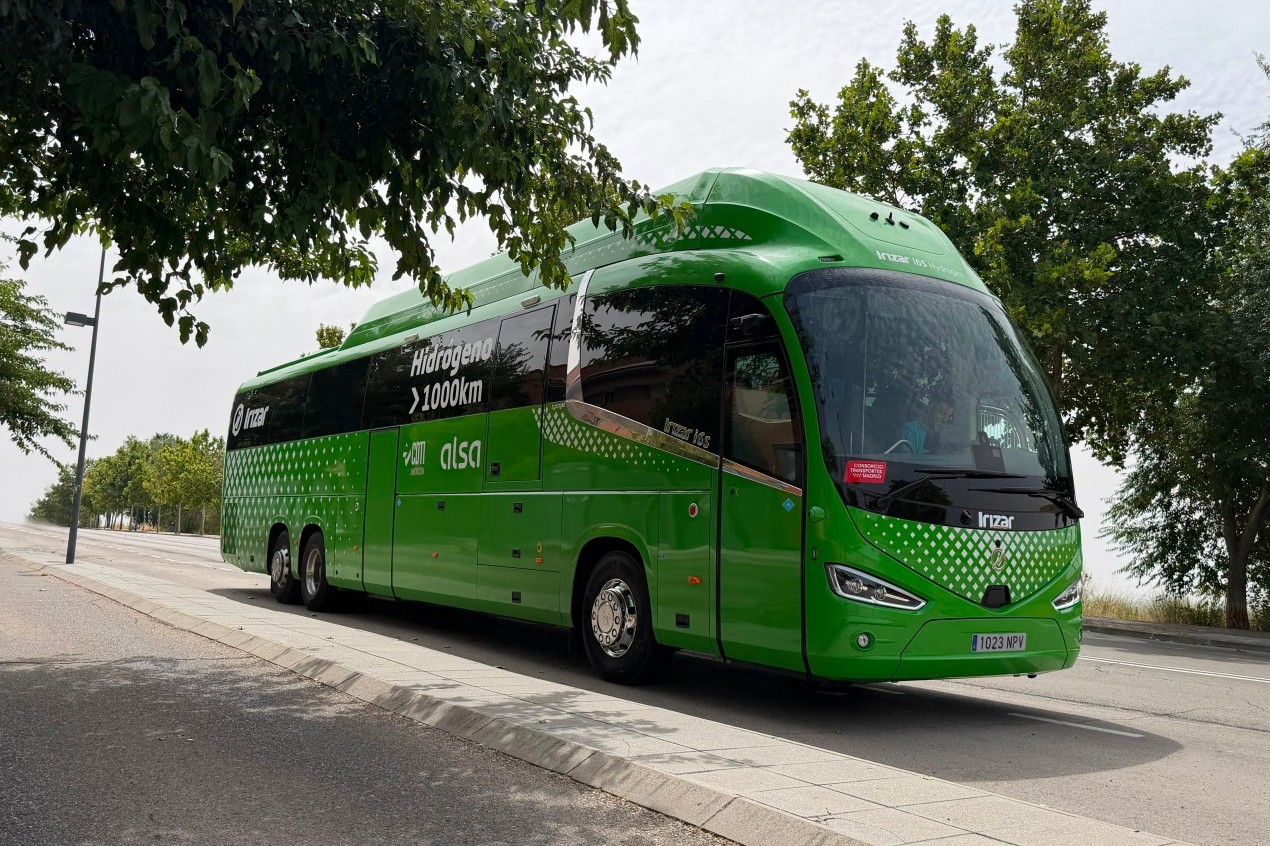
Bosch has begun real-world testing of its new hydrogen fuel cell system for buses in Madrid, deploying the technology in an Irizar bus operating on the Spanish capital’s public transport network.
The trial follows the debut of Bosch’s fuel cell bus portfolio at the Mobility Move trade fair in Berlin in March. The company said the testing program is designed to validate the performance and durability of its fuel cell technology under everyday passenger transport conditions.
Fuel Cell System Enters Public Service
The demonstration vehicle is equipped with Bosch’s FCPM C190 fuel cell power module, which delivers a continuous output of 190 kilowatts and is designed for installation on the roofs of 12- and 18-metre buses.
Over the coming weeks, the bus will carry passengers on regular routes across Madrid, with a focus on services where its long operating range can be fully utilized.
Bosch to Invest €2.5 Billion in Hydrogen Fuel Cell Technology, Aims for €5 Billion in Sales by 2030
According to Bosch, the vehicle’s hydrogen storage system enables a driving range of more than 1,000 kilometres while refuelling takes between 10 and 15 minutes. The company said these characteristics also make the bus suitable for intercity operations.
Bosch’s fuel cell portfolio also includes the FCPM C300, developed for heavy-duty coaches and trucks, and the lower-output FCPM C100, which is designed for urban buses requiring a more compact powertrain.
Thomas Pauer, member of the Bosch Mobility sector board and president of Bosch Power Solutions, said hydrogen fuel cells complement battery-electric technologies in commercial transport.
SamTrans Selects Fastech and Bosch Rexroth to Build Hydrogen Station for 175 Fuel Cell Buses
“The fuel cell is the perfect complement to battery-electric powertrains – even in bus operations.”
“Fuel cells are especially well-suited for buses that travel longer distances every day and rarely have the opportunity to charge en route. With this trial, we can clearly demonstrate that Bosch’s fuel-cell technology is ready for the demands of large-scale deployment in passenger transport.”
Bosch said the vehicle has already completed extensive validation and regulatory approval procedures before entering passenger service. The operational trial will allow the company to assess the system’s reliability and performance in daily use.
EU Emissions Rules Accelerate Zero-Emission Bus Adoption
Bosch said tightening European Union emissions regulations are encouraging bus operators and public transport authorities to replace diesel-powered fleets with zero-emission alternatives.
Bosch Introduces FCPM C100 Hydrogen Fuel Cell System for City Buses
Under current EU climate targets, carbon dioxide emissions from newly registered city buses must be reduced by 90% compared with 2019 levels by 2030, while the same reduction target will apply to other bus categories from 2040.
The company noted that fuel cell-powered buses qualify as zero-emission vehicles under European Union regulations, making them one option for operators seeking to comply with future emissions standards.
According to the European Automobile Manufacturers’ Association (ACEA), more than 38,000 new buses were registered across the European Union in 2025.
Bosch Launches First Hydrogen Truck for Factory Logistics in Germany