


South Korean automaker KGM said it has signed a strategic agreement with battery maker Samsung SDI to jointly develop next-generation battery pack technologies, as the company accelerates its transition toward battery-electric vehicles.
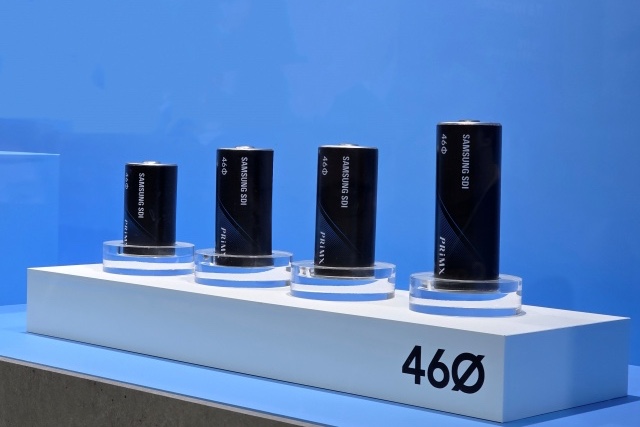
KGM, formerly known as SsangYong until its rebranding in 2023, said the partnership will focus on battery packs using Samsung SDI’s 46-millimetre cylindrical cells based on nickel-cobalt-aluminium (NCA) chemistry. The two companies have signed a memorandum of understanding and are already working on battery packs intended for integration into KGM’s future electric vehicle lineup.
See also: Samsung SDI Secures $1.36 Billion LFP Battery Deal for U.S. Energy Storage
Samsung SDI’s 46-series cylindrical cells feature high-nickel NCA cathodes and a proprietary silicon-carbon nanocomposite (SCN) anode, a combination aimed at improving energy density and performance. The cells also use a “tabless” design, which removes the internal tabs found in earlier 18650 and 2170 cylindrical formats, a change intended to enhance current flow and thermal characteristics.
Samsung SDI announced the start of production of its new 46-millimetre cylindrical cells in spring 2025, positioning the format as part of its push into next-generation battery technologies for electric vehicles.
See also: Samsung SDI, BMW, and Solid Power Partner on Solid-State Battery Validation Project
“This partnership once again proved the differentiated technological competitiveness of our 46-series cylindrical batteries in both Korean and global EV markets,” Samsung SDI said in a statement. “We will continue to strengthen our technology leadership in the next-generation global battery industry.”
For KGM, the collaboration underscores a renewed focus on electrification following its restructuring and rebranding. By aligning with a domestic battery supplier, the automaker aims to secure access to advanced cell technology while optimising battery pack design for its upcoming battery-electric models.
See also: Samsung SDI to Expand Hungarian Plant to Supply Prismatic Batteries for Hyundai, Kia EVs
The agreement comes as competition intensifies among automakers to improve battery performance, cost efficiency and supply chain resilience, with cylindrical cell formats gaining renewed interest alongside prismatic and pouch designs.