
Researchers at the Korea Advanced Institute of Science and Technology (KAIST) said they have developed a new materials design approach that could help overcome key performance and cost challenges facing solid-state batteries, a technology widely seen as safer than conventional lithium-ion cells but difficult to commercialise.
KAIST said on Jan. 8 that a joint research team led by Seo Dong-hwa of its Department of Materials Science and Engineering, together with researchers from Seoul National University, Yonsei University and Dongguk University, had devised a method to improve solid-state battery performance using low-cost raw materials. The findings were published in the peer-reviewed journal Nature Communications.
See also: Swiss Researchers Unveil Manufacturing Method to Advance Solid-State Batteries
Solid-state batteries replace the liquid electrolyte used in lithium-ion batteries with a solid material, reducing the risk of fire and explosion. However, lithium ions typically move more slowly through solid electrolytes, limiting performance. Manufacturers have sought to address this by using expensive metal materials, but that has pushed up costs and slowed commercial deployment.
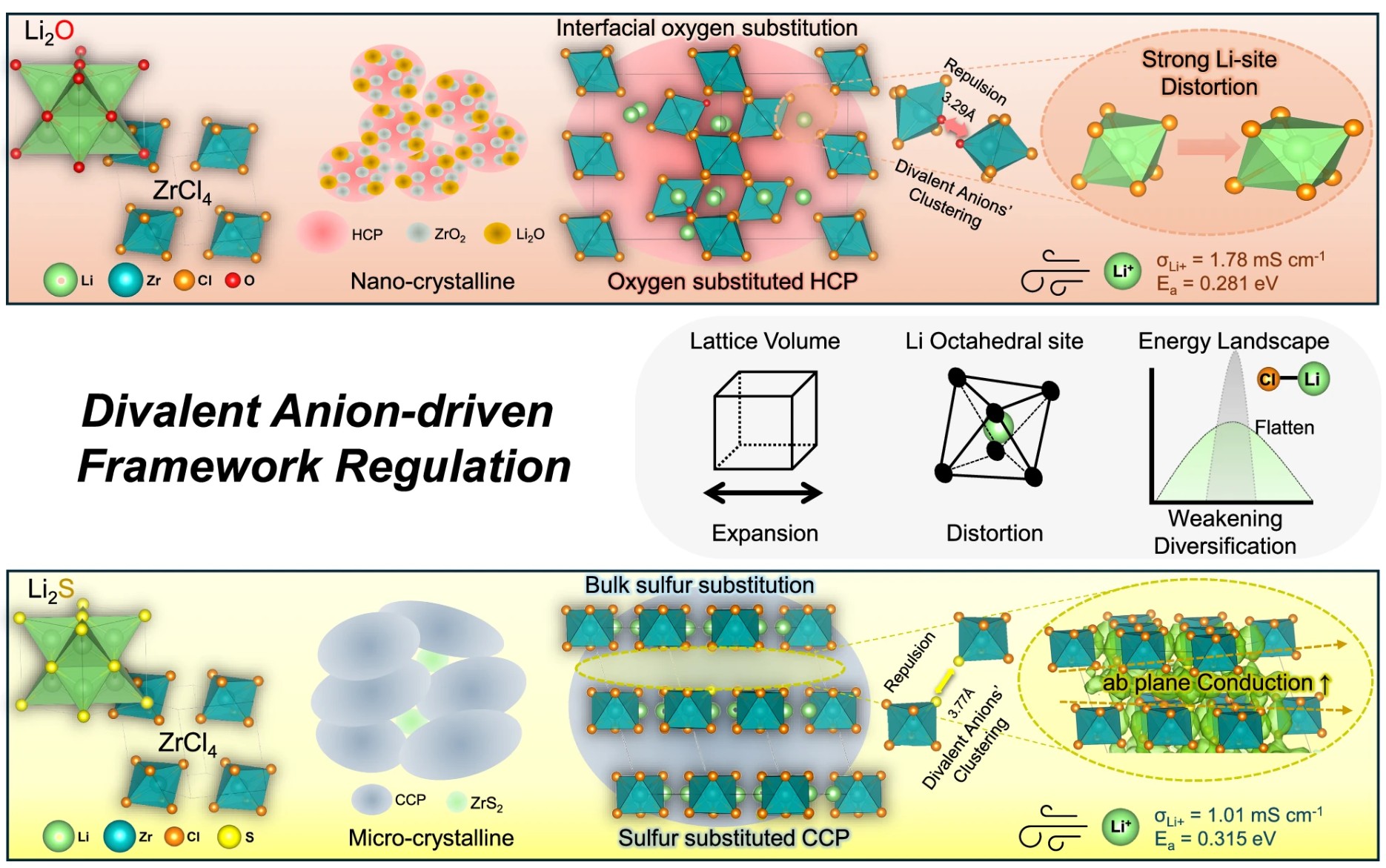
The KAIST-led team said it achieved significant performance improvements through structural design rather than costly materials. The researchers focused on introducing so-called divalent anions, such as oxygen and sulfur, into the internal structure of solid-state electrolytes. These anions alter the crystal structure of the electrolyte, creating wider and more efficient pathways for lithium ions to move.
See also: Syensqo and Axens Launch Argylium Joint Venture for Solid-State Battery Materials
The approach was applied to zirconium-based halide solid electrolytes, which are relatively inexpensive. By precisely controlling the internal structure, the team said it was able to reduce the energy barriers faced by lithium ions, improving conductivity without relying on high-cost metals.
According to the researchers, lithium-ion mobility in electrolytes containing oxygen or sulfur improved by two to four times compared with conventional zirconium-based solid electrolytes, reaching performance levels suitable for practical solid-state battery applications.
See also: Finland’s Donut Lab Unveils Solid-State Battery for OEM Use, Targeting 2026 Motorcycle Deployment
“Through this research, we have presented design principles that can simultaneously improve the cost and performance problems of solid-state batteries using inexpensive raw materials,” Seo said, adding that “the potential for industrial application is very significant.”
The researchers said the results could help accelerate efforts to bring solid-state batteries closer to large-scale manufacturing, as automakers and battery makers seek safer and more energy-dense alternatives to existing battery technologies.