
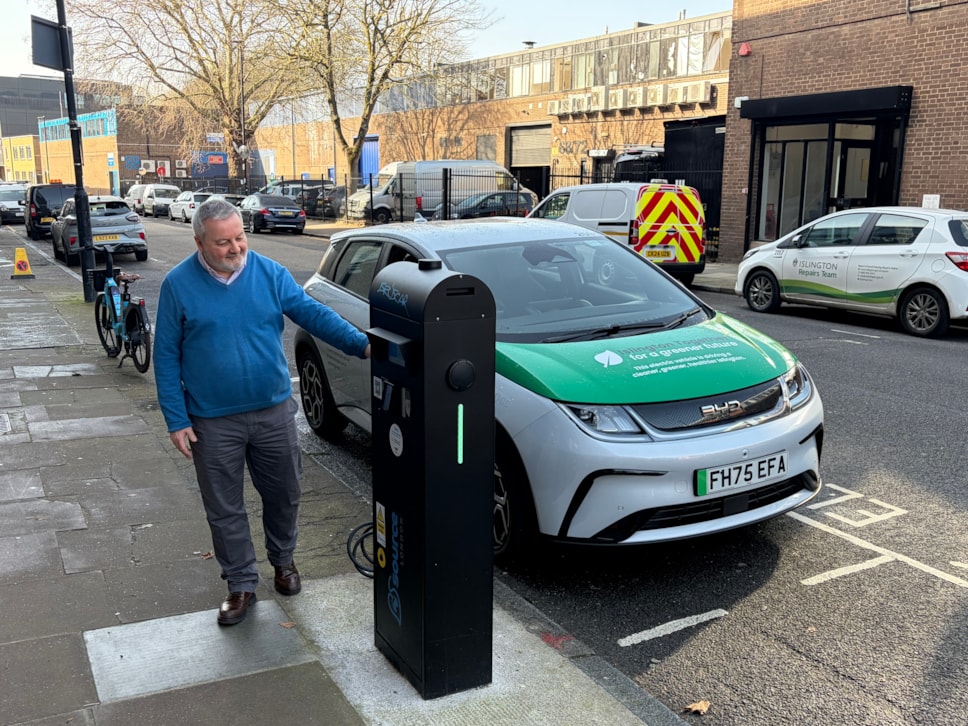
The London Borough of Islington has secured £932,500 in government funding to expand its electric vehicle charging infrastructure, with plans to install at least 840 new charging points across the area.
The project will significantly increase access to overnight charging for residents who do not have off-street parking, helping the borough move closer to its goal of installing 1,400 on-street EV charging points by 2030.
According to the council, the new infrastructure will include two types of chargers: 600 lamp column charging points rated at 5 kW and 240 charging points with a capacity of 7 kW.
Islington said the government funding will be complemented by what it described as “significant” private investment to support the rollout.
The council has not yet announced which company will install or operate the new charging infrastructure. It said procurement strategies for the project are currently under development and are expected to be submitted for approval in spring 2026.
Previously, Compleo UK won a contract in 2025 to install 500 charging points in the borough, though the council did not indicate whether the same provider would be involved in the new rollout.
Rowena Champion, Islington’s executive member for environment, air quality and transport, said the funding would accelerate efforts to expand local EV infrastructure.
“Islington council has delivered more than 600 publicly accessible charge points and has plans to deliver more in the coming months and years,” Champion said.
“By making sure we have the infrastructure in place for electric vehicles, we can encourage drivers to make the switch to more environmentally friendly forms of transport, which helps improve air quality across the borough and delivers a huge range of health and wellbeing benefits including a lower risk of developing respiratory illness.”
The expansion forms part of broader efforts by UK local authorities to support the transition to electric vehicles by improving access to public charging infrastructure, particularly in densely populated urban areas where many residents rely on on-street parking.