
Intel is closing its automotive architecture business and laying off the majority of its workforce in the unit, marking another step in the chipmaker’s broader restructuring strategy aimed at refocusing on its core client and data center businesses.
The decision, confirmed by Intel to TechCrunch, follows an internal memo sent to employees on Tuesday. A company spokesperson said the restructuring reflects Intel’s effort to streamline operations and better align with evolving customer demands.
“As we have said previously, we are refocusing on our core client and data center portfolio to strengthen our product offerings and meet the needs of our customers,” said Cory Pforzheimer, an Intel spokesperson. “As part of this work, we have decided to wind down the automotive business within our client computing group. We are committed to ensuring a smooth transition for our customers.”
Intel did not disclose how many employees are affected or which locations will be impacted by the layoffs.
Though never a major revenue contributor, Intel’s automotive business had played a visible role in its push into autonomous driving and software-defined vehicles. The company invested heavily in the space during the initial wave of interest in self-driving technologies, including its $15.3 billion acquisition of Mobileye in 2017 and the $900 million purchase of mobility-as-a-service platform Moovit in 2020. Mobileye now operates as a separate publicly traded entity in which Intel retains a significant stake.
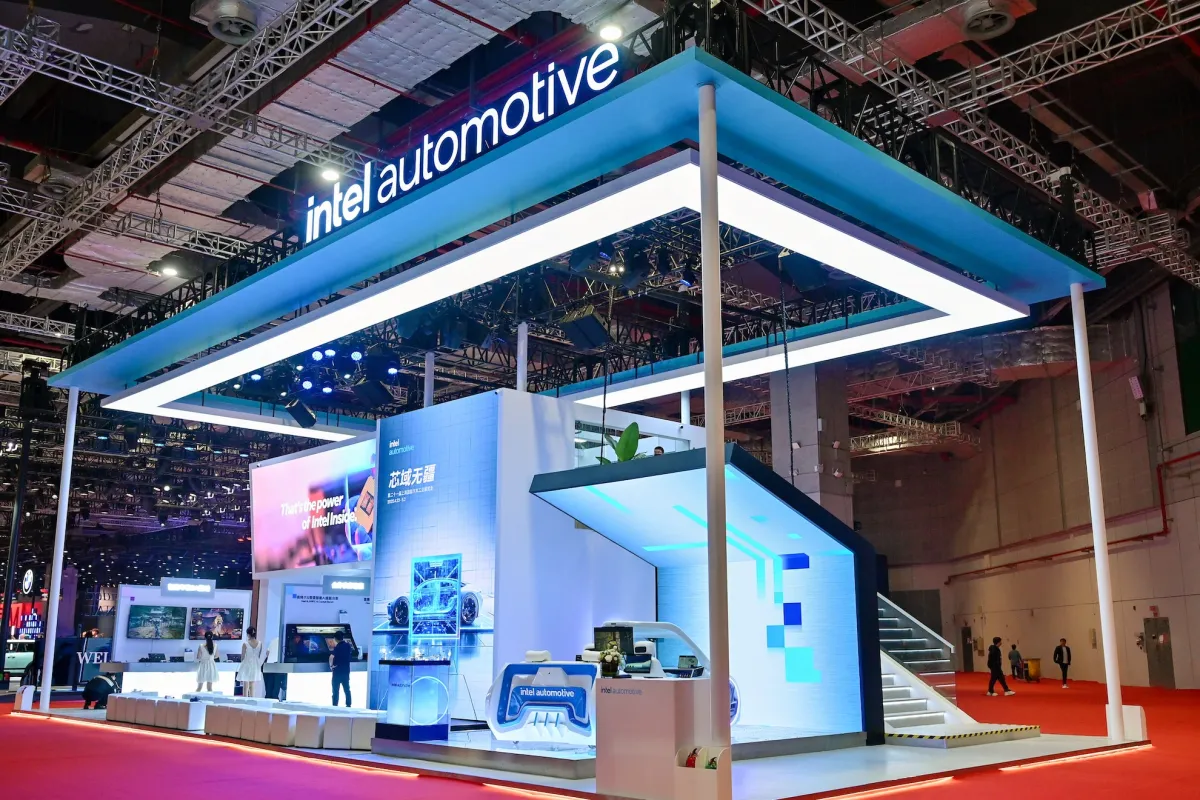
Intel’s automotive team had remained active in the emerging smart vehicle market, debuting an AI-enhanced system-on-chip (SoC) at CES 2025 and again at the Shanghai Auto Show in April. The SoC, tailored for software-defined vehicles, was scheduled for production later this year. However, signs of retrenchment became apparent in April when CEO Lip-Bu Tan indicated further layoffs were imminent due to underperformance and declining sales.
This latest move follows Intel’s announcement earlier this month that it would cut up to 20% of staff in its Intel Foundry division starting in July. The Foundry arm focuses on semiconductor design, manufacturing, and packaging for third-party clients, and has also faced pressure from falling demand and increasing competition.
Intel’s exit from the in-house automotive business marks a shift away from its once-expansive strategy to dominate next-generation mobility through internal development, leaving the company more reliant on external ventures like Mobileye for exposure to the automotive sector.