
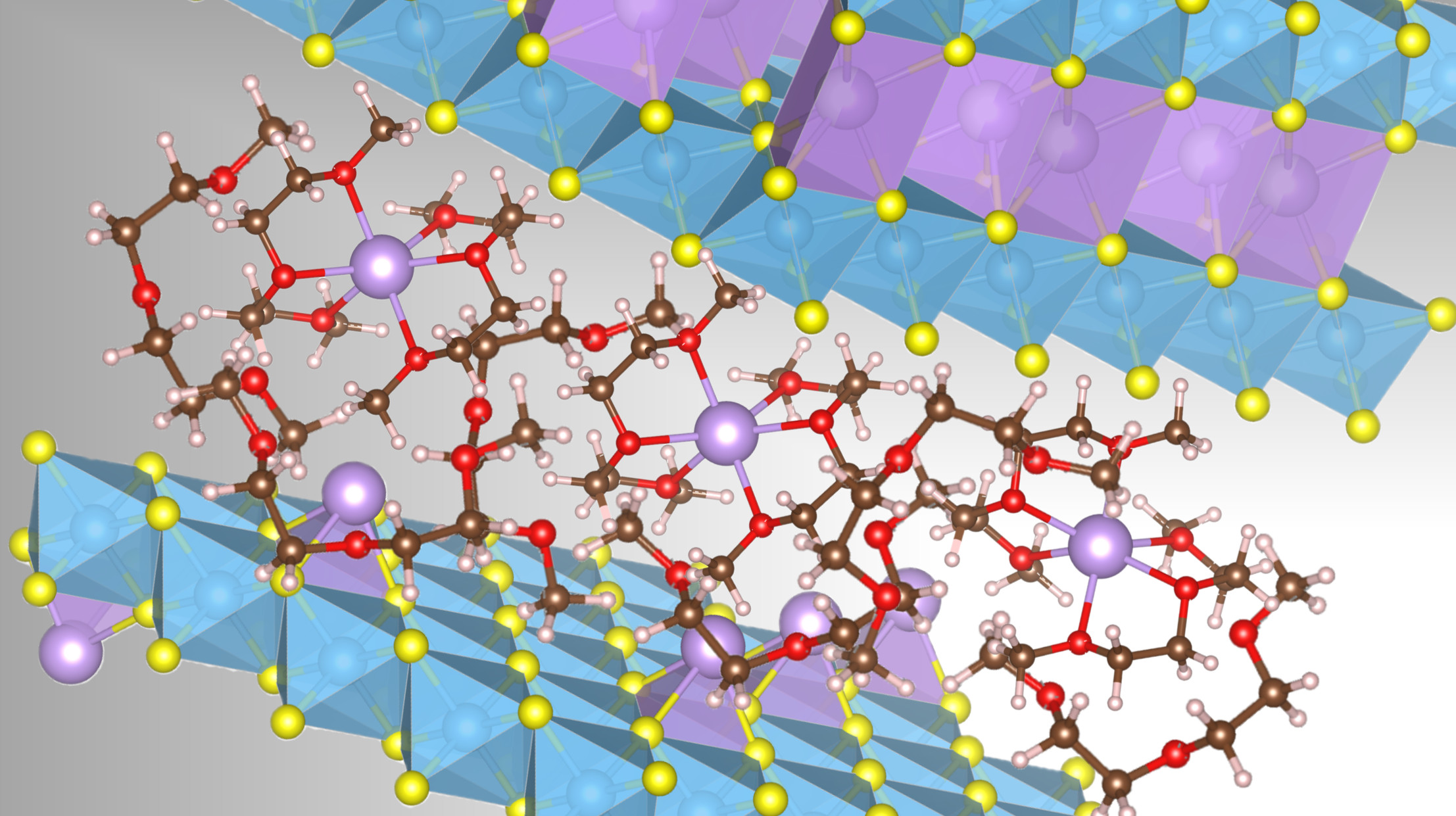
Researchers at the Helmholtz Institute Berlin (HZB) said they have uncovered a new storage mechanism for sodium-ion batteries that could enable faster charging and more efficient performance, challenging long-held assumptions about battery stability.
The study, led by Professor Philipp Adelhelm, found that the co-intercalation of sodium ions and solvent molecules into cathode materials can be both reversible and rapid, offering a pathway for high-rate sodium-ion cells with minimal capacity loss. Traditionally, co-intercalation was considered detrimental to battery function and prone to causing rapid failure.
“The process of co-intercalation could be used for developing very efficient and faster-charging batteries. This is why we wanted to investigate this topic in more detail,” Adelhelm said.
The research team explored layered transition metal sulfides as cathode hosts, combining electrochemical testing, structural studies using synchrotron radiation at PETRA III at DESY, and volume change measurements. Dr. Yanan Sun, who carried out much of the experimental work, said the results show cathode co-intercalation differs significantly from graphite anodes, retaining capacity while delivering unusually fast reaction kinetics.
“Above all, certain cathode materials offer a huge advantage: the kinetics are super-fast, almost like a supercapacitor,” Sun noted.
Adelhelm said the findings highlight how challenging conventional wisdom can yield breakthroughs. “Exploring the concept of co-intercalation was extremely risky because it is against classical battery knowledge. I was therefore very grateful to receive funding for this idea from the European Research Council through an ERC Consolidator Grant,” he added.