
Chinese tech giants Huawei and Xiaomi are reigniting their long-standing rivalry, this time in the electric vehicle (EV) market, as both companies seek to establish dominance in one of the world’s fastest-growing and most competitive industries.
At the opening day of the 2025 Shenzhen Auto Show, Richard Yu, Huawei’s executive director and head of its consumer business group, made indirect but pointed remarks suggesting that Xiaomi’s EVs, while commercially successful, lacked in quality and performance. “Although its products may not be that good, they’ve already sold like hotcakes,” Yu said in comments widely shared on Chinese social media. He added, “Our products are better than theirs in every aspect — better quality, better experience, better performance — but we can’t sell as much as they do.”
Xiaomi executives responded swiftly. Lu Weibing, Xiaomi partner and president, took to Weibo to defend the company’s automotive efforts. “Whether it’s the popularity of the SU7 or the higher attention and expectations for the YU7 compared to the SU7, it’s all based on strong product competitiveness,” he wrote. Xiaomi founder and CEO Lei Jun echoed that sentiment, initially quoting Nobel laureate Mo Yan: “Slandering is, in itself, a form of admiration,” a line he later removed from his post.
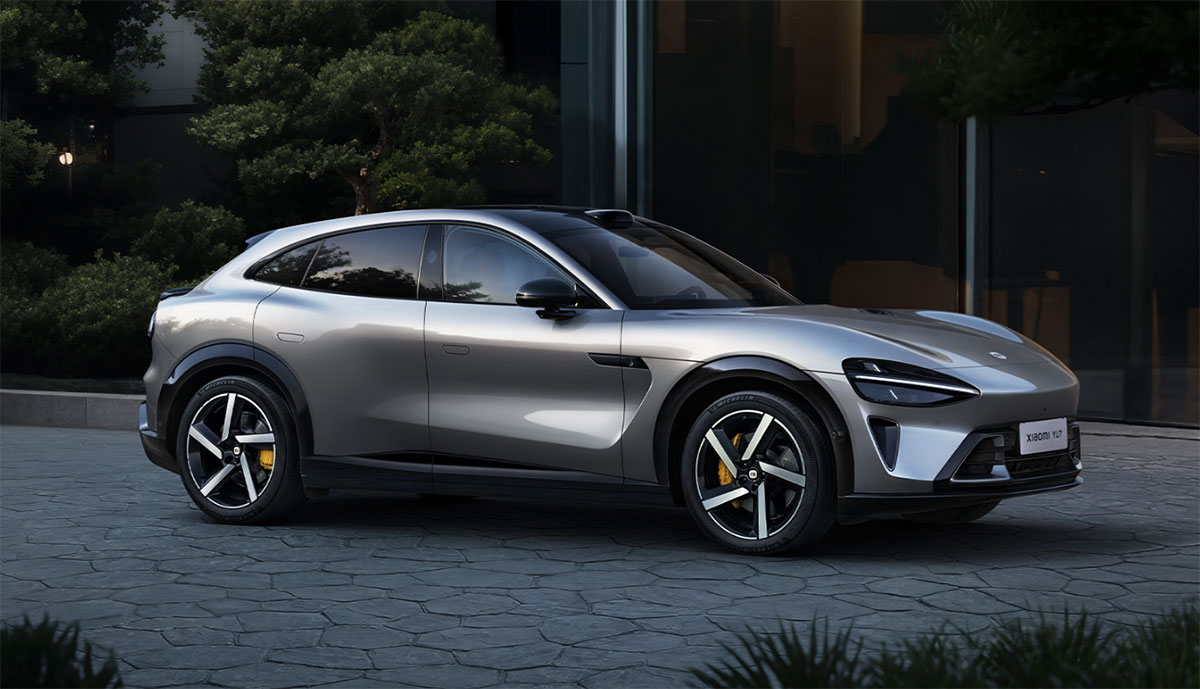
The two firms represent differing approaches to EV production. Xiaomi entered the sector as a full manufacturer, launching its first model, the SU7 sedan, in March 2024. The vehicle quickly became one of China’s most popular EVs, with Xiaomi EV reporting over 28,000 deliveries in May alone — the eighth consecutive month surpassing 20,000 units. The company unveiled its second model, the YU7 SUV, on May 22, with a launch scheduled for July.
Huawei, by contrast, does not manufacture cars directly. Instead, it collaborates with automakers such as Seres, Chery, and SAIC through its Harmony Intelligent Mobility Alliance (HIMA), playing a central role in design, software, and marketing across five EV brands.
The renewed public clash between Huawei and Xiaomi echoes past tensions, most notably a 2019 smartphone dispute when Xiaomi’s Redmi brand challenged Huawei’s then-subsidiary, Honor. As the EV market becomes increasingly vital to both companies’ futures, their ongoing rivalry is expected to intensify, drawing attention from both consumers and investors.
Source: CNEVPOST