
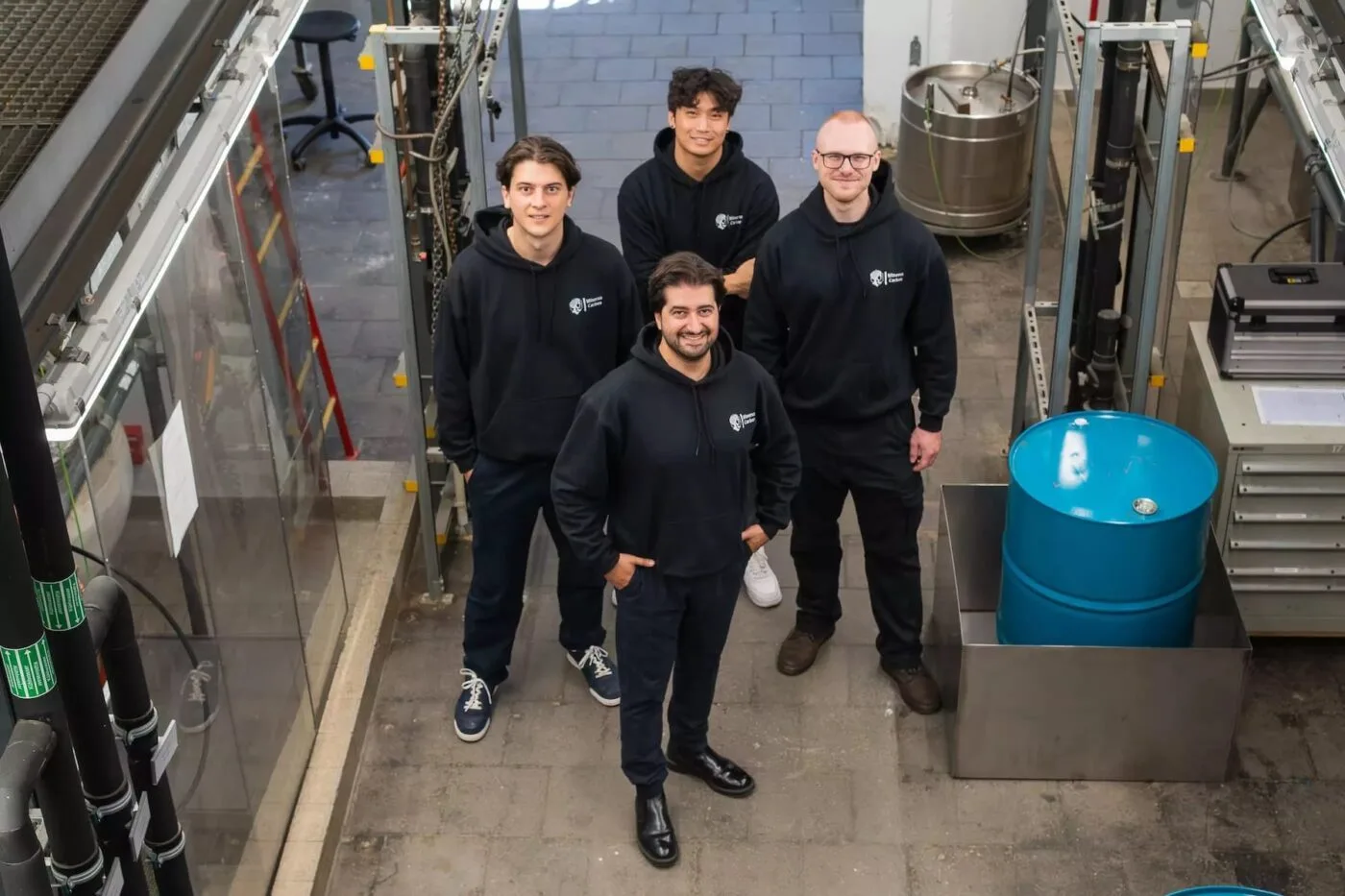
Mülheim-based startup Minerva Carbon, a spin-off from the Max Planck Institute for Coal Research, has received about €1.8 million in funding from the German Federal Ministry for Economic Affairs and Energy’s EXIST program, the company said. The team is developing mesoporous high-performance carbon materials for use in batteries and fuel cells.
The material, described as a “high-tech sponge” made of carbon, provides extensive storage space for ions and fast conductivity, enabling faster charging, longer lifespans, and greater stability for batteries.
It also offers performance advantages in proton-exchange membrane (PEM) fuel cells, according to the company. “We now have a unique opportunity to commercialize mesoporous carbons with outstanding properties on a large scale for a wide range of applications,” said founder Abdu Bilican.
Bilican, a former doctoral researcher at the Max Planck Institute, developed a more efficient synthesis process to produce large quantities of mesoporous carbons within shorter timeframes, a step that the company said could accelerate industrial use.
Co-founder Jonas Gram added, “Our aim is to combine cutting-edge research with modern production technology. This will allow us to manufacture application-optimized carbon materials efficiently and sustainably right here in North Rhine-Westphalia.”
A pilot plant will be built at the Max Planck Institute for Coal Research in Mülheim an der Ruhr to support scaling up. “The EXIST program is like a booster for us. With this support behind us, we have the ideal starting position to lead Minerva Carbon into a successful future,” Bilican said. The founders aim to strengthen Germany’s role in battery and fuel cell technology and integrate into the broader European value chain.