



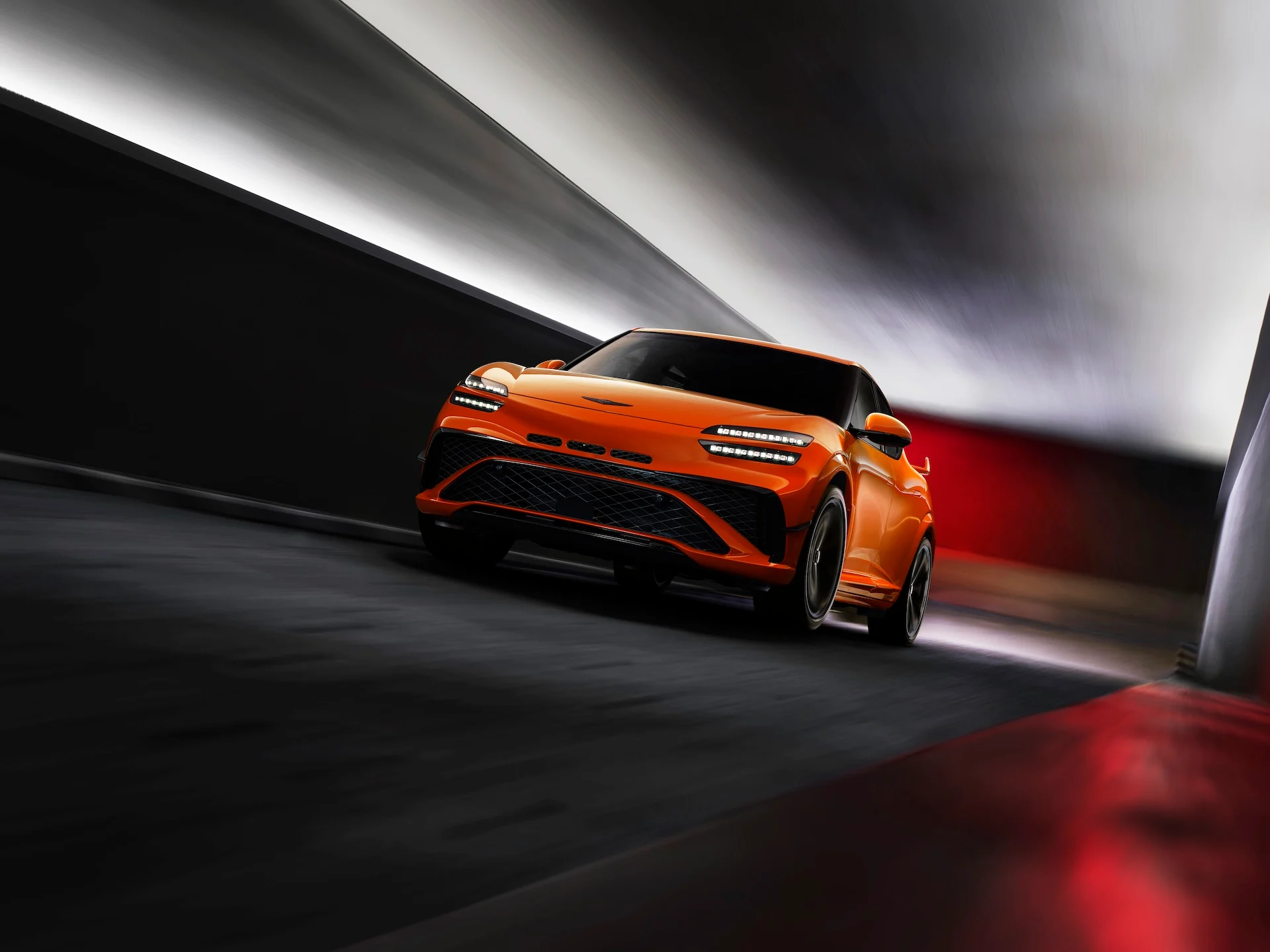
Genesis has introduced the GV60 Magma, its first high-performance production model, positioning the electric crossover as the foundation of a new “Luxury High Performance” strategy the brand plans to advance through 2035.
The model, unveiled at Circuit Paul Ricard, delivers 448 kW in standard configuration and up to 478 kW (650 hp) in Boost Mode. Top speed is listed at 264 km/h, while acceleration from 0 to 200 km/h is achieved in 10.9 seconds. The vehicle incorporates several performance technologies including a Virtual Gear Shift System (VGS), Drift Mode, and High-Performance Battery Control (HPBC), features intended to distinguish the Magma line from Genesis’ mainstream EV portfolio.

José Muñoz, President and CEO of Hyundai Motor Company and Genesis, said the company intends to use the Magma programme to define a new category of premium electrified performance. “Genesis reached one million global sales faster than any luxury manufacturer in history,” he said, adding that the brand aims to combine elegance with driving precision rather than “excessive energy or intensity.”
Luc Donckerwolke, President and Chief Creative Officer, said the Magma direction is meant to broaden the brand’s design scope. “Magma shows how emotion and precision can coexist while maintaining Genesis’ elegance and balance,” he said.
Platform and Performance
The GV60 Magma uses a dual-motor all-wheel-drive system generating 740 Nm of torque in standard mode and 790 Nm under Boost Mode. Launch Control enables a consistent torque profile from a standstill, and three drive modes—Sprint, GT and a customizable MY mode—adjust parameters including electronic limited-slip differential (e-LSD) behavior and stability control thresholds.

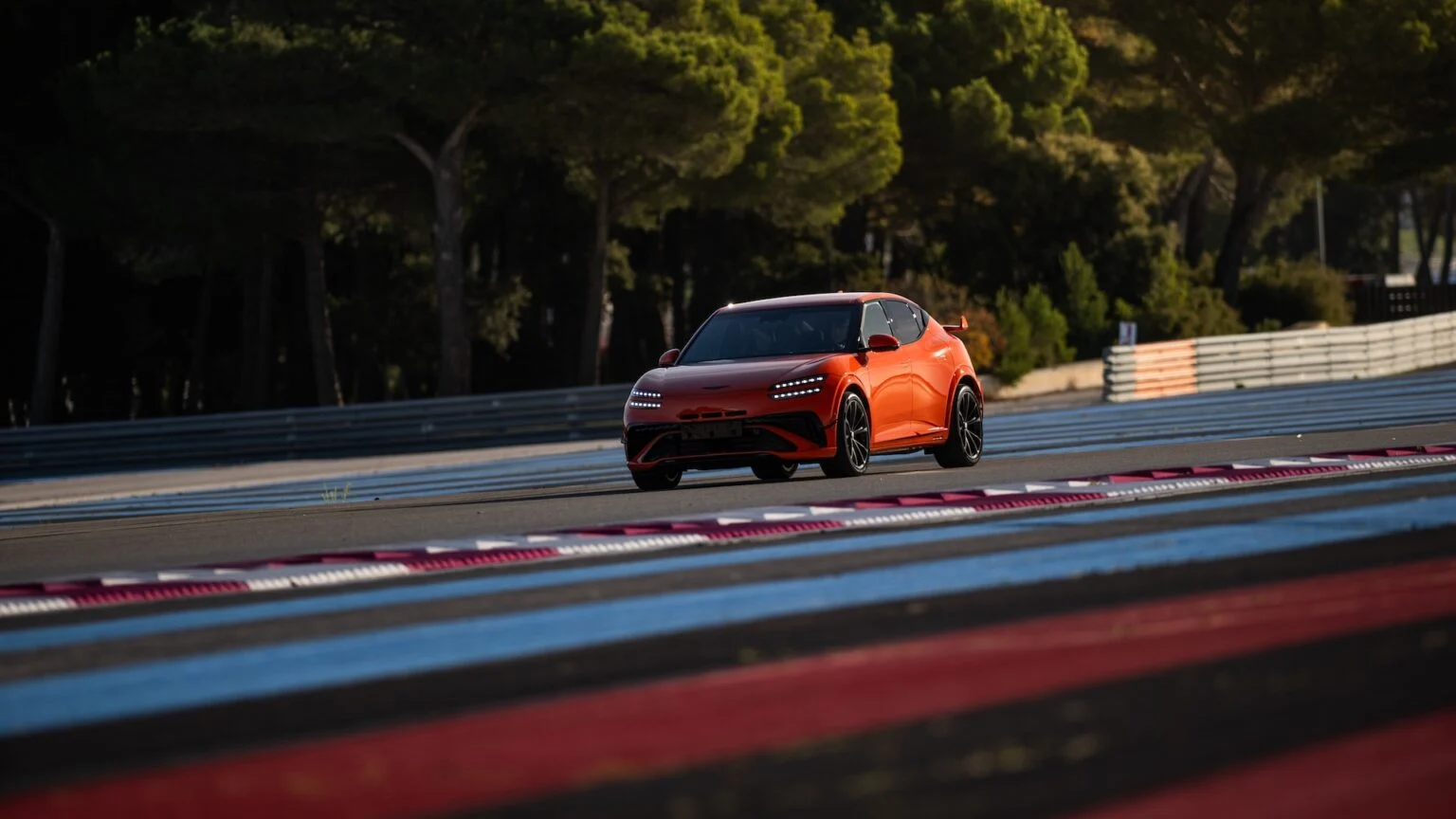
VGS modifies motor output, torque distribution and regenerative braking to reproduce shift-like sensations similar to high-revving combustion-engine vehicles. When paired with HPBC, the instrument cluster displays performance information including temperatures, G-force, pedal input and available boost duration. Drift Mode channels power toward the rear axle via coordinated e-LSD and traction control settings.
Design and Aerodynamics
Genesis lowered the vehicle by 20 mm and widened the fenders to accommodate 21-inch forged wheels paired with 275-mm tires. A redesigned front bumper incorporates a three-hole cooling structure that serves both aerodynamic and thermal management functions. Side skirts integrate additional airflow elements, while a functional rear wing-type spoiler increases downforce.

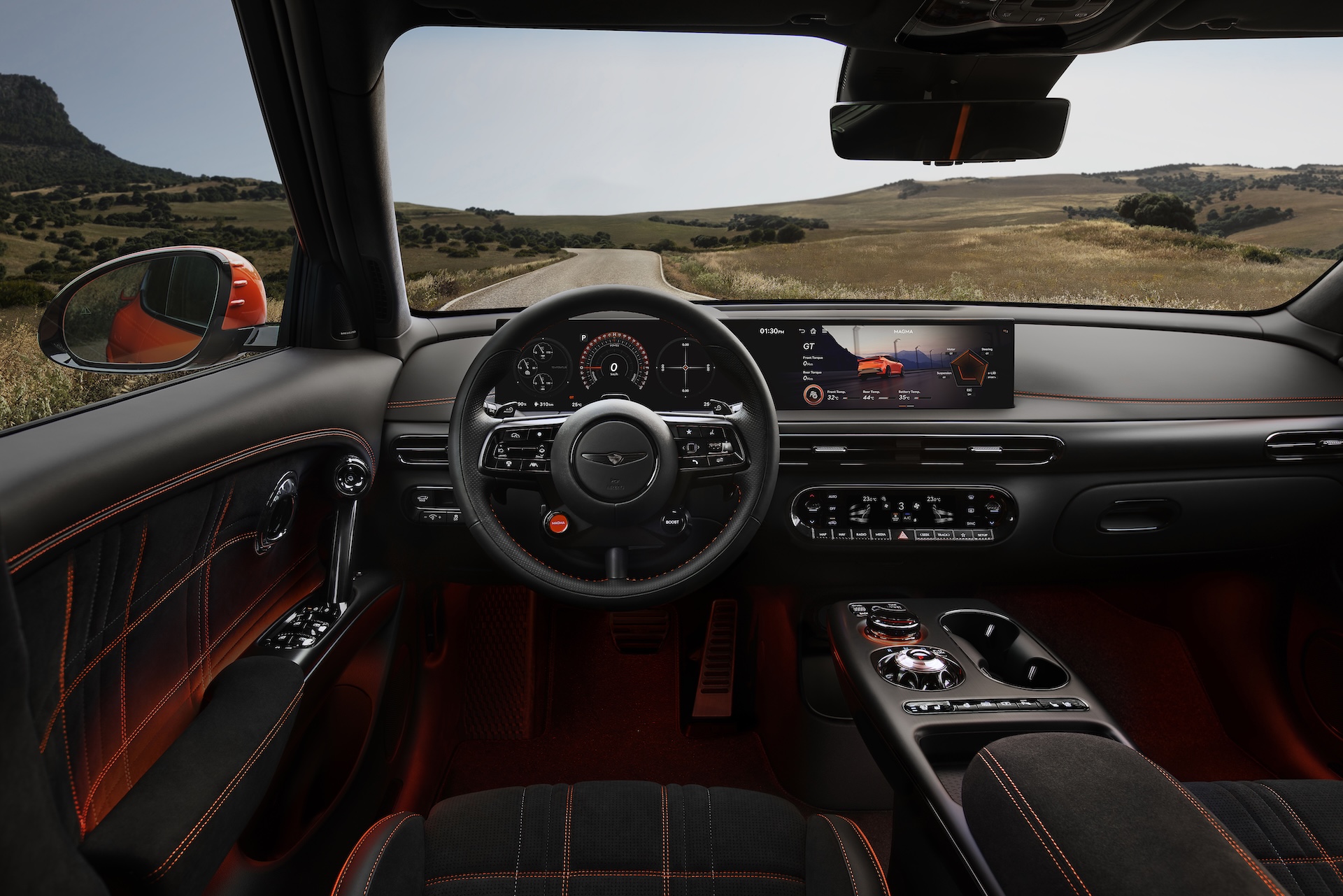
Interior updates include Chamude suede-like materials, orange-and-grey stitching, dark metal accents and a steering wheel with Magma-specific buttons and color elements. The brand says Active Noise Control-Road, sound-insulating glass and reinforced sealing help preserve cabin quietness despite the performance-focused chassis and tire configuration.
Chassis, Braking and Noise Control
Recalibrated suspension geometry, Electronic Control Suspension and End-of-Travel control aim to maintain stability while reducing harshness. Hydro G-Bushings in the front suspension and dual-layer bushings at the rear limit road vibration. Large-diameter front discs paired with monoblock calipers, along with high-friction rear brake materials, improve stopping performance.
The digital interface shifts to a three-circle performance display when Magma Mode is activated. The Head-Up Display shows simplified information including speed, boost countdown and regenerative braking levels.
Development and Market Outlook
Genesis said the GV60 Magma builds on concepts shown over recent years, including the GV80 Coupe Concept, G80 Magma Special and X Gran Berlinetta. The GV60 Magma Concept earlier won its class at the 2024 Goodwood Festival of Speed, completing the 1.86-kilometre run in 52.72 seconds.
Market introduction begins in South Korea in early 2026, followed by launches in Europe and North America later in the year.