

Geely has released updated specifications for its upcoming Galaxy Starshine 7 plug-in hybrid electric vehicle (PHEV) following its inclusion in China’s MIIT “23rd Batch of New Energy Vehicles Eligible for Vehicle Purchase Tax Reduction.”
The Starshine 7 will offer two lithium-iron-phosphate (LFP) battery options: an 18.99 kWh pack providing 115–120 km of pure electric range and a 28.3 kWh pack rated for up to 165 km on the CLTC cycle. The model is expected to debut in China later this year.
See also: Geely Galaxy Launches Starshine 6 Hybrid Sedan with Aggressive Pricing to Boost Market Share
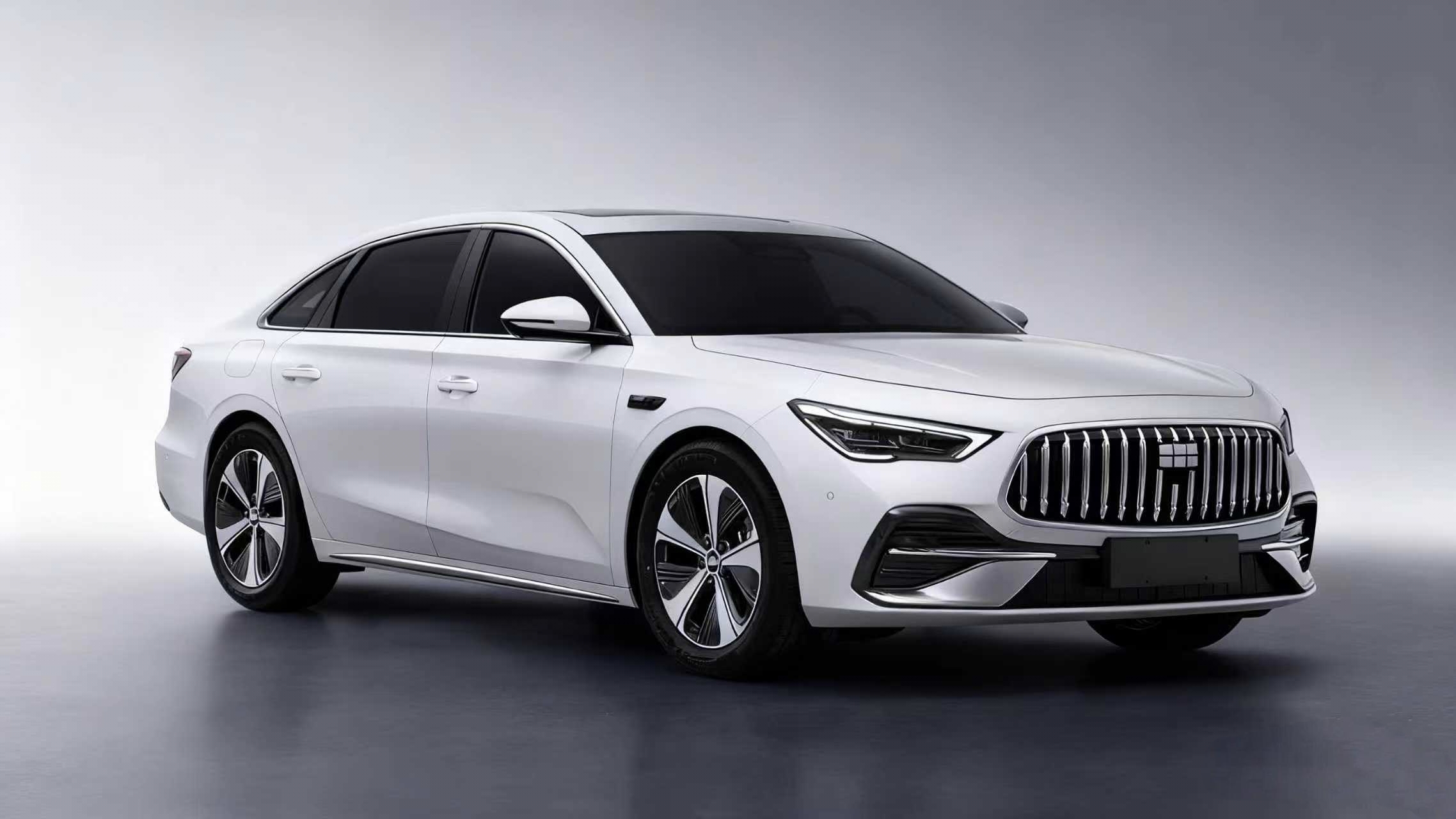
The vehicle retains the design language of Geely’s Starshine series, featuring a body measuring 4,958 mm long, 1,915 mm wide, and 1,505 mm high, with a 2,852 mm wheelbase. Depending on the configuration, the curb weight ranges from 1,815 kg to 1,860 kg.
Externally, the Starshine 7 includes a large trapezoidal front grille with vertical waterfall-style chrome strips, polygonal multi-source LED headlights, and a three-section bumper with air intakes. The rear incorporates a horizontal taillight cluster integrated with the “GEELY” logo. Optional features include multiple grille and rim designs, privacy glass, radar and camera systems, and tire sizes of 225/55R18 or 235/45R19.
See also: Geely Launches Galaxy E5 Electric SUV in UK Market, Priced From £31,990
The sedan is powered by Geely’s NordThor AI Hybrid 2.0 system, consisting of a 1.5 L engine producing 82 kW (110 hp) paired with an electric motor rated at 120 kW (160 hp). The hybrid setup, combined with the two battery options, allows for the reported pure electric ranges. The Starshine 7 has a top speed of 190 km/h.
Geely’s Starshine 7 will compete in China alongside the Starshine 6 and Starshine 8 models. The Starshine 6, launched for pre-sale in September, measures 4,806/1,886/1,490 mm with a 2,756 mm wheelbase and offers up to 125 km of electric range with its high-end 17 kWh battery. Pricing for the Starshine 8 currently ranges from 115,800 to 155,800 yuan ($16,300 to $21,900).