



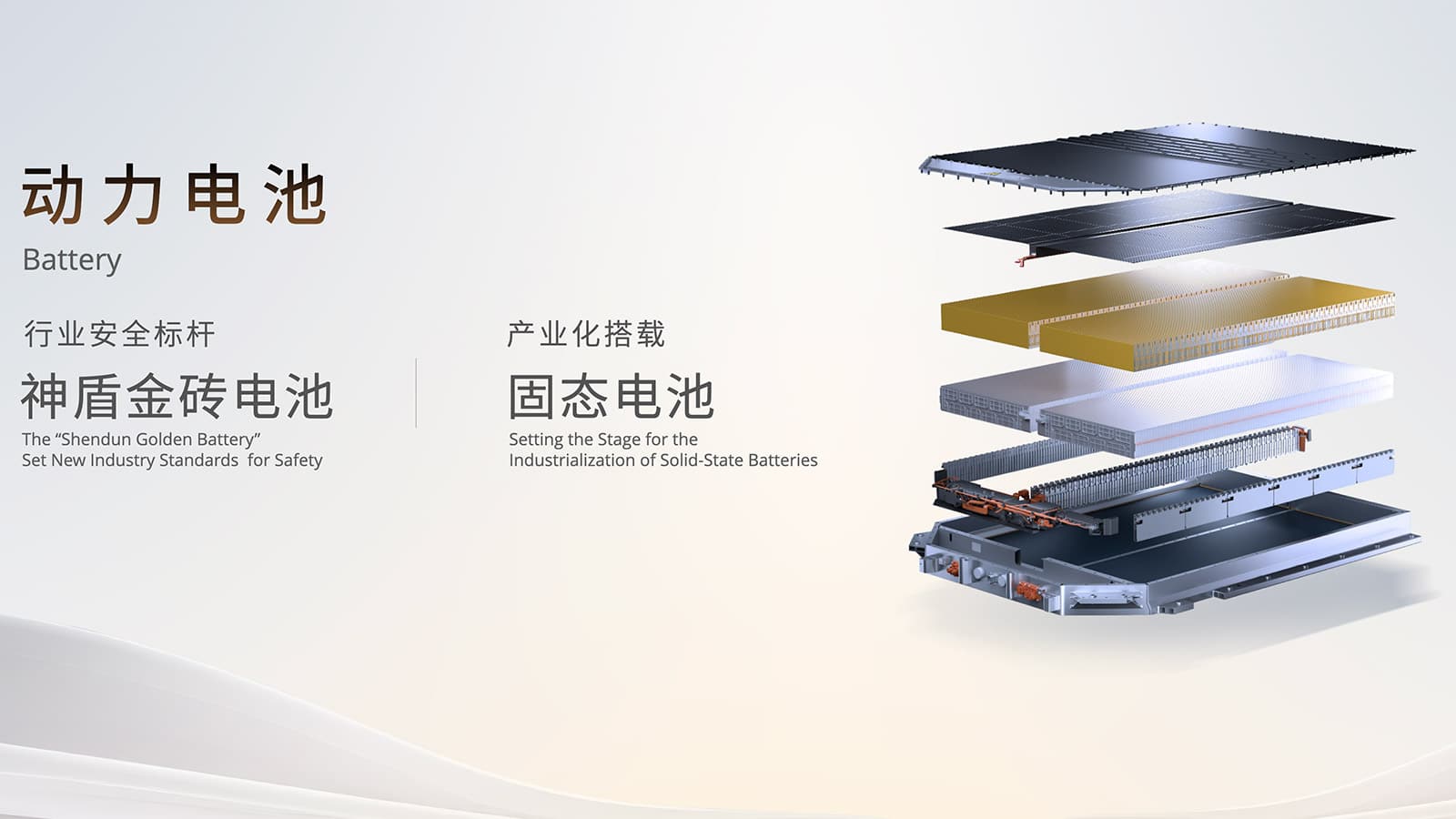
Geely Auto said it plans to begin production of solid-state battery packs later this year, marking a further step by Chinese automakers toward next-generation battery technologies as competition intensifies in the electric vehicle market.
The company disclosed the target on Thursday during Geely Holding Group’s five-year strategy briefing, saying it will complete production of its first in-house developed all-solid-state battery pack in 2026 and proceed with vehicle installation and verification.
See also: Geely Holding Targets 6.5 Million Global Vehicle Sales by 2030, With NEVs at 75%
Geely Auto also said it will roll out a newly developed lithium manganese iron phosphate battery, which it expects to deliver more than 15% higher energy density compared with its existing lithium iron phosphate products.
The announcement places Geely Auto among a growing number of Chinese automakers accelerating plans to integrate solid-state battery technology. Dongfeng Motor began extreme cold-weather testing of a solid-state battery prototype vehicle earlier this month and is targeting mass production of 350 Wh/kg solid-state batteries by September 2026, which it says could enable driving ranges of up to 1,000 kilometres.
See also: Geely Galaxy Launches V900 Extended-Range MPV as First Model in New V Series
At the end of last year, Hongqi, a marque under China FAW Group, unveiled its first vehicle prototype equipped with solid-state batteries, signalling the start of on-road testing for the technology.
Battery makers, however, have generally taken a more cautious stance. Industry leaders CATL and BYD have said they expect only small-scale vehicle integration of solid-state batteries around 2027. Svolt Energy has outlined plans to complete development of 400 Wh/kg semi-solid-state batteries in 2026, followed by higher-density variants later in the decade.
See also: Geely Holding Invests $45.6 Million in ECARX to Deepen Intelligent Vehicle Partnership
The diverging timelines highlight both the rapid pace of innovation among Chinese automakers and the technical and cost challenges that remain before solid-state batteries can be deployed at scale.


