

GAC Aion has unveiled the Ray series, a new line of electric vehicles designed to attract younger buyers, with the Ray 7 becoming the first model to carry the company’s updated brand identity.
The new series was introduced as GAC Aion seeks to refresh its image in China’s increasingly competitive new energy vehicle market. The Ray 7 is positioned as a mid-to-large electric sedan aimed at becoming an entry point for younger consumers entering the electric vehicle segment.
Ray 7 Debuts With New Brand Identity
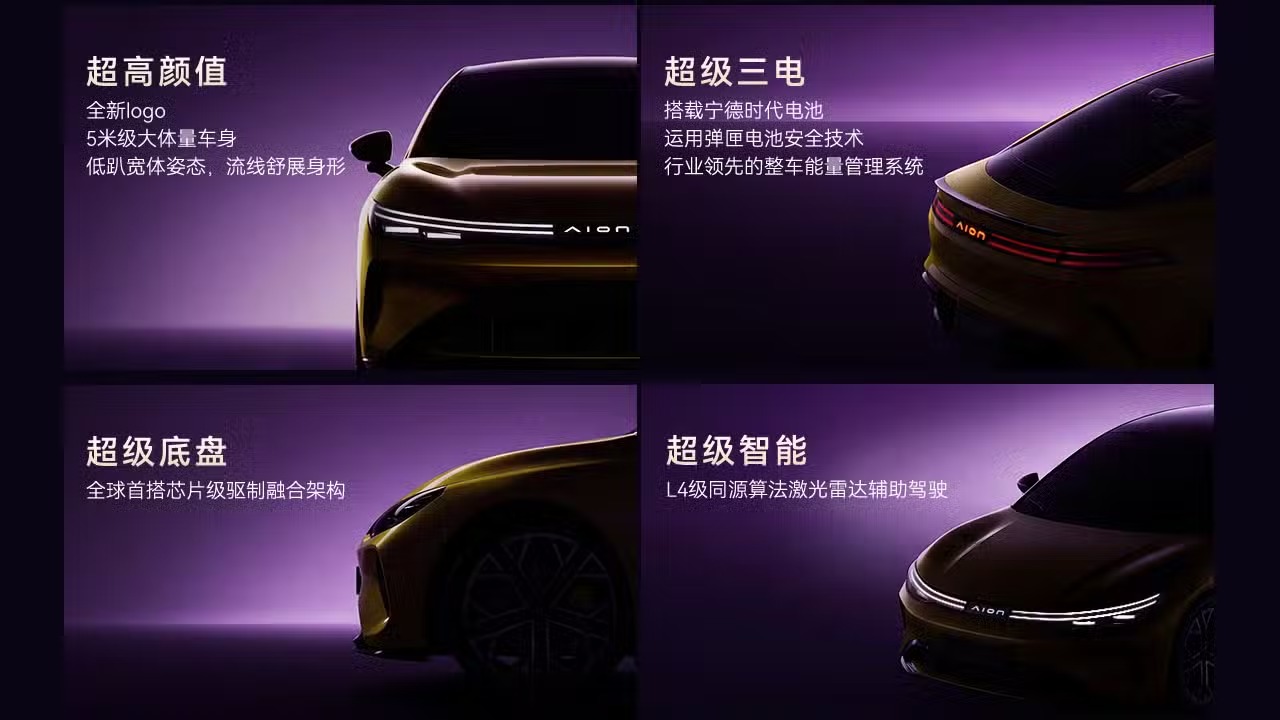
According to GAC Aion, the Ray 7 is the first vehicle to feature the company’s new logo.
The sedan measures in the five-metre class and adopts a low, wide stance with streamlined styling intended to emphasize its sporty appearance.
The company said the Ray 7 is equipped with battery cells supplied by CATL and incorporates GAC Aion’s Magazine Battery safety technology, which is designed to improve battery protection and thermal safety.
The vehicle also features what GAC Aion describes as a “super chassis” using a chip-level integrated drive and braking architecture, which the company said is the first of its kind.
LiDAR-Based Driver Assistance
The Ray 7’s advanced driver assistance system is built around a LiDAR-based sensing solution.
According to GAC Aion, the software algorithms share the same technology stack used in Level 4 autonomous driving systems, although the company has not disclosed the vehicle’s driver assistance capabilities in detail.
GAC Aion has yet to announce the Ray 7’s pricing, driving range or market launch date.
Earlier this month, Zhang Xiong, President of the GAC Hyptec and Aion Business Unit, said the first model in the Ray lineup would be a mid-to-large electric sedan targeting younger buyers seeking their first premium electric vehicle.
GAC Aion was among China’s earliest dedicated new energy vehicle brands and previously recorded strong sales in the domestic market.
In addition to the Aion lineup, the company also markets vehicles under its Hyptec brand. The two brands were integrated last year as part of a strategy to reduce overlap between product portfolios and improve operational efficiency.