
Foxconn has begun small-scale production at its new battery cell factory in Kaohsiung, Taiwan, after a lengthy quiet period following the plant’s groundbreaking in 2022. The company confirmed during a November media tour that the facility has been operating in “start-up mode” since March, producing limited quantities of lithium iron phosphate (LFP) cells as it prepares for a broader ramp-up.
The Kaohsiung site entered operations with a capacity of 0.5 GWh and is expected to reach 1.2 GWh next year. Output at current levels is sufficient to supply batteries for around 1,500 electric buses, a figure that Foxconn projects will increase to 3,000 vehicles by 2026. The first commercial product is a 230 Ah LFP cell for large commercial vehicles. Additional formats—a 120 Ah cell for electric cars and a 320 Ah cell for stationary energy storage—are planned.
Foxconn said its immediate priority is achieving process stability before scaling production. “We are demonstrating here on a small scale that we have mastered the entire process,” said Troy Wu, Foxconn’s Vice President for Global Battery Strategy, in remarks quoted by Automotive News. “We can duplicate and scale this up anywhere.” The company, however, is ramping conservatively given the challenges associated with minimising waste and maintaining yield as production increases.
A key element of Foxconn’s approach is its locally anchored supply chain. More than 80 percent of materials for the Kaohsiung plant come from Taiwanese suppliers, some of which Foxconn has invested in. While this raises costs, the company said it reduces dependence on China and enables faster replication of its supply model in other markets. Foxconn believes it could eventually “copy the concept worldwide” and build a 10 GWh plant within four years, including two years for ramp-up.
See also: Stellantis Partners with NVIDIA, Uber, and Foxconn to Develop Level 4 Robotaxi Fleet by 2028
The company is also developing improvements to its existing cell technology. The 230 Ah LFP cell currently achieves 175 Wh/kg but is targeted to reach 185 Wh/kg as development progresses. Fast-charging times and durability—expected to increase from 10,000 to 12,000 cycles—are also being enhanced.
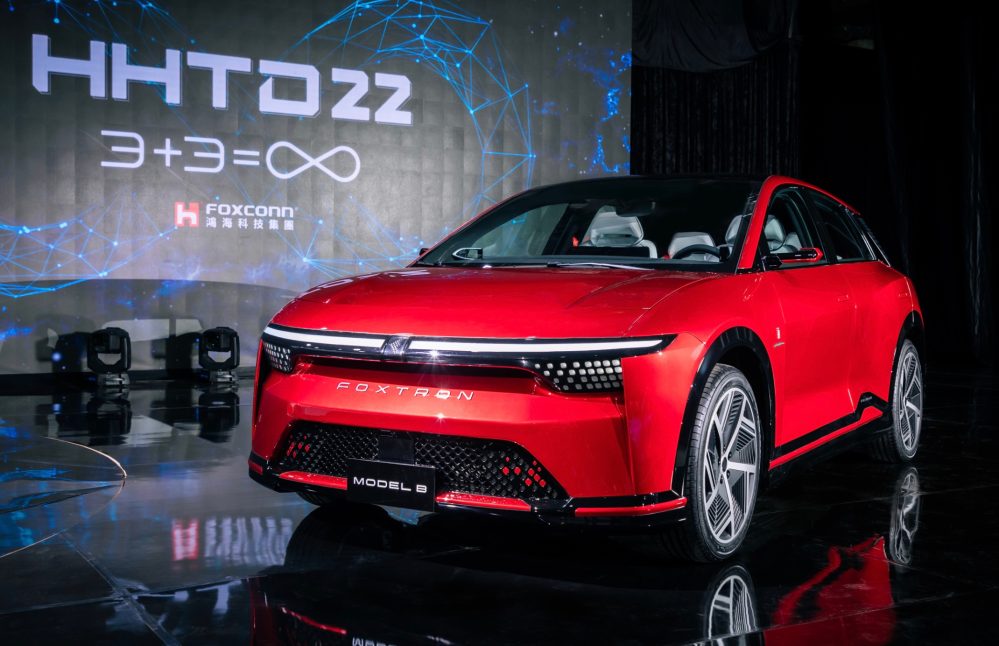
Foxconn does not yet have confirmed customers for its planned automotive cell but may use the batteries in its own vehicles. The company is seeking certification for its Model C crossover in North America and has reportedly secured interest from a potential U.S. customer. Under its Foxtron brand, Foxconn continues to develop reference designs for electric vehicles, with production to follow customer specifications.