




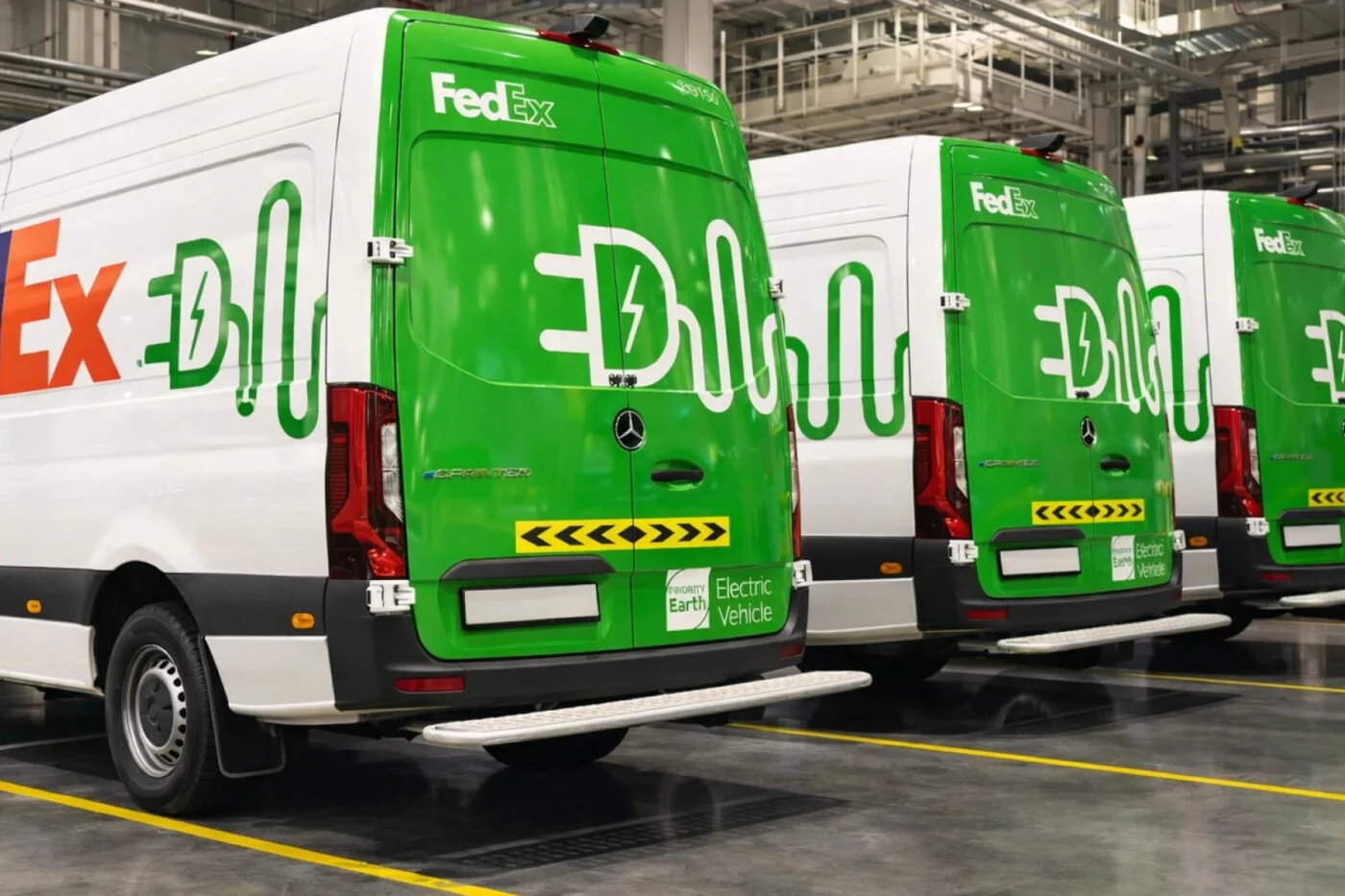
FedEx has deployed 14 Mercedes-Benz eSprinter electric delivery vans in the United Arab Emirates, marking the first introduction of the German-built electric model in the Middle East as the logistics company expands its zero-emission vehicle operations.
The vans are being used for pick-up and delivery services across all seven Emirates. According to the company, the fleet is expected to reduce carbon emissions by around 148 metric tonnes of CO₂ annually.
See also: FedEx Adds Electric Trucks to Japan Fleet in Push to Cut Urban Emissions
The deployment forms part of FedEx’s broader goal of achieving carbon-neutral global operations by 2040. The target is set a decade ahead of the United Arab Emirates’ national UAE Net Zero 2050 climate strategy.
Mercedes-Benz offers the eSprinter in several configurations, although FedEx did not specify which variant is being used in its fleet. The company said the electric vans can carry a maximum payload of up to three tonnes and offer an estimated driving range of up to 380 kilometers on a single charge.
“FedEx is committed to building a smarter, more efficient network for our customers. Electric vehicles are proving their value across our global operations, and expanding our fleet in the UAE gives us a tangible opportunity to reduce last-mile emissions while supporting reliable delivery performance with the sustained growth of e-commerce,” said Taarek Hinedi.
See also: Harbinger Raises $160 Million Series C as FedEx Orders 53 Electric Truck Chassis
FedEx began testing electric vehicles in the UAE in December 2022 with one-tonne electric trucks. Commercial operations involving EVs started in September 2023 with a small fleet of three vehicles, including what appeared to be a Peugeot e-Expert XL panel van.
The company’s shift toward electrification has progressed faster in other regions. In China, FedEx said electric vehicles account for more than 20% of its delivery fleet. In Singapore, the company recently expanded its EV fleet to 39 units.
According to FedEx’s 2025 Corporate Social Responsibility Report, the company operated 8,018 on- and off-road electric vehicles globally as of May 31, 2024, reflecting continued expansion of its electric fleet across multiple markets.


