




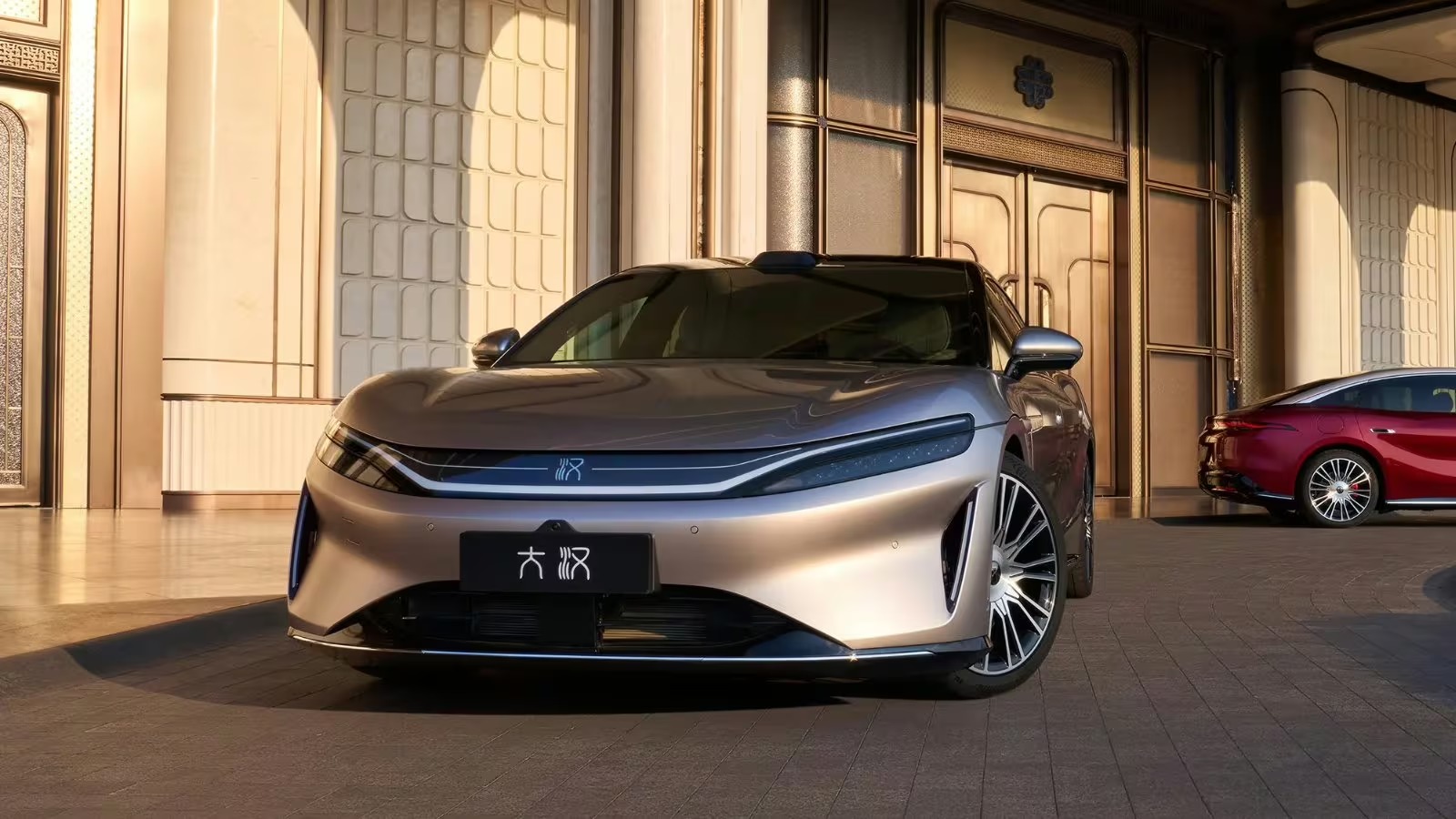
BYD has expanded its Dynasty lineup with the Da Han EV, a flagship electric sedan designed to deliver long driving range, high-performance electric propulsion and premium cabin technology. Positioned above the existing Han, the new model strengthens the brand’s push into China’s higher-end electric vehicle market.
The five-seat sedan is available in three battery-electric variants, with prices ranging from 235,900 yuan to 275,900 yuan. Its key features include a 102.3 kWh second-generation Blade Battery, a maximum claimed CLTC range of 1,008 km and a flash-charging system capable of charging the battery from 10% to 97% in nine minutes under the specified conditions.

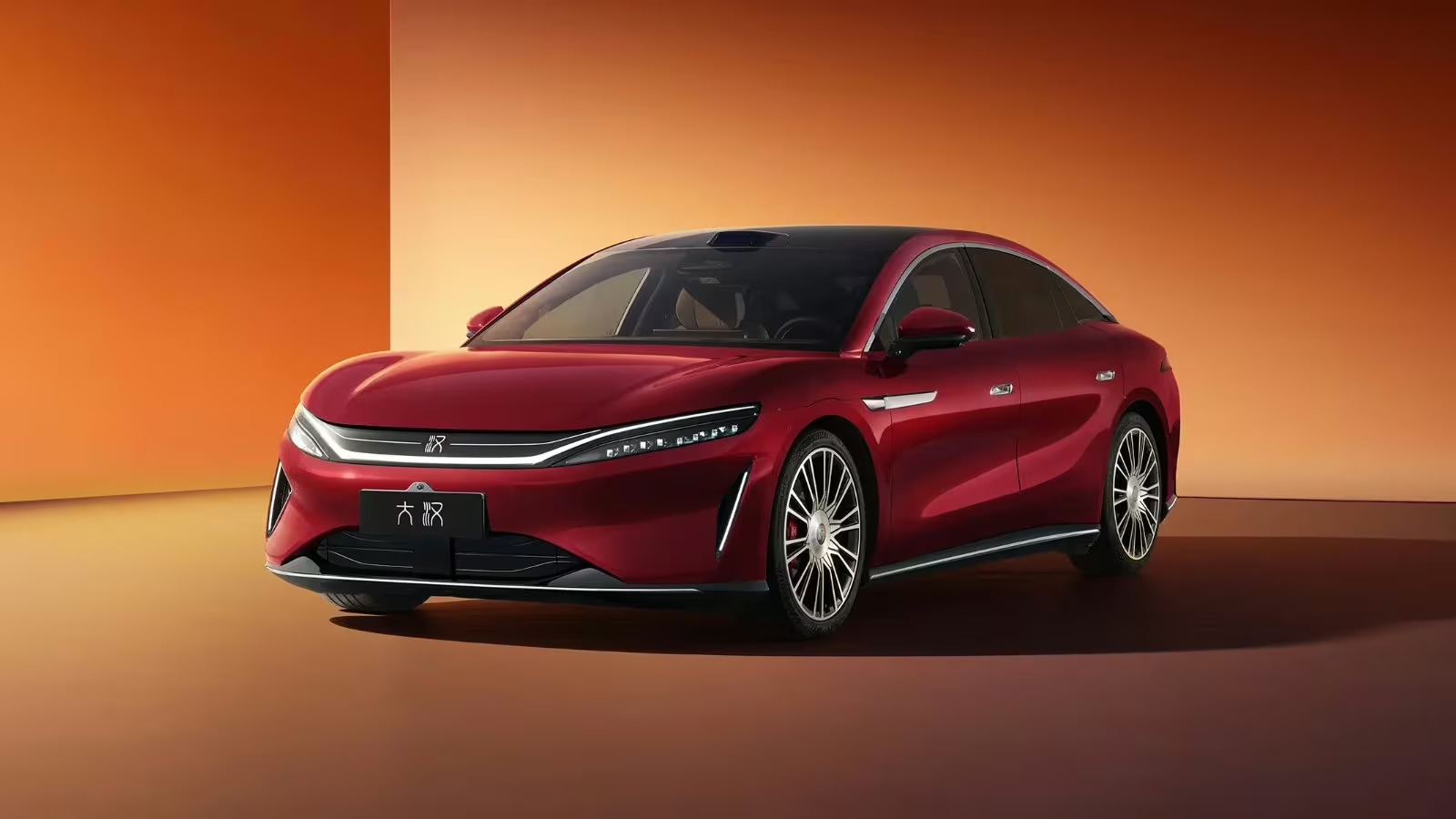
BYD Da Han EV Pricing and Variants
The BYD Da Han EV launched in three configurations, with final prices substantially below the levels announced during pre-sales at the Chengdu Auto Show on August 21.
| Variant | Drive Configuration | CLTC Range | Price |
|---|---|---|---|
| LiDAR Premium | Rear-wheel drive | 1,008 km | 235,900 yuan |
| LiDAR Flagship | Rear-wheel drive | 1,008 km | 249,900 yuan |
| LiDAR Flagship | All-wheel drive | 880 km | 275,900 yuan |
The final prices are 14,000 yuan, 20,000 yuan and 24,000 yuan lower than the respective pre-sales prices.
BYD has also introduced purchase incentives, including one year of free flash charging. Trade-in subsidies amount to 10,000 yuan for existing BYD owners and 6,000 yuan for customers trading in vehicles from other brands.
The launch covers the battery-electric versions. Although BYD has previously filed for regulatory approval of a plug-in hybrid version, pricing for that configuration was not announced at this event.
Dimensions and Aerodynamic Design
The Da Han EV is a large five-seat sedan with dimensions designed to support passenger space and high-speed efficiency.
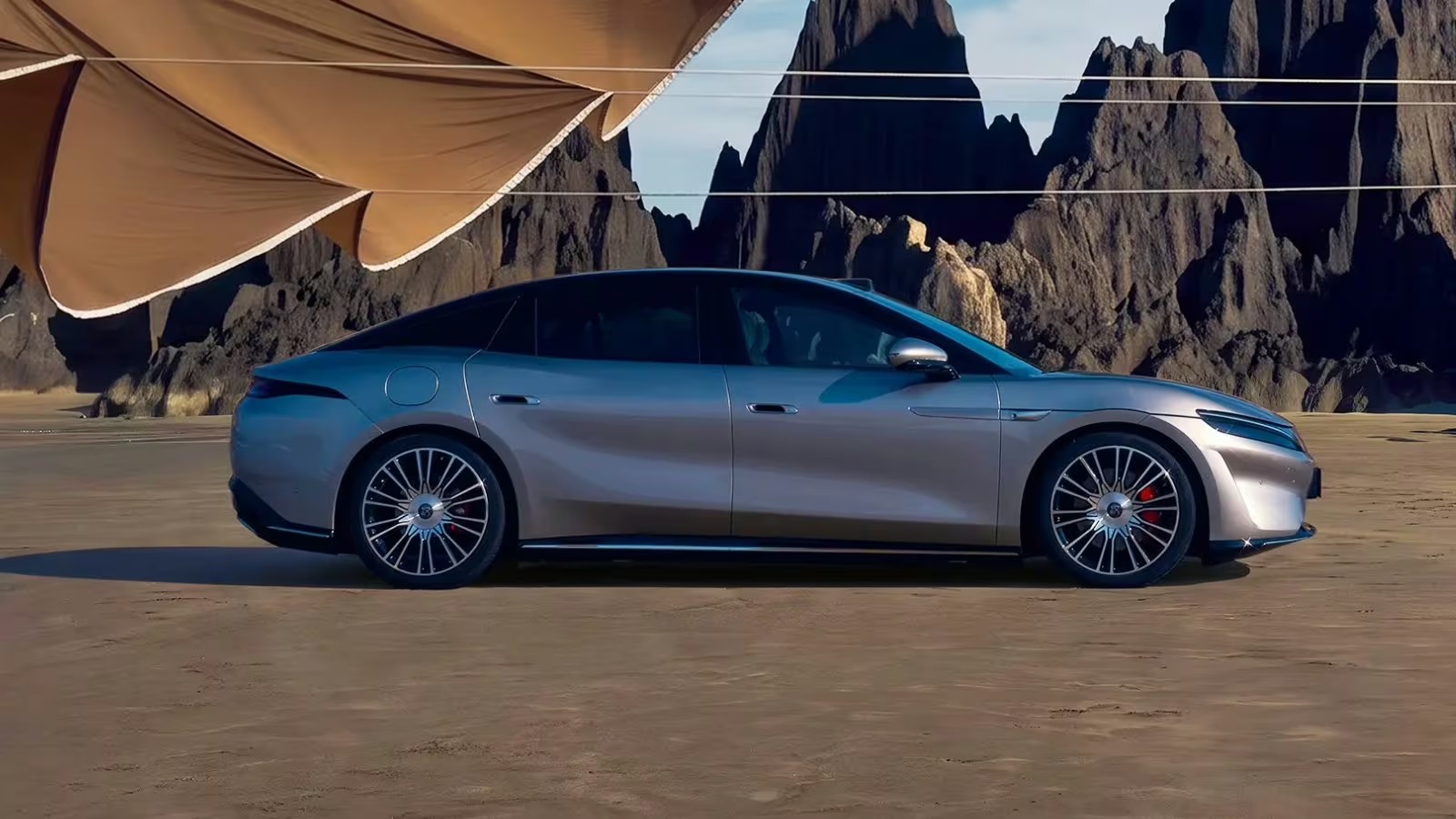
It measures 5,256 mm in length, 1,999 mm in width and 1,510 mm in height. The wheelbase reaches 3,130 mm.
One of its notable engineering features is a drag coefficient of 0.197. The low figure reflects an aerodynamic design intended to reduce resistance and help improve driving efficiency, particularly at higher speeds.
The sedan’s large footprint and extended wheelbase also provide the foundation for its premium interior and rear-passenger accommodation.
Second-Generation Blade Battery
All three Da Han EV variants use a 102.3 kWh second-generation Blade Battery.
The rear-wheel-drive configurations deliver a claimed CLTC range of 1,008 km, while the all-wheel-drive flagship offers up to 880 km.
The difference reflects the higher power output and additional motor hardware of the all-wheel-drive model.
The large battery capacity and aerodynamic bodywork form the core of the Da Han EV’s long-range proposition, positioning it for buyers who prioritize extended driving distances between charging stops.
Flash Charging Technology
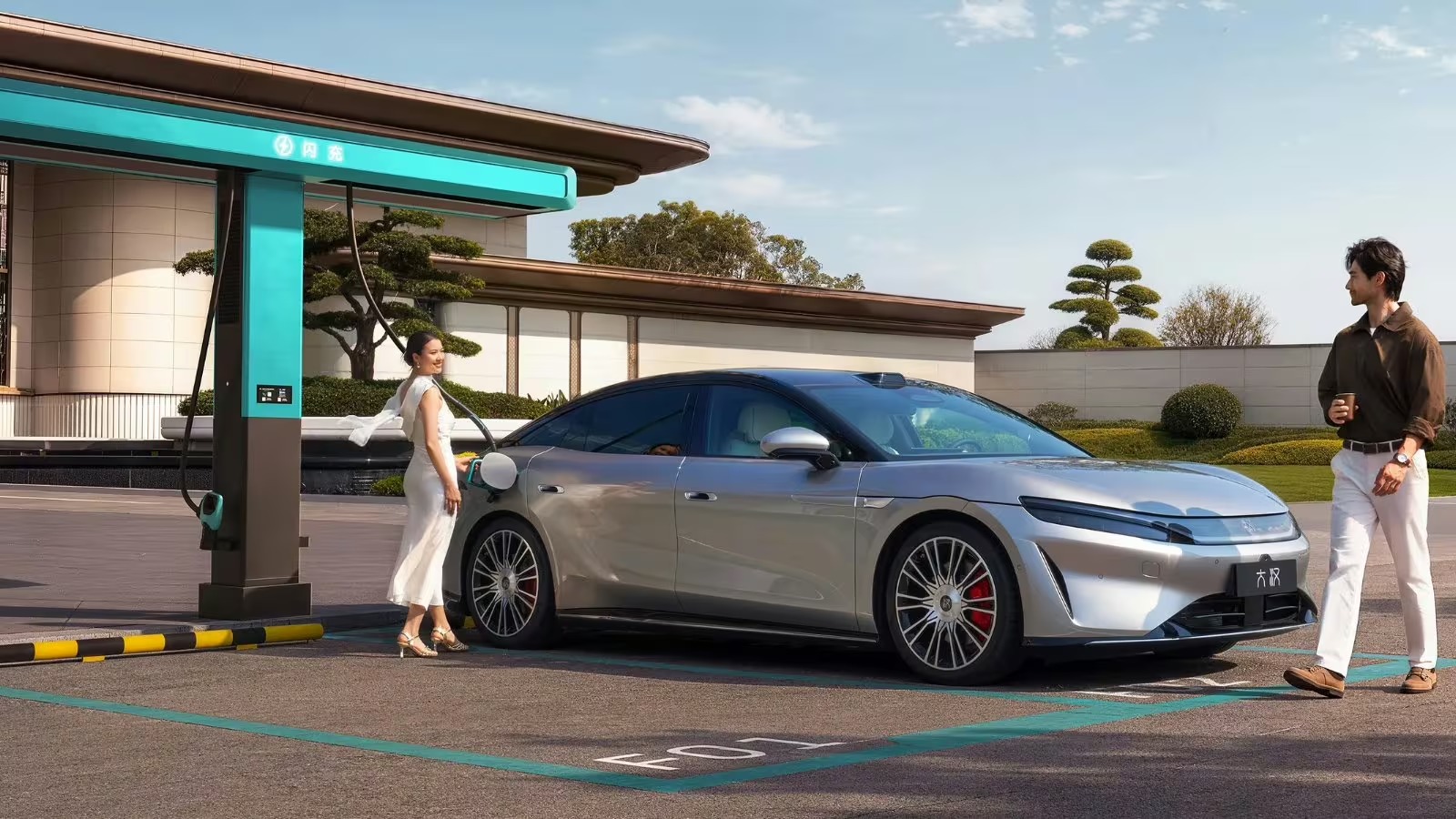
BYD says the Da Han EV can charge from 10% to 97% in approximately nine minutes using its flash-charging system under specified conditions.
In extremely cold weather at minus 30 degrees Celsius, the charging process takes approximately three minutes longer.
The system is designed to reduce charging downtime significantly. Actual charging performance will depend on charger compatibility, battery temperature, state of charge and other operating conditions.
BYD is also offering one year of free flash charging as part of its launch benefits, giving early buyers an additional ownership incentive.
Electric Powertrain and Performance
The two rear-wheel-drive variants use a single electric motor with a maximum output of 370 kW (496 hp).
These models accelerate from 0 to 100 km/h in 4.9 seconds, combining high output with the longest available driving range.
The all-wheel-drive variant adds a 200 kW front motor to the rear motor, increasing combined maximum output to 570 kW.
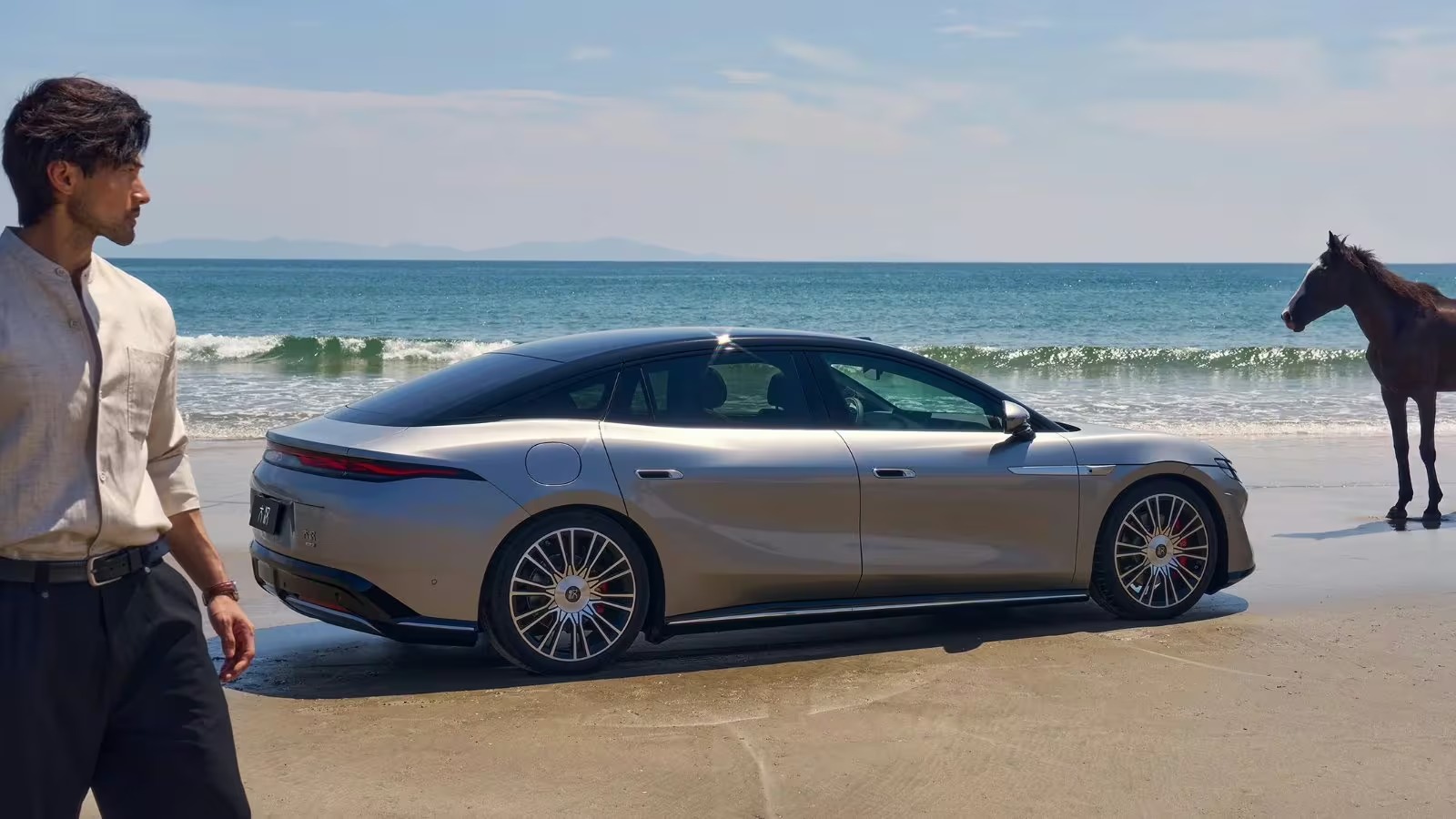
With this dual-motor configuration, the flagship completes the 0-to-100 km/h acceleration run in 3.3 seconds.
The three-variant lineup therefore offers a choice between maximum range and additional performance through all-wheel drive.
DiSus-A Suspension and Rear-Wheel Steering
The Da Han EV comes standard with DiSus-A dual-chamber air suspension across the lineup.
The system is paired with road-preview technology intended to help the suspension respond to upcoming road conditions, improving ride comfort and body control.
Rear-wheel steering is also standard. BYD states that the sedan has a minimum turning radius of 4.95 meters, helping improve maneuverability despite its relatively large dimensions.
Together, the suspension and steering systems are designed to balance comfort, handling and low-speed maneuverability.
God’s Eye B and God’s Eye 5.0 Driver Assistance
All Da Han EV variants feature BYD’s God’s Eye B LiDAR-based driver-assistance system and God’s Eye 5.0 capabilities.
The system supports navigation assistance on urban roads and highways, using LiDAR-based sensing and other vehicle sensors to help the driver manage different traffic conditions.

These functions are driver-assistance technologies rather than fully autonomous driving. Drivers must remain responsible for vehicle control and follow the operating requirements of the system.
Premium Interior and Comfort Features
The Da Han EV combines a technology-focused cabin with several comfort features associated with premium sedans.
Two front zero-gravity seats are included, while Nappa leather upholstery contributes to the upscale interior.
The audio system uses 31 Devialet speakers, providing a multi-speaker sound setup throughout the cabin.
Soft-close doors are fitted to all four doors, adding a convenience feature commonly associated with luxury vehicles.
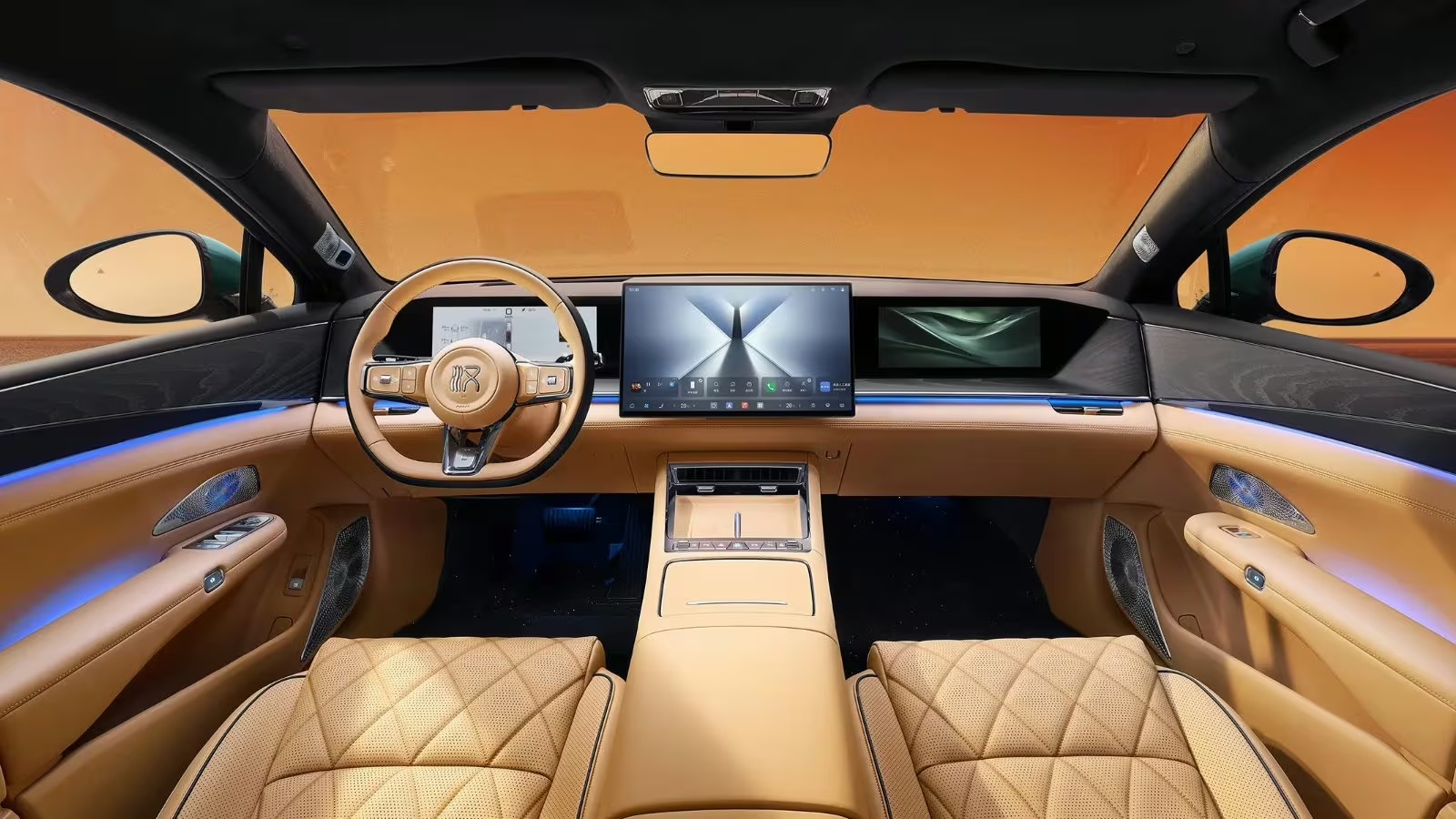
These features complement the sedan’s large dimensions and long wheelbase, positioning the Da Han EV as a premium alternative within BYD’s Dynasty range.
BYD Da Han EV Specifications at a Glance
| Specification | Da Han EV |
|---|---|
| Vehicle type | Flagship electric sedan |
| Seating capacity | 5 |
| Variants | 3 |
| Battery capacity | 102.3 kWh |
| Battery technology | Second-generation Blade Battery |
| Length | 5,256 mm |
| Width | 1,999 mm |
| Height | 1,510 mm |
| Wheelbase | 3,130 mm |
| Drag coefficient | 0.197 |
| RWD motor output | 370 kW |
| AWD combined output | 570 kW |
| RWD acceleration, 0-100 km/h | 4.9 seconds |
| AWD acceleration, 0-100 km/h | 3.3 seconds |
| Maximum CLTC range | 1,008 km |
| AWD CLTC range | 880 km |
| Flash charging, 10%-97% | About 9 minutes |
| Cold-weather charging at -30°C | About 12 minutes |
| Suspension | DiSus-A dual-chamber air suspension |
| Rear-wheel steering | Standard |
| Minimum turning radius | 4.95 m |
| Driver assistance | God’s Eye B / God’s Eye 5.0 |
| Audio system | 31-speaker Devialet |
| Front seats | Zero-gravity |
| Upholstery | Nappa leather |
| Door feature | Four soft-close doors |
Position in the BYD Dynasty Lineup
The Da Han EV sits above the existing Han in BYD’s Dynasty family of vehicles. It follows the Da Tang SUV as another model intended to raise the lineup’s positioning in the market.
The launch reflects BYD’s strategy of expanding beyond its established high-volume models with vehicles offering longer driving range, advanced chassis systems and more premium equipment.
The sedan’s combination of a large battery, high-output powertrain options and rapid charging is designed to appeal to buyers seeking a long-range electric vehicle with luxury-oriented features.
Conclusion
The BYD Da Han EV combines a 102.3 kWh second-generation Blade Battery with an aerodynamic body, high-performance motors and advanced chassis technology.
Its rear-wheel-drive variants offer up to 1,008 km of claimed CLTC range, while the all-wheel-drive flagship produces 570 kW and accelerates from 0 to 100 km/h in 3.3 seconds. The flash-charging system, DiSus-A suspension, rear-wheel steering and God’s Eye driver-assistance technology further distinguish the sedan.
With launch prices starting at 235,900 yuan, the Da Han EV expands BYD’s Dynasty lineup into the premium electric sedan category, offering a combination of long-distance capability, rapid charging and comfort-focused equipment.