



TomTom and Chinese automated-driving technology provider DeepRoute.ai have signed a memorandum of understanding (MoU) to collaborate on artificial intelligence-based driving systems, building on earlier integration of TomTom’s location data into DeepRoute.ai’s driving software.
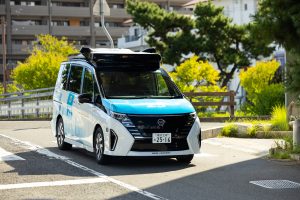
A demonstration vehicle equipped with the combined technology is offering test drives on public roads in Paris during the Paris Motor Show 2026. The collaboration focuses on supporting Level 2+ and Level 2++ advanced driver-assistance functions, which require drivers to remain responsible for supervision and control as applicable to the system’s capabilities.
The companies aim to combine onboard sensor information with location data covering road geometry, local traffic regulations and wider driving context. They say this additional information can help automated-driving software plan ahead, particularly when operating on unfamiliar roads.
Supporting Automated Driving Across Markets
Adapting automated-driving systems for international markets presents challenges because road layouts, traffic regulations, driving behavior and validation requirements vary between countries.
TomTom’s location data could provide contextual information to help DeepRoute.ai adapt its software to these differences. Incorporating road characteristics and regulatory information into the driving system may reduce some of the work required to prepare it for deployment in new markets.
The companies are targeting L2+ and L2++ functions, where location intelligence can supplement information collected by onboard cameras and other sensors. The precise capabilities of the combined system and the extent of its deployment have not been disclosed.
Willem Strijbosch, Head of Orbis Product Management at TomTom, said:
Automated driving systems are becoming increasingly advanced and safer by building on a reliable understanding of the physical world. As these AI-driven technologies evolve, they need a scalable, dependable understanding of real-world environments that can adapt to local road conditions. DeepRoute and TomTom’s cooperation is speeding up the safe roll-out of automated driving across different markets.
DeepRoute.ai’s International Expansion
The agreement supports DeepRoute.ai’s efforts to expand beyond China as domestic automated-driving suppliers seek opportunities with automakers in overseas markets.
For these suppliers, international expansion involves more than transferring existing software. Systems must be adapted and validated for different road environments, regulatory frameworks and vehicle platforms.
TomTom’s location technology could provide an additional layer of regional context for that process. However, the MoU does not include announced commercial terms, and the companies have not identified an automaker customer or confirmed a production deployment.
In a statement, Xuan Liu, Partner at DeepRoute.ai, said:
As we accelerate our global expansion, partnering with a world-class location technology provider like TomTom is a crucial milestone. By combining our advanced AI driving stack with TomTom’s rich location intelligence, we can better help automakers navigate complex and unfamiliar regulatory and physical environments abroad, bringing safe and scalable automated driving to drivers worldwide faster.
Location Data and System Localisation
The partnership also highlights the role of mapping and location data in adapting automated-driving technology across borders.
Some developers have pursued approaches that rely heavily on onboard sensors rather than detailed high-definition maps. However, road geometry, traffic rules and local driving conditions can still create challenges when systems enter unfamiliar markets.
Location data can provide information about the road environment beyond the immediate field of view of a vehicle’s sensors. Its potential contribution will depend on data coverage, accuracy, update frequency and how effectively the driving software incorporates that information.
For TomTom, collaboration with automated-driving developers offers a way to apply its location technology to advanced driver-assistance systems. For DeepRoute.ai, the arrangement provides access to location information that may help with international system adaptation.
Regulatory and Data Considerations
The collaboration also raises questions about how automakers and regulators will assess cross-border automated-driving systems, particularly when software and location data come from providers based in different jurisdictions.
Data security, privacy, software oversight and regulatory compliance may influence adoption in individual markets. Requirements can differ between countries, meaning the use of a European location-data provider does not by itself resolve every regulatory or security consideration associated with a driving system.
The agreement remains at the MoU stage. Further details about commercial deployment, automaker partnerships, system validation and market availability have not been announced.


