
Electric company fleets are becoming increasingly common across Europe, with more than half of businesses planning to expand their battery-electric vehicle (BEV) adoption within the next two years, according to a new study by DKV Mobility.
The 15-page report, titled “E-mobility in companies: Where Europe stands – and what is slowing down expansion,” is based on a survey of 1,732 fleet managers across eight European markets, conducted by Innofact AG in November 2025.
“Our report clearly shows that electrification in European companies is accelerating. At the same time, it becomes evident that transforming corporate fleets remains a complex strategic task for many businesses,” said Sven Mehringer, Managing Director responsible for Energy & Vehicle Services at DKV Mobility.
The survey covers Germany, France, Italy, Netherlands, Spain, Poland, Czech Republic and Romania, providing a broad snapshot of fleet electrification trends across the region.
Despite growing adoption, conventional drivetrains still dominate. Diesel remains the most common fuel type, followed by petrol, although electrified options—battery-electric vehicles and plug-in hybrids—are steadily gaining ground.
The Netherlands leads in EV adoption among surveyed countries, with 21% of corporate fleets already consisting of electric vehicles and 16% plug-in hybrids. In Germany, electric vehicles account for 16% of fleets, alongside 36% diesel and 32% petrol vehicles, placing it in the upper mid-range across Europe.
In other markets, EV shares range between 6% and 15%, with companies in Central and Eastern Europe still relying more heavily on conventional and hybrid drivetrains.
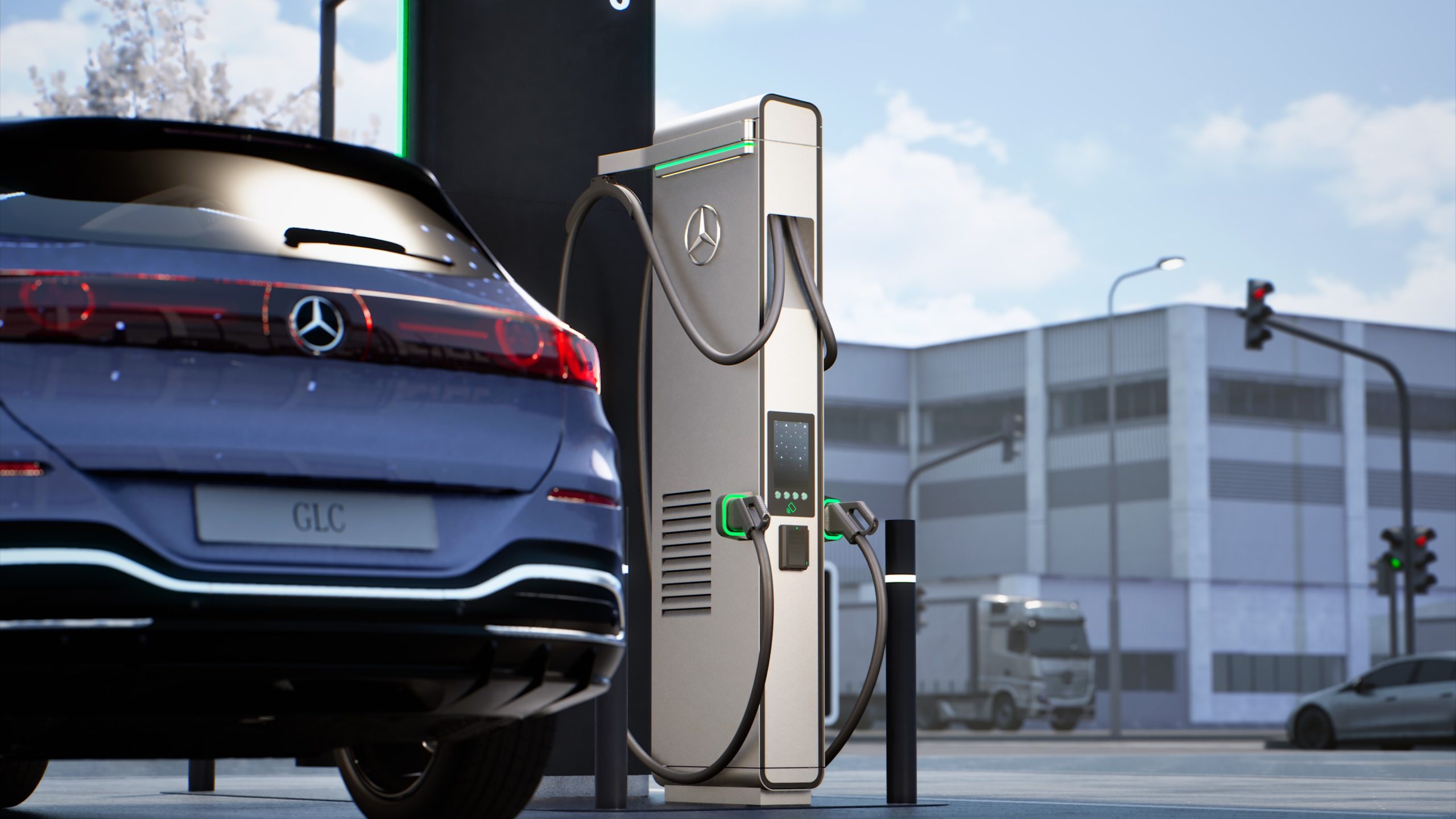
A key finding of the study is the widespread investment in private charging infrastructure. Around nine out of ten companies operating electric vehicles already have charging solutions installed on-site, with most planning further expansion.
“At the same time, many companies are investing in their own charging solutions. Today, around nine out of ten companies with electric vehicles already operate charging infrastructure on their premises. A clear majority also plans to further expand this infrastructure over the next two years,” the report states.
While fast chargers are generally preferred across Europe, Germany stands out as an exception, where companies more frequently install wall boxes instead. Across markets, respondents agreed that public fast-charging infrastructure still needs significant expansion.
The study identifies three main barriers to further electrification: high acquisition costs, rising electricity prices and concerns over driving range. Companies also cited insufficient public charging infrastructure as a limiting factor, with economic considerations particularly prominent in Germany.
“Companies identify three main barriers to further electrification: high purchase costs, rising electricity prices, and the perceived limited range of electric vehicles,” the study’s authors wrote.
Despite these challenges, momentum is building. Around 56% of surveyed companies plan to add more battery-electric vehicles within two years, while larger firms and transport-sector businesses are leading the transition.
Germany shows strong intent, with 53% of companies planning new EV purchases, while Romania stands out with 74%. Across all surveyed countries, about two-thirds of large companies intend to expand their electric fleets.
“Many companies have clearly committed to electrifying their fleets. The decisive factor now will be whether key framework conditions, such as costs, energy prices and infrastructure can keep pace with this momentum,” Mehringer said.