

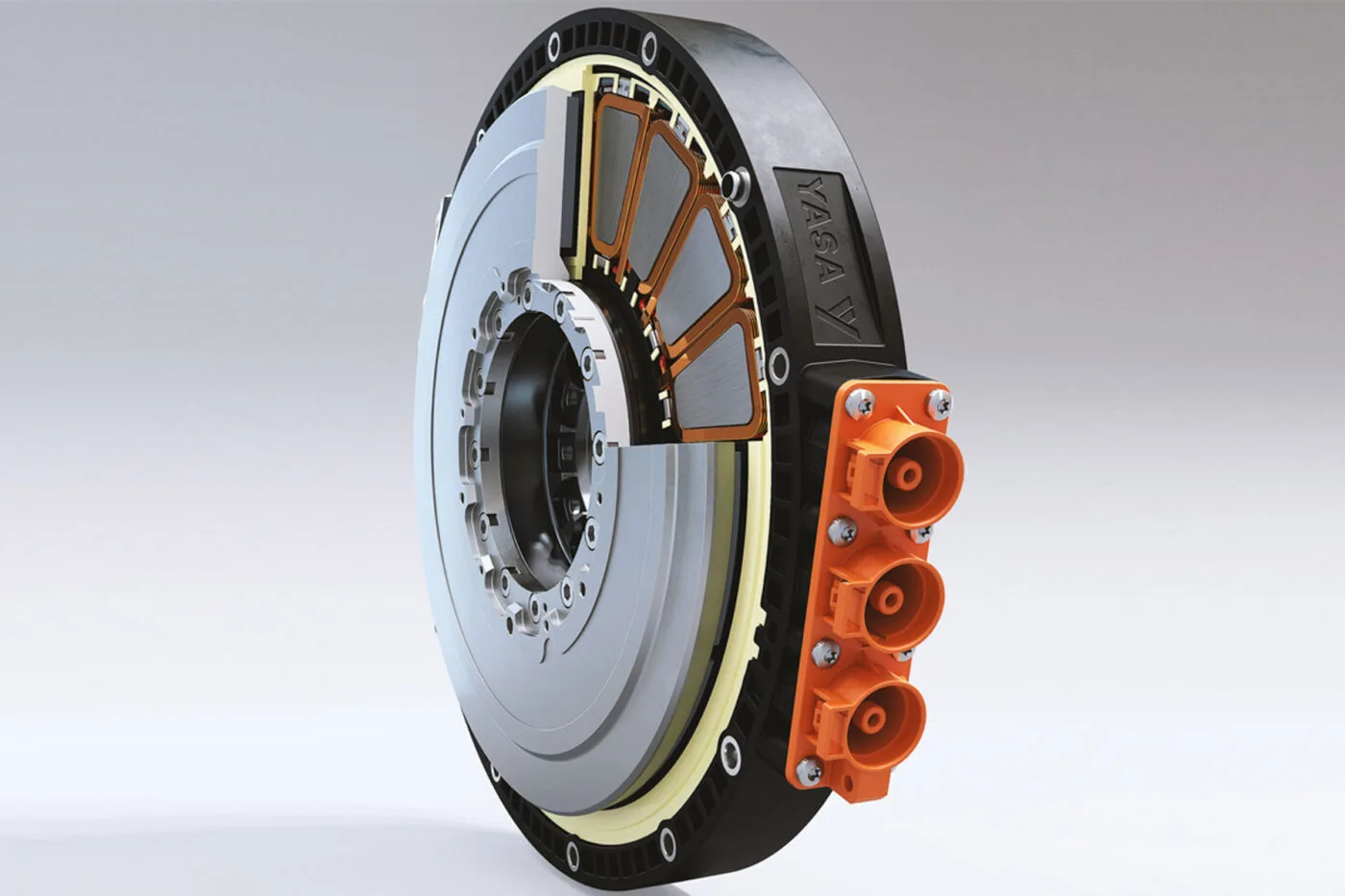
The EU-funded MAXIMA project has announced the completion of its first development milestones as it works to create a cost-effective axial flux motor for electric vehicles with reduced reliance on permanent magnets.
The project, formally known as Modular AXIal flux Motor for Automotive, was launched in 2023 with funding of 5.5 million euros from the European Union.
MAXIMA aims to develop compact, high-performance electric motors while improving recyclability and reducing dependence on critical raw materials used in conventional motor designs.
See also: Mercedes-Owned Yasa Develops Prototype In-Wheel Drive for High-Performance EVs
Axial flux motors differ from traditional radial flux motors in the orientation of their magnetic fields. In axial flux systems, the magnetic field is aligned along the rotational axis of the motor rather than across the radius, enabling higher power density and more compact packaging.
Because of their disc-shaped design, axial flux motors are sometimes referred to as “pancake motors.”
The technology has so far mainly been used in high-performance hybrid sports cars from brands including Ferrari and Lamborghini.
Many of those motors were supplied by British electric motor specialist Yasa, which is now owned by Mercedes-Benz.
See also: Mercedes-Benz-Owned Yasa Produces 50,000th Axial-Flux Electric Motor
Mercedes-AMG is expected to introduce axial flux motors in its upcoming electric AMG GT model later this year. The automaker previously used three such motors in the AMG GT XX test vehicle, which set multiple performance records in 2025.
MAXIMA’s goal is to make axial flux technology more accessible for broader automotive applications beyond premium sports cars.
“MAXIMA has established a pioneering multiphysics design and analysis platform that enables manufacturers and engineers to account for electromagnetic, structural and thermal performance, as well as recyclability, from day one,” Stéphane Clénet from Arts et Métiers ParisTech, the project coordinator, said in a statement.
The project team said it has also developed a digital twin system capable of monitoring motor performance in real time, supporting predictive maintenance and adaptive control functions.
See also: Yasa Sets Unofficial World Record for Electric Motor Power Density at 59 kW/kg
According to MAXIMA, the technology could improve motor efficiency, durability and operational reliability under real-world driving conditions.
The next phase of the programme will involve building and testing several motor prototypes in realistic vehicle environments.
The consortium has additionally begun developing recycling methods for neodymium-iron-boron magnets, including processes to recover, clean and prepare the materials for reuse.
The project is scheduled to continue until January 2027 and aims to support Europe’s transition toward a circular economy and greater strategic autonomy in electric vehicle technologies.
See also: Mercedes-Owned Yasa Claims Record-Breaking Power Density for Electric Motor Prototype
“In doing so, it will strengthen Europe’s global leadership in sustainable electrification technologies, creating long-term industrial, environmental and societal benefits,” Clénet said.
The MAXIMA consortium includes 11 companies and research organisations from across Europe, including Stellantis and Nidec PSA Emotors, the electric motor joint venture between Stellantis and Japanese motor manufacturer Nidec.