
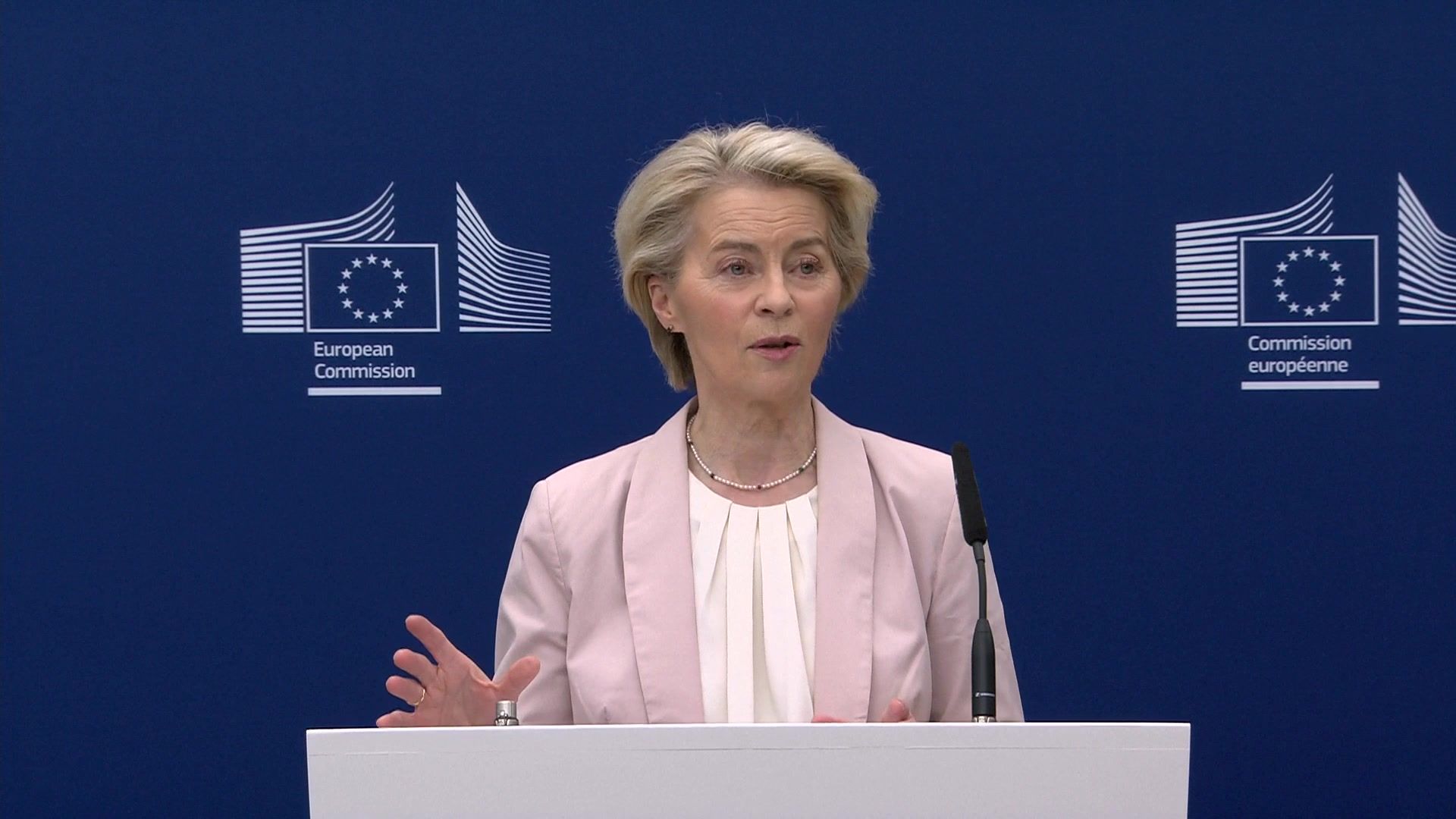
The European Commission is considering allowing car manufacturers additional time to meet CO2 emissions targets, while also exploring new subsidies for battery production, Commission President Ursula von der Leyen said ahead of the official release of the EU’s Strategic Dialogue on the Future of the Automotive Industry.
Von der Leyen proposed that automakers could comply with the 2025 CO2 target over three years instead of by 2025 alone, provided the European Parliament and member states agree. “Instead of annual compliance, companies will get three years – this is the principle of banking and borrowing; the targets stay the same; they have to fulfil the targets,” von der Leyen said.
See also: EU to Unveil Measures to Boost EV Demand, Strengthen Battery Production
The move comes amid concerns that carmakers under economic strain could face significant fines if they fail to meet emissions limits. Last year, industry voices had already called for more flexibility, suggesting that manufacturers be allowed to offset CO2 target overruns in 2025 against future compliance. “There is a clear demand for more flexibility on CO2 targets. The key principle here is balance,” von der Leyen said, emphasizing the need to support both early adopters and companies seeking more pragmatic policies.
Von der Leyen also suggested that the EU might reconsider its planned phase-out of fossil-fuel-powered vehicles by 2035. “We want to speed up work on the 2035 review, with full technology neutrality as a core principle,” she said. More details are expected on Wednesday when Transport Commissioner Apostolos Tzitzikostas presents the Commission’s automotive industry action plan.
See also: EU Commission Allocates €422 Million for Charging and Hydrogen Infrastructure Projects
Additionally, the Commission is looking into direct financial support for EU battery manufacturers. “We need European car supply chains to be more robust and more resilient, especially when it comes to batteries. Here, we have a challenge,” von der Leyen said. “Because while our own production is in the process of scaling up, we see that imported batteries are cheaper. We cannot let EVs become more expensive. But we also cannot afford to create new dependencies.”
The proposed support measures may include European content requirements for battery components, akin to the United States’ Inflation Reduction Act. However, no specific timeline has been set for the battery subsidy programme or potential adjustments to the 2035 combustion engine phase-out.
See also: EU Mulls Possible Revisions to 2035 Combustion Engine Ban Amid Industry Lobbying
With flexibility on emissions targets and fresh discussions on technological neutrality, it remains unclear how the EU plans to balance regulatory adjustments with its broader climate objectives.
Source: ec.europa.eu