
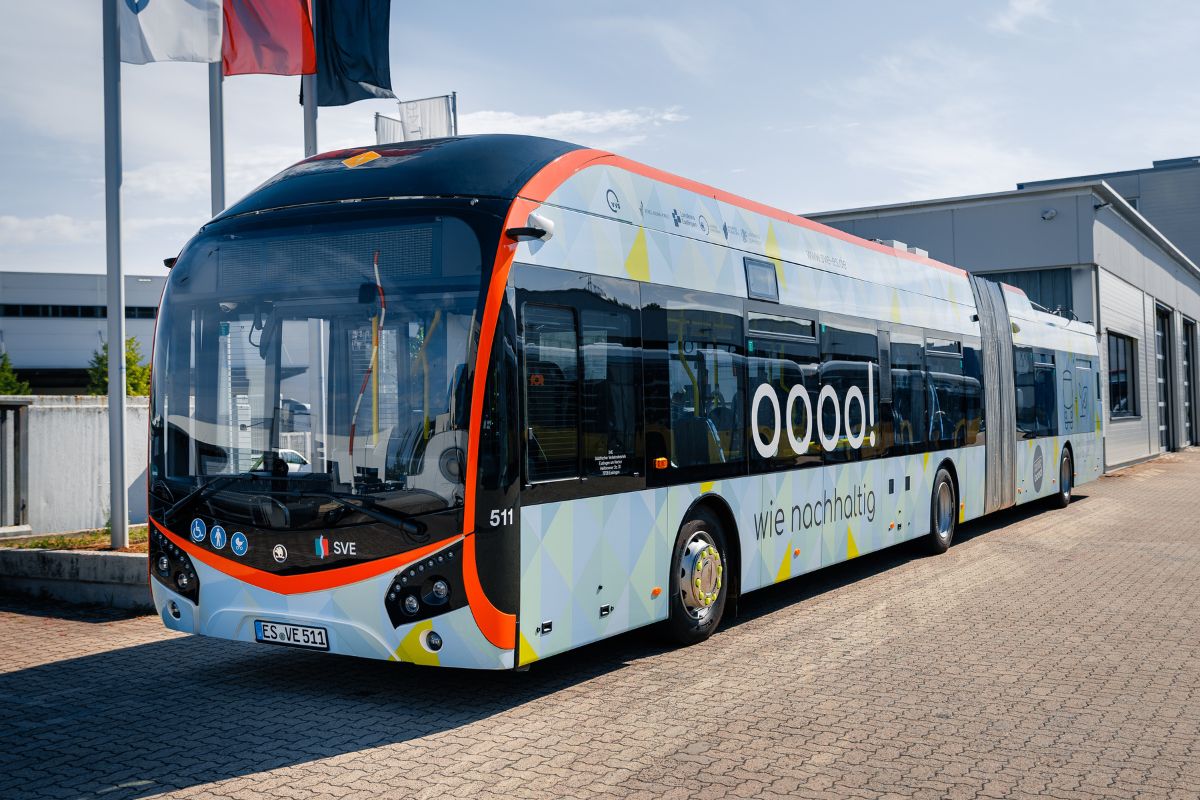
Esslingen has taken delivery of its first two battery-trolleybuses from Skoda Group as the German city moves forward with plans to fully electrify its urban bus network by the end of 2026.
The new vehicles are part of an order for 52 battery-trolleybuses that will replace conventional buses while expanding the use of electric public transport across the city.
Skoda Group Signs Framework Agreement to Deliver Up to 30 Articulated Trolleybuses to Ústí nad Labem
First Vehicles Delivered
The procurement includes ten 12-metre Skoda 32Tr solo trolleybuses and 42 articulated Skoda 33Tr models, with all deliveries scheduled to be completed by the end of 2026. The agreement also includes an option to purchase an additional nine vehicles.
The battery-trolleybuses combine conventional overhead wire operation with battery-electric driving.
While operating beneath overhead lines, the buses draw electricity directly from the grid while simultaneously recharging their onboard batteries. On sections of route without overhead infrastructure, they can continue operating solely on battery power for distances of up to 25 kilometres.
The solo buses are equipped with 135 kWh battery packs, while the articulated models feature 156 kWh batteries and dual driven axles.
Skoda Group Wins €56 Million Deal to Supply 75 Trolleybuses to Sofia
Network Expansion Underway
Alongside the fleet renewal, Esslingen is extending its trolleybus overhead line network by approximately five kilometres, increasing the existing system from around 29 kilometres.
The city is investing more than €64 million in the electrification programme.
Federal funding of approximately €27 million will support the purchase of 42 buses and the expansion of the overhead line infrastructure, while the state of Baden-Württemberg is contributing €1.43 million toward the acquisition of six additional vehicles.
Skoda Group to Deliver Up to 16 Battery-Powered Trolleybuses to Ostrava
Fully Electric Operations by 2026
Esslingen’s approach builds on its long-established trolleybus network by combining overhead-powered operation with battery-electric capability, reducing the need to install overhead lines across every route.
Using renewable electricity supplied by municipal utility subsidiary grün ES, the city plans to operate its entire urban bus network using electric propulsion by the end of 2026.
The project highlights the growing role of battery-trolleybuses as a solution for cities seeking to electrify public transport while limiting infrastructure costs by extending existing trolleybus networks with battery-powered operation.