
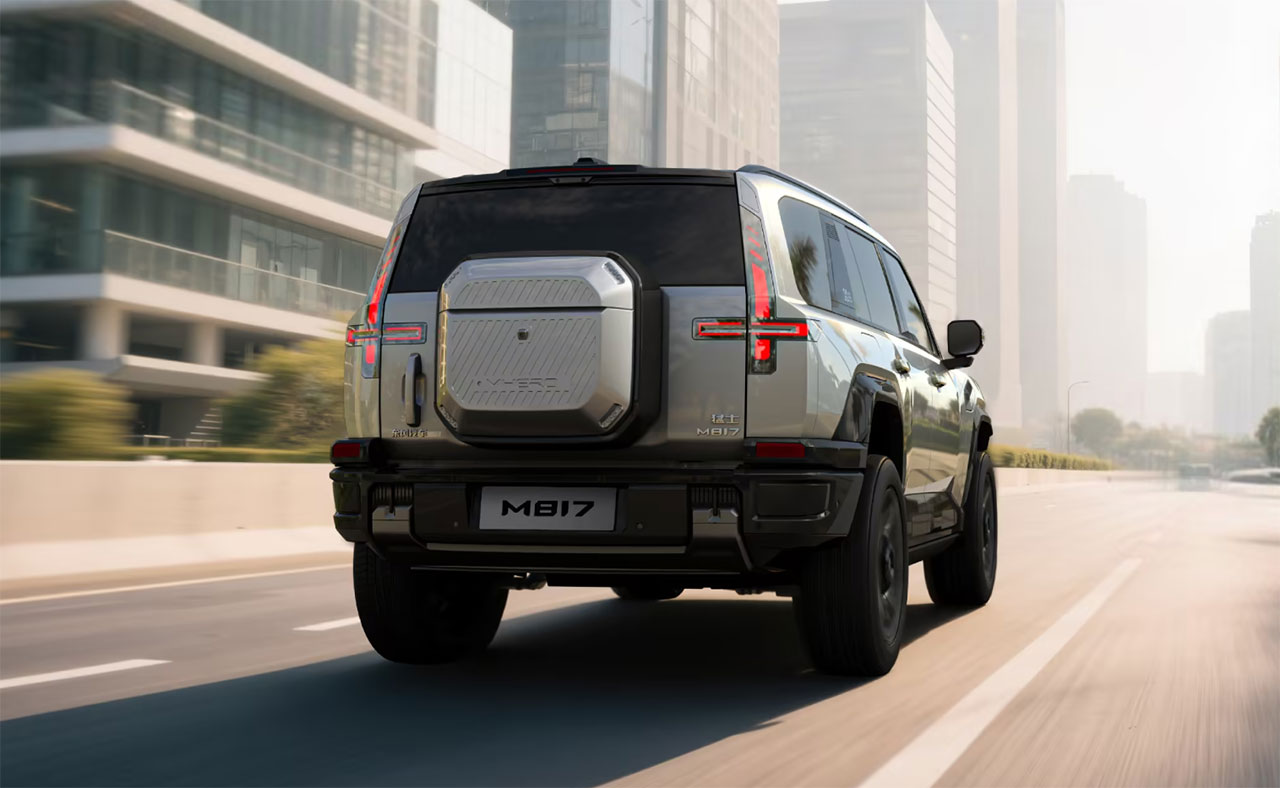
China’s Dongfeng Motor has unveiled a new strategy to accelerate its transition toward high-tech electric vehicles, with plans to launch solid-state battery models capable of delivering up to 1,000 kilometers of driving range by 2026. The move comes as the automaker consolidates its eπ, Fengshen, and Nano brands into a new subsidiary, Dongfeng eπ Technology.
The reorganization, announced during a company event in Wuhan, establishes two distinct product pillars under Dongfeng Motor. Dongfeng eπ will focus on advanced new-energy vehicles, while Dongfeng Fengshen will continue to develop internal combustion engine and hybrid models. The strategy is aimed at strengthening the company’s position in both traditional and future mobility markets.
Dongfeng’s upcoming electric vehicles will leverage a next-generation high-voltage architecture exceeding 1,000 volts and equipped with a 1,700 V silicon-carbide power module. The system supports a peak 12C charging rate and integrates a 30,000 rpm electric motor. A new fast-charging infrastructure under development is expected to deliver 450 kilometers of range in just five minutes.
The company’s future EVs will feature solid-state battery technology incorporating silicon-carbon and high-nickel materials with solid electrolytes. These packs are designed to offer higher energy density and improved thermal stability compared to conventional lithium-ion batteries. The first production vehicle using this platform is scheduled for 2026.
Dongfeng eπ Technology will introduce two model lines: the Mainstream Technology Series and the Smart Premium Series. The former targets younger consumers with models such as the Nano 01, Nano 06, eπ 007, and eπ 008, while the premium lineup, co-developed with Huawei, will debut in 2026 with a full-size SUV powered by HarmonyOS 5 and advanced driver assistance features.
Dongfeng Fengshen will continue producing small- and midsize models, with plans to launch or refresh at least two models annually, reaching ten models by 2028. Dongfeng eπ Technology also aims to develop over 30 export models and establish a global retail network of 2,000 outlets by 2027.
Source: CarNewsChina