
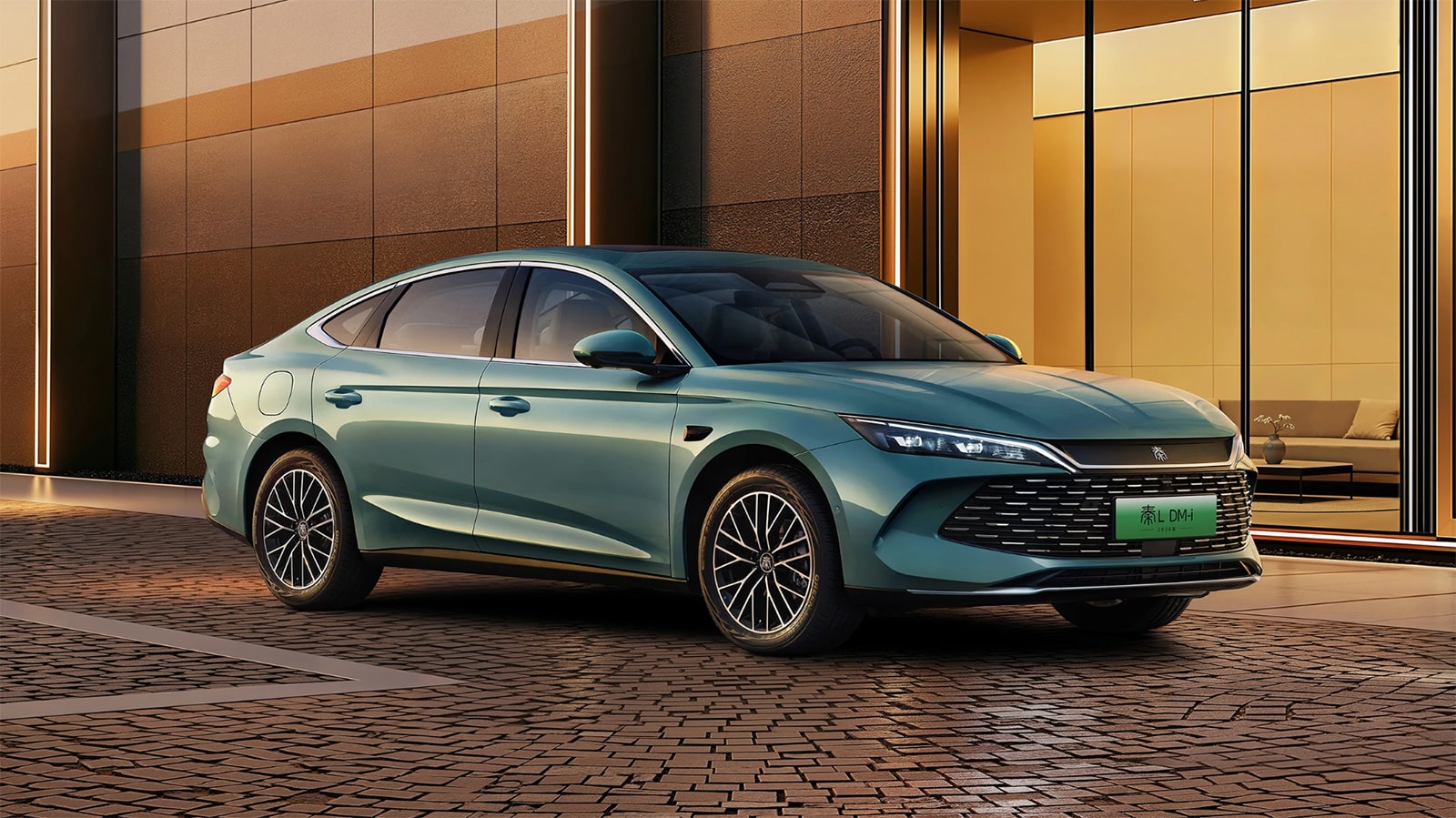
China’s Ministry of Industry and Information Technology (MIIT) has identified compliance issues involving Geely Auto’s Xingyuan and BYD’s Qin L DM-i as part of its 2025 new energy vehicle (NEV) production conformity inspections.
MIIT released the inspection results on Friday, identifying problems involving seven vehicle models. The regulator disclosed vehicle identification codes rather than model names, but previous regulatory filings link two of the cases to Geely’s Xingyuan and BYD’s Qin L DM-i.
Geely Xingyuan Cited Over Wheelbase Discrepancy
The vehicle identified by MIIT as JL7001BEV71 corresponds to Geely’s Xingyuan, an all-electric sedan.
According to the regulator, the wheelbase of the inspected sample vehicle differed from the value recorded in its regulatory filing by more than the permitted 1% margin of error.
China Launches Yearlong Campaign to Strengthen EV and Vehicle Quality Oversight
The vehicle was manufactured by Zhejiang Haoqing Automobile Manufacturing Co Ltd, a Geely manufacturing entity.
MIIT did not disclose the exact wheelbase measurements or specify what regulatory action was taken against Geely in relation to the case.
BYD Qin L DM-i Fails Fuel Consumption Check
The second passenger vehicle identified in the inspection was the BYD7153WT6HEV plug-in hybrid sedan, which corresponds to the Qin L DM-i based on previous regulatory filings.
MIIT said the sample vehicle recorded higher fuel consumption in charge-sustaining (CS) mode than the level declared by the manufacturer.
China to Tighten EV Market Entry Rules Over Quality and Autonomous Driving Risks
The regulator did not disclose the sample vehicle’s actual fuel consumption, the size of the discrepancy or the specific Qin L DM-i variant involved.
It also did not specify the measures taken against BYD.
Five Commercial Vehicles Also Identified
The remaining five models cited in the inspection were commercial vehicles.
The reported issues included missing manuals, discrepancies between vehicle parameters and regulatory filings, and emergency windows and protective equipment that failed to meet national standards.
MIIT said the regulatory measures applied depended on the severity of each issue.
China Draft Law Would Make Automakers Handle Traffic Violations in Fully Autonomous Mode
Potential actions included requiring manufacturers to carry out rectification, suspending or revoking the listing of affected products in the regulator’s catalog, and suspending the electronic transmission of vehicle conformity certificates.
The inspection results form part of China’s broader efforts to strengthen production conformity and product quality oversight as the country’s NEV industry continues to expand.