
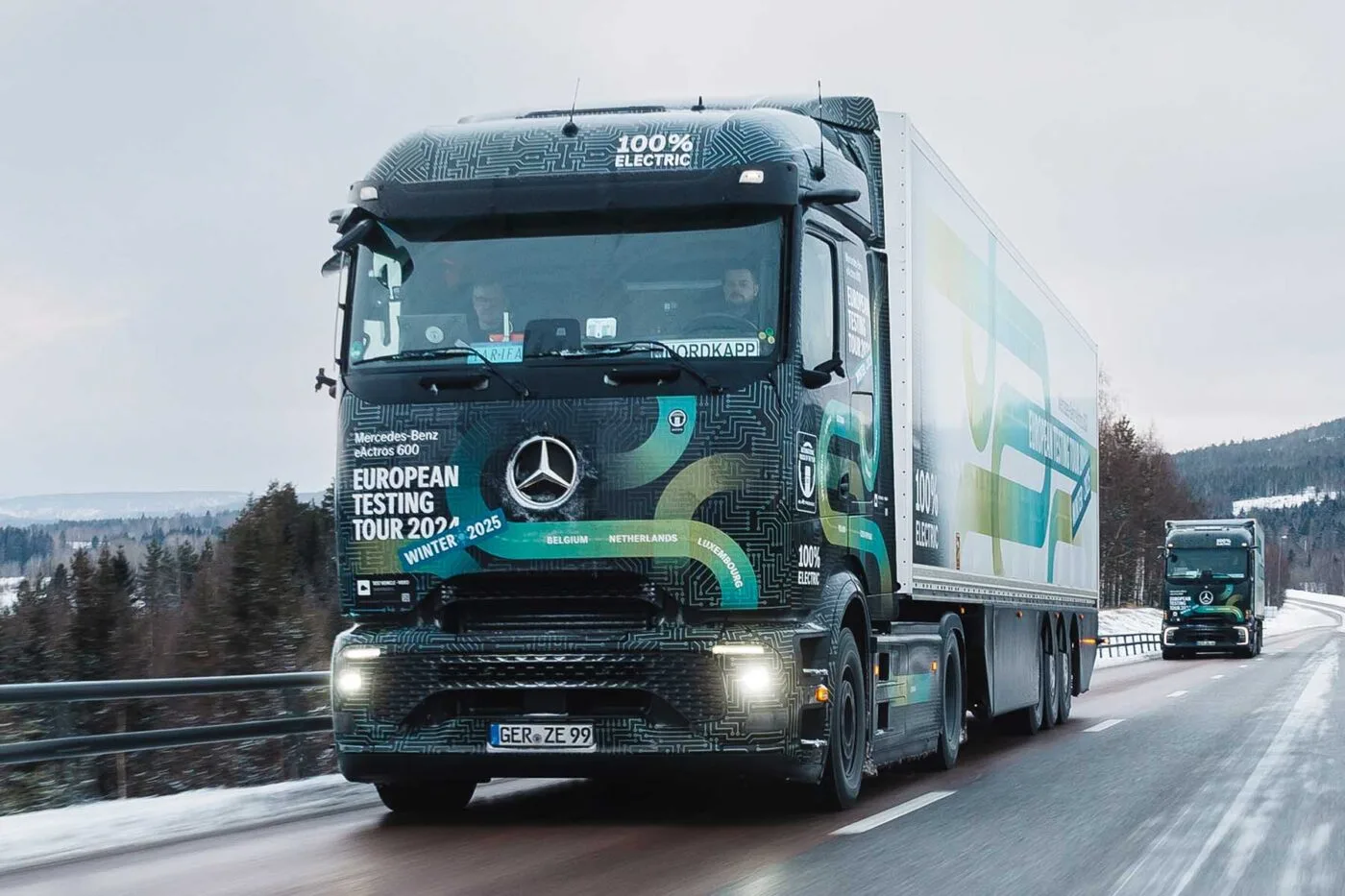
Daimler Truck announced a sweeping strategic shift under a new roadmap titled Stronger 2030, which includes the delay of its hydrogen truck launch to the early 2030s, potential outsourcing of electric truck production, and a plan to cut around 5,000 jobs in Germany by 2030. The moves come in response to what the company described as “unpredictable dynamics” in its core markets, including volatile energy prices, shifting subsidies, and varying rates of decarbonisation.
CEO Karin Rådström presented the strategy during Daimler Truck’s Capital Markets Day at its Cleveland, U.S. plant, stating the plan is aimed at boosting resilience and achieving an adjusted return on sales above 12% by 2030. “We have the strategy in place, and we are establishing the performance culture to achieve this ambition,” Rådström said. “When we do it right, it brings us to a profitability of more than 12% return on sales by 2030.”
The revised roadmap marks a clear pivot from Daimler Truck’s previous EV-first narrative. While still committed to CO₂-neutral transport by 2050 and to selling only zero-emission vehicles in Europe, Japan and North America from 2039, the company will now take what it calls a “pragmatic” and regionally flexible approach. This includes renewed investment in diesel platforms, especially in North America, where the “speed of zero-emission vehicle adoption has slowed,” according to management.
One of the most significant changes is the postponement of the hydrogen-powered GenH2 Truck, which had been scheduled to enter series production in 2027. The company cited slow development of hydrogen refueling infrastructure, saying pre-series customer trials launched in mid-2024 will continue, but volume production will now be pushed to the early 2030s and focused initially on Europe. “The expansion of hydrogen refuelling stations is progressing much more slowly than expected,” Daimler Truck said in a statement.
The Group’s modular strategy will involve flexible investment, new partnerships, and global scaling of technologies. “Depending on the transformation speed in different markets, we deliver the right technologies at the right time,” said Andreas Gorbach, head of Truck Technology. “This accounts for both diesel and zero-emission propulsion systems as well as for software and electronics in the truck.”
As part of the transformation, Daimler Truck plans to reduce fixed costs in Europe by over €1 billion by 2030. The “Cost Down Europe” programme will affect manufacturing, administration, R&D, IT, and procurement. In response to weak performance of the Mercedes-Benz Trucks brand, the company is also reviewing production volumes and locations, potentially shifting work outside Germany. However, Daimler Truck said redundancies for operational reasons are ruled out until the end of 2034, with job cuts to come mainly through natural attrition and early retirement.
The revised strategy will also impact the Amplify Cell Technologies battery joint venture with Paccar and Cummins’ Accelera division, which will now be “adapted to the market outlook.”
As part of the restructuring, Daimler Truck aims to scale zero-emission vehicle sales in Europe to over 25,000 units by 2030 while seeking new growth opportunities in defence and software through a joint venture with Volvo in vehicle electronics.