
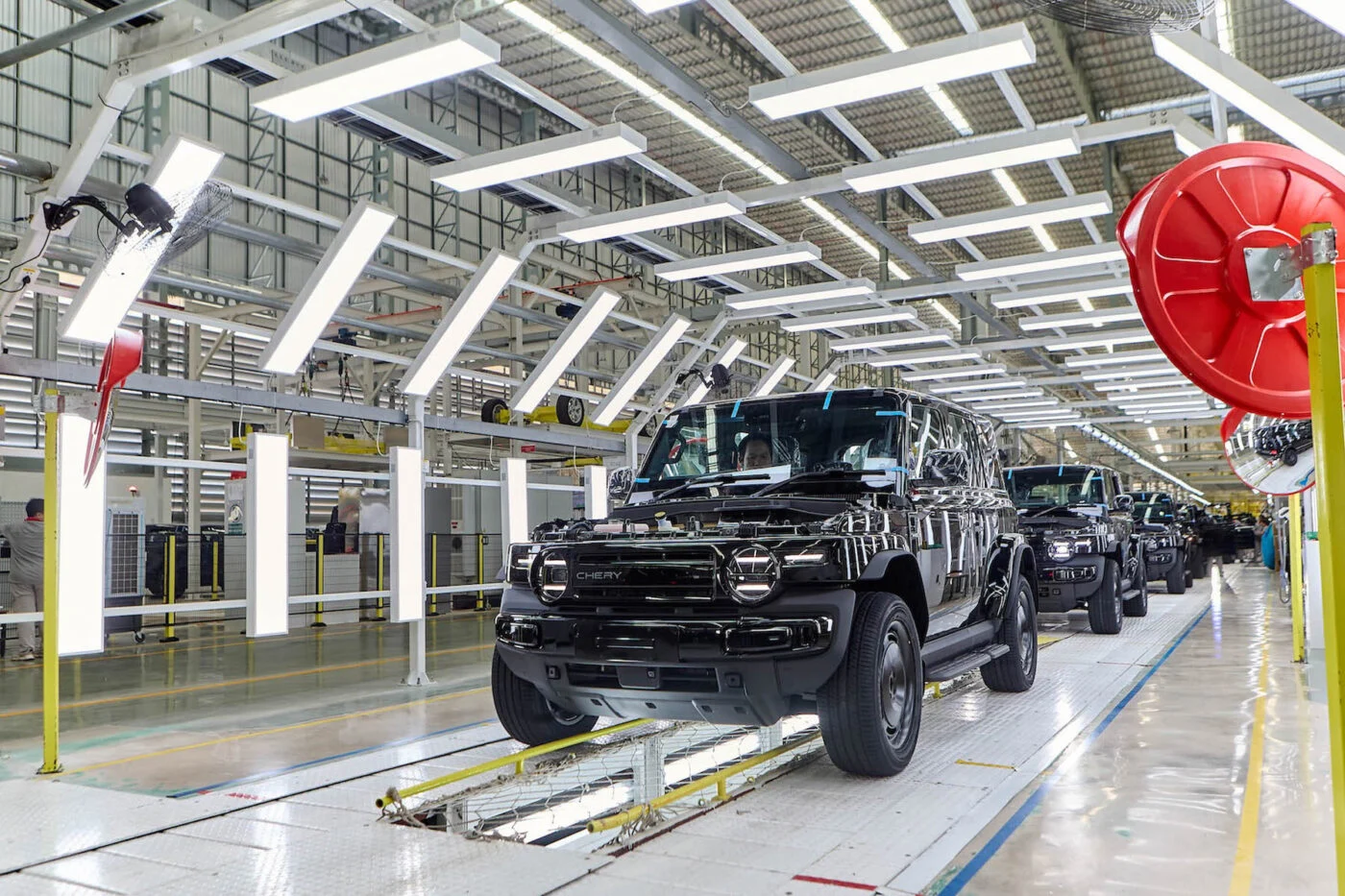
Chinese automaker Chery is considering establishing local vehicle production in Canada, extending its North American expansion plans beyond a proposed sales launch in 2027.
The company is evaluating options that include acquiring or using idle capacity at existing manufacturing facilities and building new factories with local partners, executive vice president Zhang Guibing said in an interview at Chery’s headquarters in Wuhu, Anhui province, according to Bloomberg on Friday.
Zhang said Canada could be a worthwhile market for manufacturing operations even without access to the United States. Chery is examining potential opportunities and discussing possible arrangements with prospective partners.
Chery Explores Factories and Local Partnerships
Chery is assessing unused production capacity at Canadian plants and holding discussions with local investors interested in working with Chinese automotive companies, Zhang said. He did not identify the facilities or investors involved.
The company is also considering investment from multiple parties to establish manufacturing operations through partnerships. Such an arrangement could help Chery enter the Canadian market while drawing on existing industrial infrastructure and local expertise.
A potential investment would align with Canada’s efforts to attract capital to its automotive sector. However, it could also create friction with the United States, where restrictions on Chinese electric vehicles and automotive technology remain a significant barrier to market entry.
According to Bloomberg, US officials have made clear that Chinese-brand vehicles would not be permitted to enter the US market through Canada.
Canada’s EV Import Policy Creates New Opportunities
Canada’s revised policy toward Chinese-made electric vehicles has opened a potential route for Chinese automakers to expand their presence in the country and prompted discussions about local manufacturing.
Under an agreement reached between Canada and China in January, an initial annual quota of 49,000 Chinese-made EVs can enter Canada at a most-favored-nation tariff rate of 6.1%. The quota is scheduled to increase annually.
The policy change has created an opening for Chinese manufacturers seeking access to the Canadian market. Local production could provide an additional route for companies to establish a longer-term presence, although the commercial and regulatory implications would depend on the structure of individual projects.
Canadian Industry Minister Melanie Joly visited China in June and met representatives from BYD, Geely and Chery. At the time, she said the companies were willing to explore joint ventures.
According to Bloomberg, Zhang said Chery vice president Charlie Zhang has maintained frequent contact with Joly as the company evaluates possible investment arrangements.
Overseas Manufacturing Supports Chery’s Expansion
The potential Canadian project forms part of Chery’s broader strategy to expand overseas manufacturing. Chinese automakers are increasingly pursuing local production to navigate trade barriers, establish regional supply chains and diversify revenue beyond their domestic market.
Chery has established a joint venture manufacturing plant in Spain and taken over a Nissan factory in South Africa, which it intends to use as a production hub for the African market. The company is also exploring vehicle production at Nissan’s Sunderland plant in the United Kingdom.
These initiatives reflect a wider shift among Chinese automakers toward overseas industrial operations as they seek growth in international markets while facing competitive pressure at home.
BYD and Geely Also Target Canada
Chery is not the only Chinese automaker considering a larger role in Canada. BYD has previously said it is evaluating the possibility of building a factory in the country.
Geely is also preparing to enter the Canadian market. Its main brand announced its entry on October 9 and plans to introduce its first models in 2027.
Whether Chery proceeds with Canadian manufacturing will depend on the availability of suitable facilities, the terms of potential partnerships and the wider trade environment. For now, the company’s discussions indicate that it is considering local production as a separate strategic opportunity alongside its planned sales expansion.