



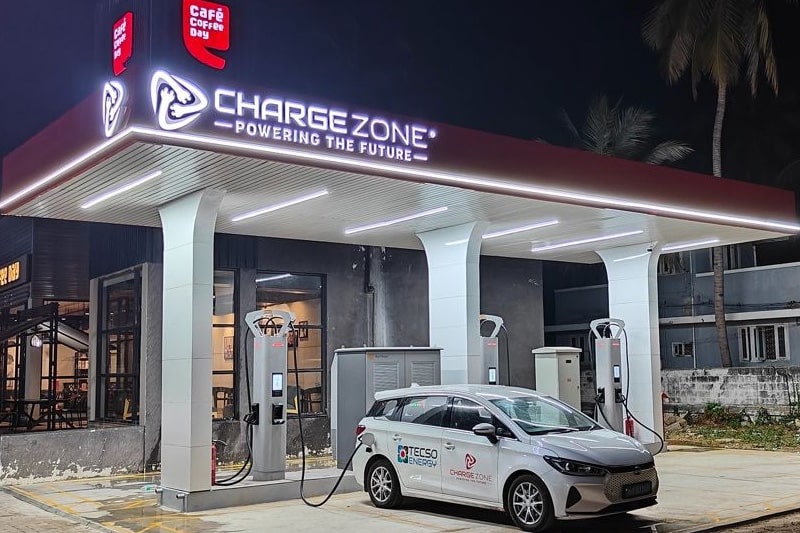
ChargeZone, an Indian startup specializing in EV charging solutions, plans to invest $360 million (€333 million) over the next four years to significantly expand its supercharging network across India. The company aims to install ‘superchargers,’ ultra-fast charging stations catering to electric cars, buses, and trucks, with capacities ranging from 360 kW to 1,200 kW (1.2 MW).
“Our new supercharging network marks a significant step towards a sustainable and electrified future integrated with micro-grids comprising of Solar PV and energy storage,” said Kartikey Hariyani, Founder and CEO of ChargeZone. “Our six-month pilot rollout of the supercharging network yielded remarkable results with the strong utilization by inter-city electric cars and electric buses as the prime customers.”
ChargeZone plans to deploy 25 new supercharging stations and aims to create a network of 500 High Power Charging (HPC) outlets. These stations will be strategically located on popular western and southern highway routes like Ahmedabad-Mumbai, Mumbai-Pune-Bengaluru, Bengaluru-Chennai, and Bengaluru-Hyderabad. The average charging time at these new stations is expected to be 15-20 minutes, significantly reducing the typical charging duration compared to DC fast-charging stations.
The company, founded in 2018 and headquartered in Vadodara, Gujarat, operates a network in western, southern, and northern India, with plans to cover 150,000 km of Indian highways. ChargeZone has also expanded internationally, setting up an EV charging network in the UAE, boasting over 4,000 charging points across 480+ locations.
ChargeZone has partnered with major automakers including Tata Motors, Mahindra & Mahindra, Audi, Hyundai, Kia, Ashok Leyland, and VE Commercial Vehicles for its EV charging solutions. The startup’s ambitious investment aims to bolster infrastructure for electric vehicles and contribute to India’s sustainable mobility goals.