



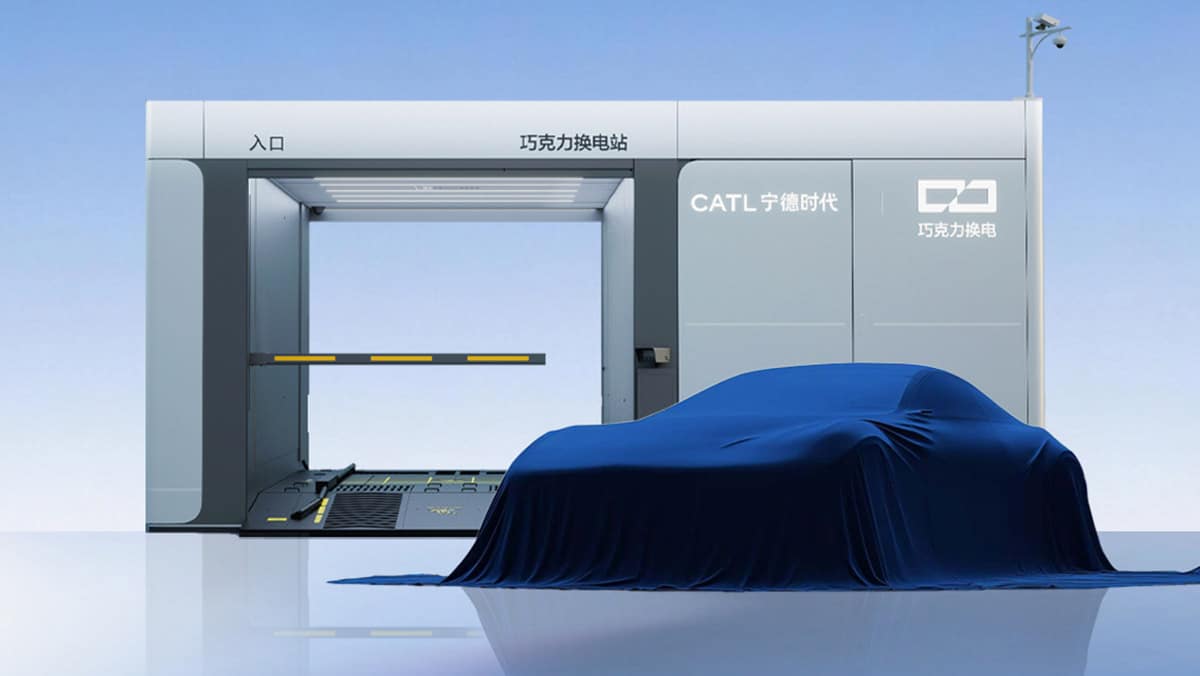
CATL is expanding support for its battery swap ecosystem as Chinese automakers GAC Aion and BAIC’s Arcfox prepare to launch new electric vehicle models compatible with the company’s Choco-SEB battery swap system.
GAC Aion said on Thursday it will introduce a battery swap version of its Aion RT sedan in April. The model will feature what the company described as a 99-second ultra-fast battery replacement process.
The Aion RT was originally launched in September 2025 as a family sedan available in four variants priced between 99,800 yuan ($14,460) and 123,800 yuan.
Arcfox, the electric vehicle brand under BAIC, announced on Friday that a battery swap version of its next-generation electric family sedan will also be introduced soon. The vehicle will connect to CATL’s Choco swap network and offer the same 99-second energy replenishment capability, the company said.
The announcements indicate further expansion of CATL’s battery swap ecosystem in China as the company works with automakers to develop vehicles compatible with its technology.
GAC Aion has previously adopted CATL’s battery swap solution. In November 2025, the company launched the Aion UT super model targeting the 100,000 yuan price segment with both charging and battery swap capability.
Under a battery rental scheme, the Aion UT super starts at 49,900 yuan, while the full vehicle purchase price begins at 89,900 yuan.
CATL has established broader partnerships with both manufacturers. In November 2025, the battery supplier signed a 10-year comprehensive strategic cooperation agreement with GAC Group.
CATL also signed a cooperation agreement with BAIC in June 2024 covering areas including skateboard chassis development and battery swap vehicle platforms.
As more compatible vehicles enter the market, CATL has been accelerating the rollout of its battery swap infrastructure. By the end of 2025, the company had built 1,020 Choco swap stations within a year, with the network covering 45 major cities across China.
The company has since raised its target for station construction to more than 3,000 by 2026, up from an earlier goal of 2,500.
In the longer term, CATL plans to build 30,000 Choco swap stations and introduce a franchise model to expand the network. The company also aims to deploy high-performance sodium-ion batteries on a larger scale starting in 2026.
Source: CnEVPost


