


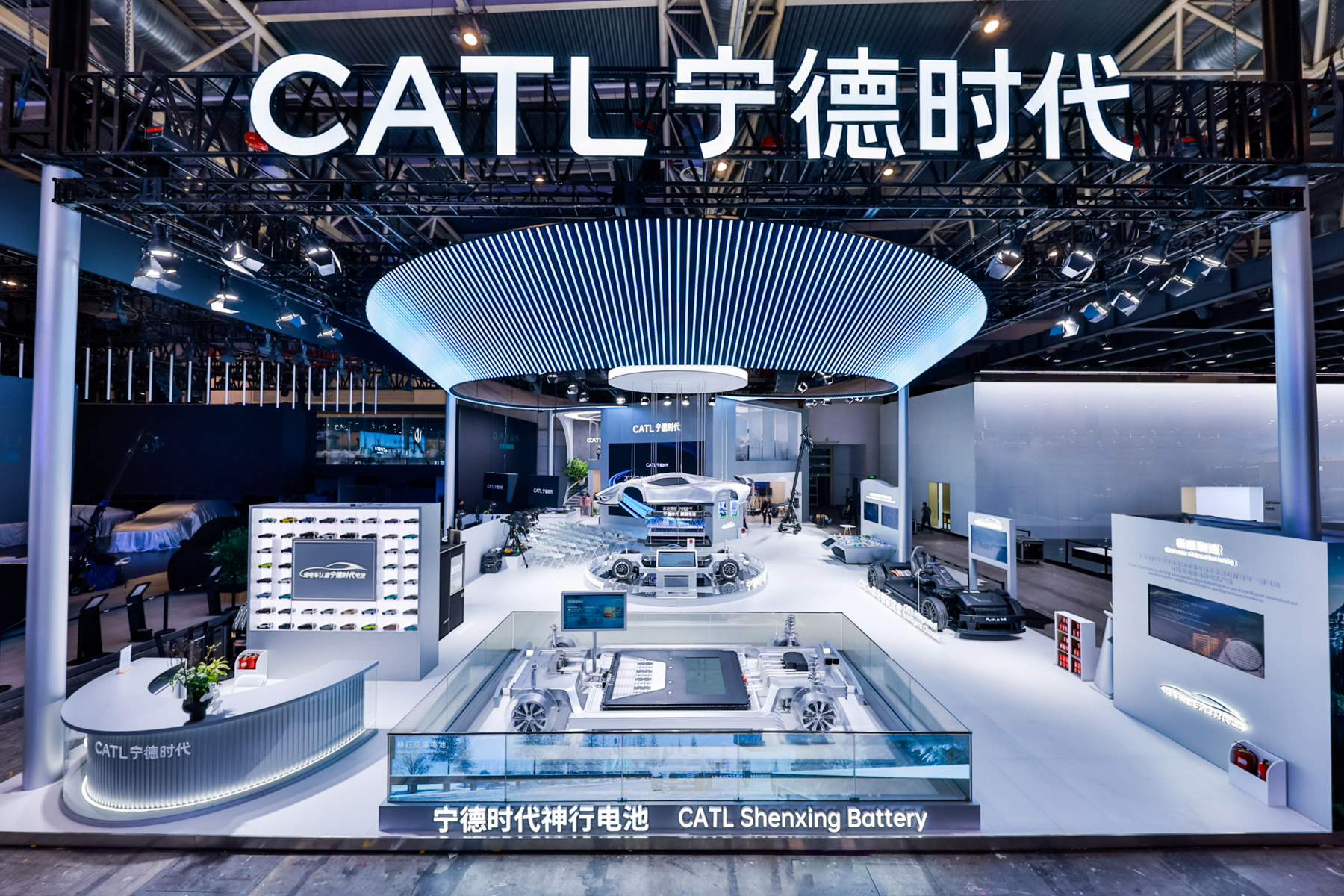
CATL and Egyptian battery manufacturer BME plan to establish a battery production facility in Egypt, initially targeting annual capacity of 1 GWh for battery systems used in heavy-duty commercial vehicles.
The agreement brings together CATL, the world’s largest battery producer, and BME, an Egyptian battery manufacturer founded by commercial vehicle maker MCV and automotive spare parts company Auto D. CATL will provide battery technology, production equipment and technical support for the project.
Initial investment in the facility is expected to exceed 2 billion Egyptian pounds, equivalent to approximately $39 million.
Plant To Start With Heavy Commercial Vehicles
The first phase of the project is planned to deliver annual production capacity of 1 GWh, with the facility primarily manufacturing battery systems for heavy-duty commercial vehicles.
The partners aim to achieve a local value-added share of 40%. Battery systems produced at the facility are intended for both the Egyptian market and international customers.
Local vehicle manufacturers are expected to be among the initial customers. Producing battery systems domestically could help reduce reliance on imports as well as associated transportation and logistics costs.
The Egyptian government and project partners have not yet disclosed a timeline for the start of production.
Capacity Could Increase To 5 GWh
A second phase would increase annual production capacity to 5 GWh.
At that stage, the factory is expected to expand beyond heavy commercial vehicle applications to produce batteries for passenger cars and stationary energy storage systems.
No timeline has yet been provided for the second phase.
The broader expansion is intended to support the development of a domestic battery industry in Egypt, with BME seeking to establish capabilities across multiple battery applications.
CATL To Provide Technology And Equipment
Under the agreement, BME will contribute local manufacturing and engineering capabilities, while CATL will supply the battery technology, production equipment and technical support required for the facility.
The partnership is also designed to support technology transfer and the development of a local battery supply chain.
The project would give Egyptian manufacturers access to locally produced battery systems while creating a domestic manufacturing base that could eventually serve a wider range of applications.
CATL Expands International Technology Partnerships
The Egyptian project is another example of CATL using technology partnerships to expand the reach of its battery systems beyond China.
Ford, for example, is producing lithium iron phosphate cells at its BlueOval Battery Park Michigan using technology licensed from CATL. Ford fully owns and operates that facility, while CATL provides technology and services.
The arrangement in Egypt similarly combines local manufacturing capabilities with CATL’s battery technology and production expertise.
BME Targets Broader Battery Industry
BME plans to use the Egyptian facility as a foundation for expanding into additional battery applications over the longer term.
The company’s ambitions include producing batteries for passenger vehicles and developing energy storage solutions for the energy sector in addition to its initial focus on heavy-duty commercial vehicles.
If the planned expansion is completed, the facility would increase from 1 GWh to 5 GWh of annual capacity and serve a broader mix of automotive and stationary energy storage applications.
The project therefore represents an effort to establish domestic battery manufacturing in Egypt while using CATL’s technology and equipment to support production for both local and international markets.