

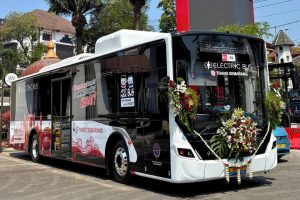


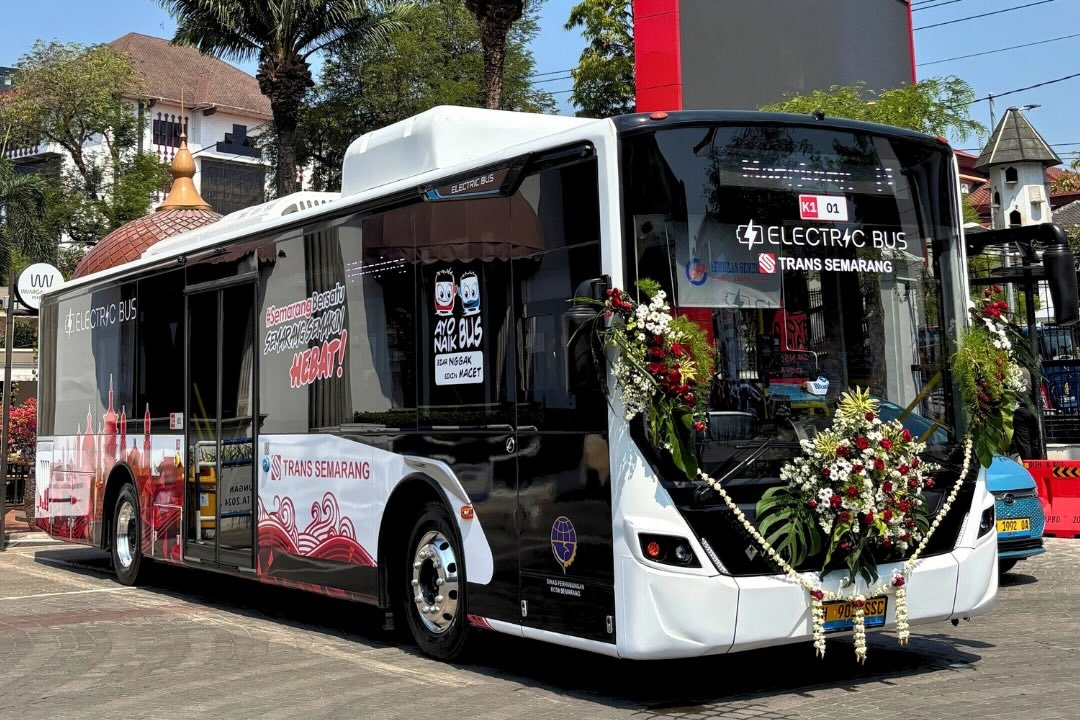
Trans Semarang, the public transport operator serving Semarang in Central Java, Indonesia, has begun deploying a new fleet of electric city buses as part of the city’s transition toward cleaner public transportation.
The operator plans to introduce 27 electric buses in total, with the first units already entering service. The remaining buses are expected to be deployed in phases, with Trans Semarang targeting completion of the fleet rollout by early November.
VKTR and Laksana Supply Electric Buses
The electric buses are being supplied through a partnership between Indonesian companies VKTR and Laksana Bus Manufaktur.
Laksana is responsible for manufacturing the bus bodies, while VKTR assembles the completed electric vehicles. The collaboration brings together local vehicle assembly and bus body manufacturing as part of the development of Indonesia’s domestic electric vehicle supply chain.
“This is not just about vehicles, but also about how local manufacturing, bus body production, supply chains, workforce, and industrial capabilities can grow together in building Indonesia’s electric vehicle ecosystem,” said VKTR President Director A. Ardiansyah Bakrie.
The buses have an estimated cost of around 4 billion to 4.5 billion rupiah (€198,000–€223,000) each, according to Laksana Bus Manufaktur Technical Director Stefan Arman. Based on those figures, the 27-bus programme would have an estimated value of approximately 108 billion to 121.5 billion rupiah (€5.3 million–€6 million).
340 kWh Battery Provides Up to 250 km Range
The first two vehicles are 12-metre low-floor electric buses with capacity for up to 60 passengers.
Each bus is equipped with a battery pack with an energy storage capacity of approximately 340 kWh and can travel up to 250 kilometres on a single charge under the stated operating range.
However, Trans Semarang is expected to operate the buses within a more conservative battery state-of-charge window to support battery longevity. Arman said maintaining the charge level between 20% and 100% would result in an effective operating range of approximately 200 to 240 kilometres.
The low-floor configuration was selected partly to improve accessibility for passengers.
Electric Buses Begin on Corridor 1
Trans Semarang has initially deployed the 12-metre electric buses on Corridor 1, which connects Mangkang Terminal with Penggaron Terminal.
The route covers approximately 29 kilometres. As an introductory measure, Trans Semarang is waiving fares on the electric buses until October 14.
The operator plans to add at least three electric buses each week as additional vehicles become available.
“We chose the low-floor design because elderly passengers account for around 7,000, or 20 per cent, of the average 35,000 people travelling on our buses daily,” said Haris Setyo Yunanto, head of Trans Semarang.
If the planned deployment schedule is maintained, all 27 electric buses are expected to be operating by early November.
Semarang Expands Electric Public Transport
The introduction of the electric buses forms part of Semarang’s efforts to develop cleaner and more sustainable public transportation.
Semarang Mayor Agustina Wilujeng Pramestuti said the city is seeking to improve passenger comfort while reducing the environmental impact of urban mobility.
“The City of Semarang is committed to continuously providing public transportation that is more comfortable, cleaner, and environmentally friendly. The introduction of Trans Semarang electric buses is a concrete step toward realising this commitment and providing the public with healthier and more sustainable mobility options.”
The 27-bus deployment will expand the use of electric vehicles in Semarang’s public transport network while also involving local manufacturers in the production and assembly of the vehicles.


