



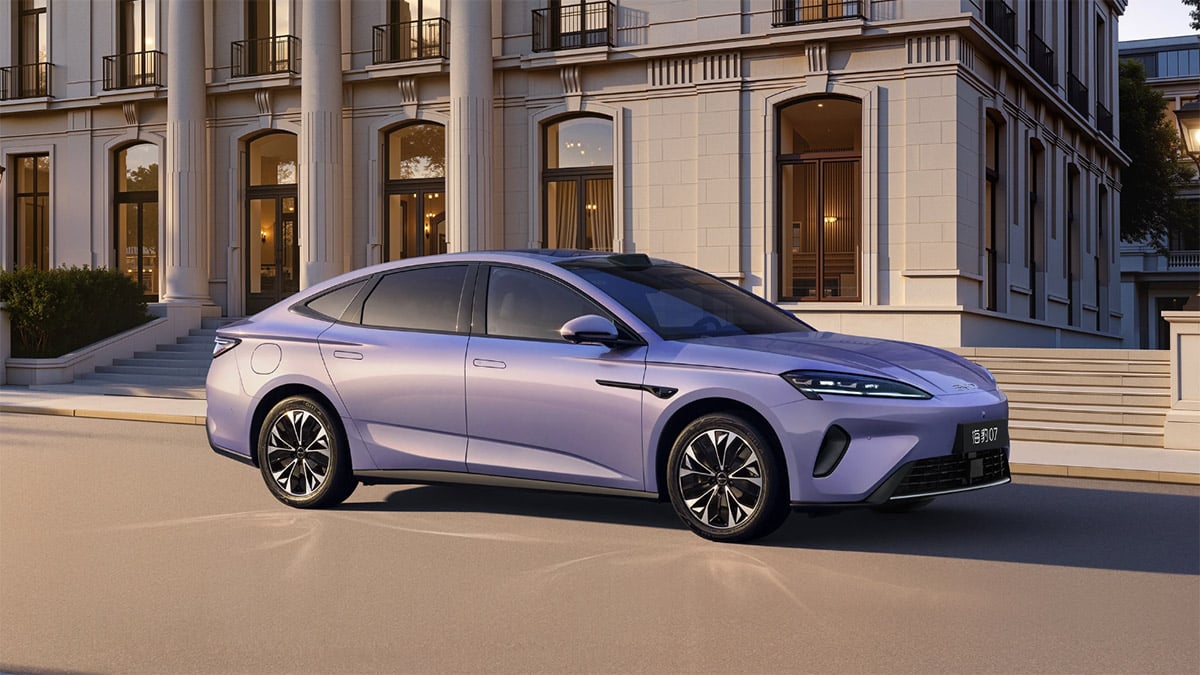
Chinese electric vehicle manufacturer BYD has unveiled two new electric models — the Seal 07 EV sedan and the 2026 Sealion 06 EV SUV — equipped with its second-generation blade battery and new flash-charging technology.
The Seal 07 EV is offered in two variants with starting prices of 169,900 yuan ($24,600) and 189,900 yuan. The mid-to-large electric sedan is powered by a 69-kWh battery pack and delivers a driving range of up to 705 kilometres.
See also: BYD Debuts Seal 08 Sedan With 1,000 km Range and Megawatt Charging
The model uses a rear-mounted single electric motor producing 240 kW and follows a rear-wheel-drive layout. The vehicle measures 4,995 mm in length, 1,910 mm in width and 1,495 mm in height, with a wheelbase of 2,900 mm.
BYD said the sedan will support its God’s Eye 5.0 advanced driver assistance platform, including city navigation assist functions.

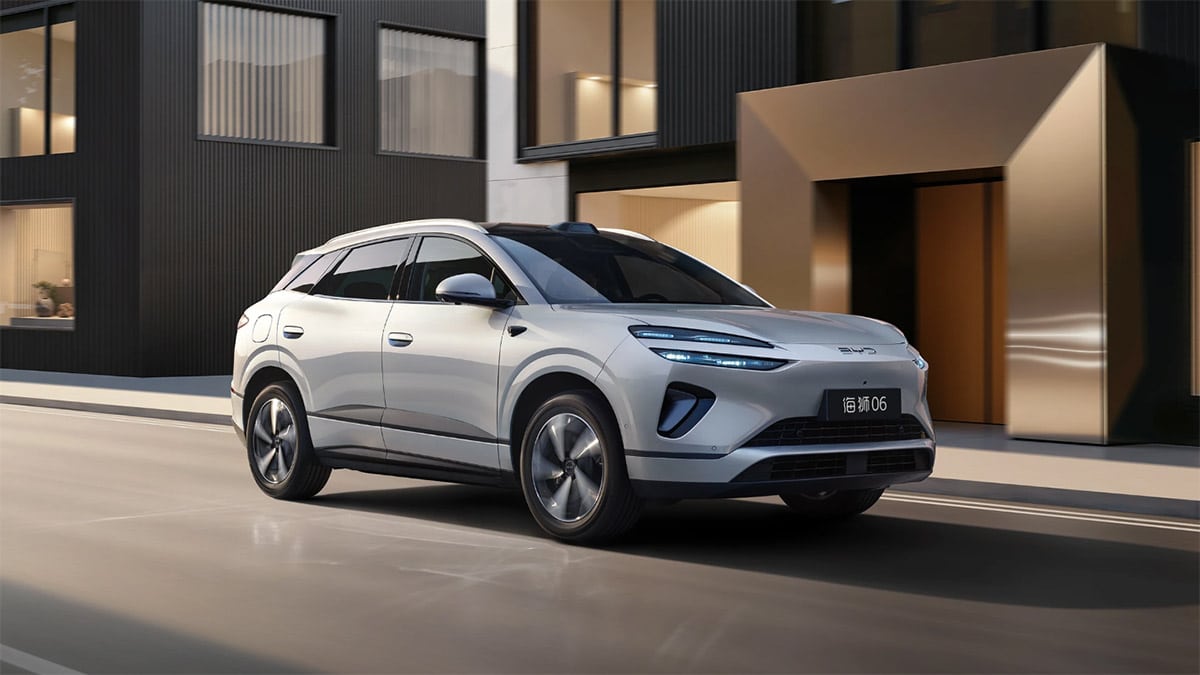
Alongside the sedan, BYD introduced the 2026 Sealion 06 EV sport utility vehicle. The model is available in four variants starting at 159,900 yuan, 168,900 yuan, 168,900 yuan and 179,900 yuan.
See also: BYD Launches 1,500 kW Supercharger and Expands Flash-Charging Network in China
The SUV retains the same dimensions as the previous version, measuring 4,810 mm long, 1,920 mm wide and 1,675 mm high, with a wheelbase of 2,820 mm. Its maximum driving range reaches up to 710 kilometres.
BYD said the new flash-charging technology enables rapid charging, allowing the battery to recharge from 10% to 97% in about nine minutes under normal temperature conditions. Even at temperatures of minus 30 degrees Celsius, charging from 20% to 97% can be completed in around 11 minutes.
The Sealion 06 EV also features a rear-mounted single motor producing 240 kW, an increase from the previous 180 kW output. The SUV comes standard with the DiSus-C chassis system and includes a high-speed tire blowout stabilization feature designed to maintain vehicle stability at speeds up to 140 km/h.
See also: Denza Launches Z9GT With Record 1,036 km Electric Range
At the launch event, BYD said it plans to build 20,000 flash-charging stations across China by the end of the year and later expand the network to overseas markets as it promotes faster charging infrastructure for electric vehicles.


