
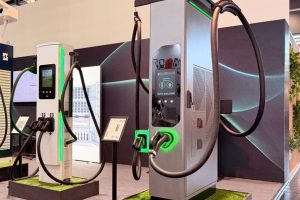



The Brussels regional government will introduce a new rotation fee for electric vehicles that remain connected to public charging stations for extended periods, with the measure taking effect on October 1.
The policy is intended to improve access to public charging infrastructure by discouraging drivers from occupying charging points longer than necessary.
Fee Applies After Six Hours
Under the new rules, drivers will pay €0.06 per minute if their electric vehicle remains connected to a public charging station for more than six hours between 9:00 a.m. and 10:00 p.m.
According to regional grid operator Sibelga, the average vehicle currently occupies a public charger for approximately six hours and 30 minutes, despite a typical charging session requiring only about two hours and 20 minutes to replenish around 18kWh of energy.
The operator said prolonged occupancy has increasingly reduced charger availability, even as Brussels continues expanding its public charging network.
Supporting Better Use of Charging Infrastructure
Brussels State Secretary for Energy Audrey Henry said the new policy is intended to encourage more efficient use of public charging facilities.
“Charging stations are not parking spaces.”
Henry and State Secretary for the Environment Ans Persoons are supporting the measure as part of the region’s broader strategy to facilitate the growth of electric mobility.
The regional government said demand for charging infrastructure continues to increase as electric vehicle adoption accelerates.
Nearly one in four newly registered vehicles in Brussels is now a battery-electric vehicle, while 61% of newly registered company cars are fully electric.
Similar Measures Already in Place
Brussels joins other Belgian cities that have introduced fees to discourage drivers from occupying charging stations after completing their charging sessions.
Antwerp charges a per-minute fee once a vehicle reaches a full battery, while Ghent applies a fee of €3.60 per hour when vehicles remain connected after charging has finished.
Officials said the Brussels rotation fee is intended to maximize the use of existing charging infrastructure rather than expand parking availability at charging locations.


