
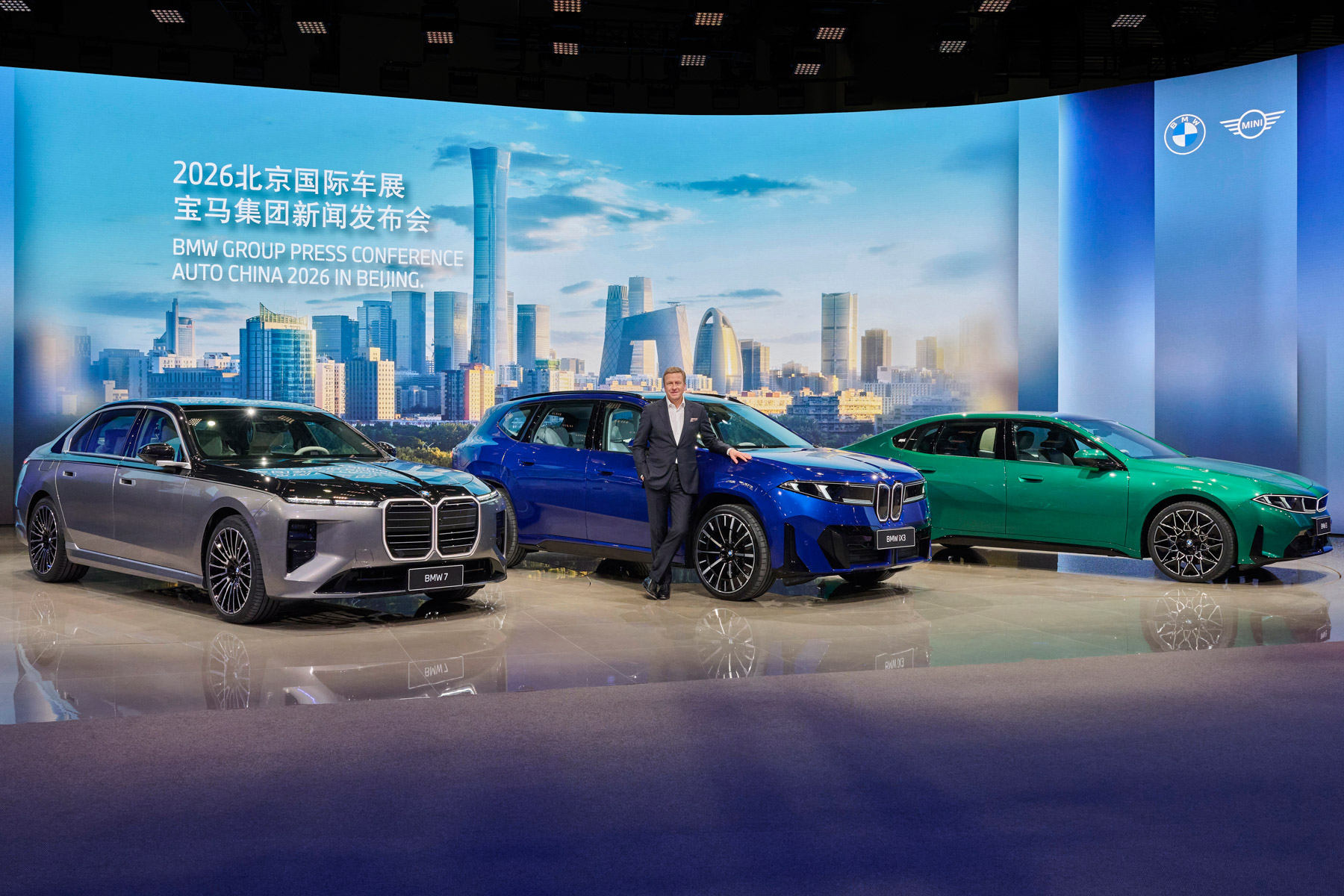
BMW has unveiled China-specific versions of its Neue Klasse-based electric models, the iX3 and i3, at Auto China, marking the first Neue Klasse vehicles developed in China for the domestic market.
The new long-wheelbase variants reflect established preferences among Chinese customers for increased rear passenger space. BMW said both models have been extended to improve comfort, with reports indicating the wheelbase has grown by around 10.8 centimetres to approximately 3.01 metres, increasing overall vehicle length to about 4.89 metres.
“These are the first models in the biggest future project in BMW’s history: the Neue Klasse,” said Oliver Zipse during the company’s presentation in Beijing.
The extended wheelbase is primarily used to enhance rear legroom, with additional upgrades including redesigned rear seats with thicker padding and greater recline angles. The China-specific versions also feature rear armrest wireless charging, enhanced ambient lighting, and additional physical controls tailored to local preferences.
BMW has not confirmed changes to the battery configuration. The global versions of the iX3 and i3 are based on sixth-generation battery technology using cylindrical cells, with an energy capacity of around 108 kWh. Range estimates suggest the same battery is retained, with the iX3L expected to exceed 900 kilometres and the i3 over 1,000 kilometres under China’s CLTC testing cycle.
The models also introduce BMW’s Panoramic iDrive display concept to the Chinese market for the first time. The system features a slim display strip along the base of the windscreen and has been adapted for local users, particularly in voice interaction.
BMW said its China-specific system integrates with local technology partners, including DeepSeek, rather than relying on Amazon technologies used in Europe and the United States.
The unveiling forms part of BMW’s broader Neue Klasse strategy, which underpins its next generation of electric vehicles. The company also highlighted its updated 7 Series at the show, incorporating elements of the new design and technology approach.