


Australian shipbuilders are moving forward with new battery-electric ferry projects in Brisbane and Sydney as governments and industry partners increase efforts to reduce emissions in maritime transport.
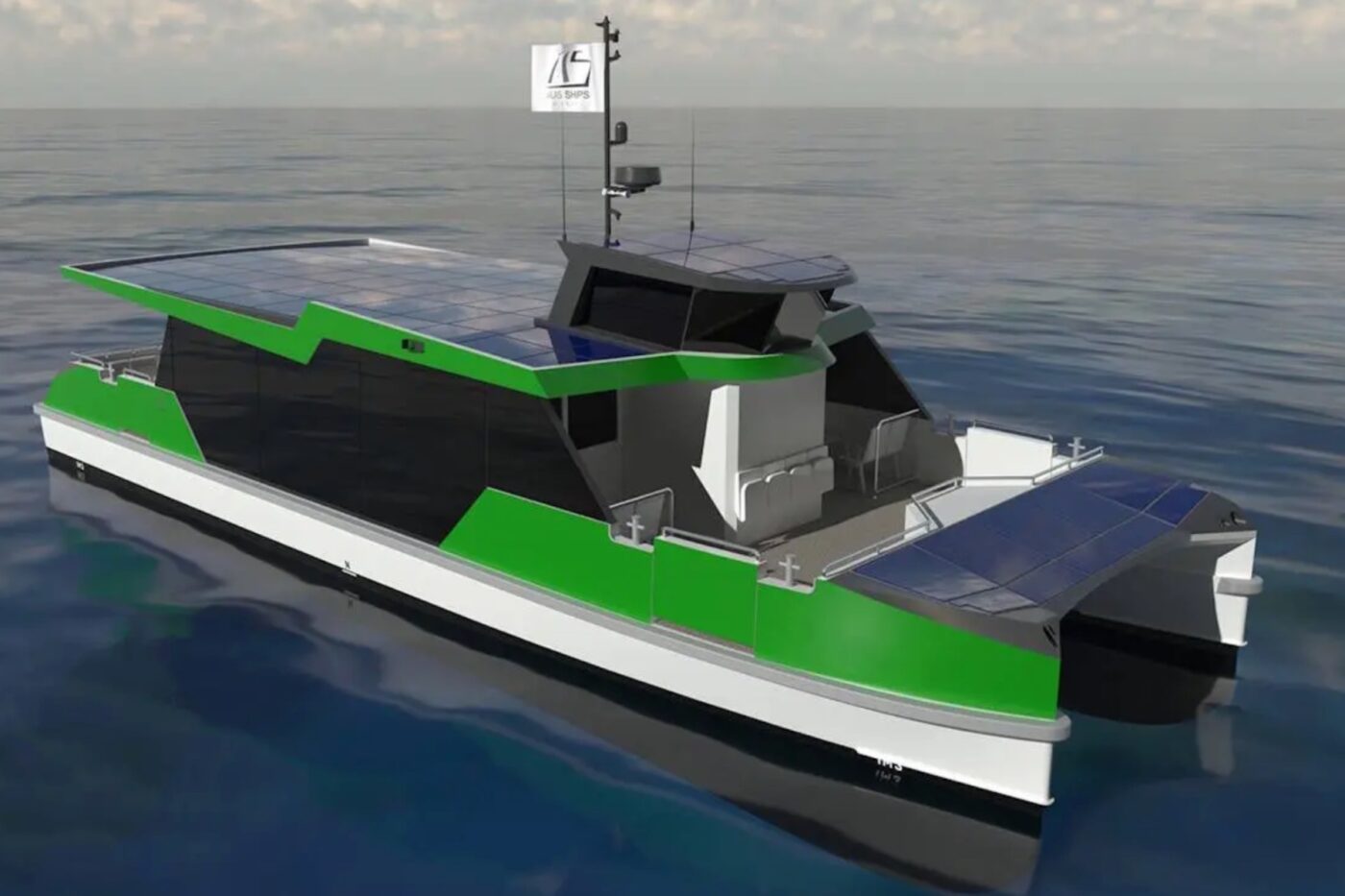
Aus Ships Group, based in Brisbane, is developing an 18-metre electric ferry in partnership with Volvo Penta.
The vessel is expected to enter service by the end of the year and will be capable of carrying up to 80 passengers.
The ferry will use a twin installation of Volvo Penta’s IPS450E electric propulsion system, with each driveline delivering 250 kilowatts of power. The propulsion setup will be paired with a 460-kWh onboard battery system and supplementary solar panels.
Funding support for the Brisbane project is being provided through the Australia-Singapore Low Emissions Technologies initiative, known as ASLET, which has contributed 2 million Australian dollars ($1.3 million).
The ASLET programme is jointly funded by the Australian and Singaporean governments and delivered by Australia’s national science agency, CSIRO, together with the Maritime and Port Authority of Singapore.
The initiative is focused on supporting maritime decarbonisation technologies and lower-emission transport solutions.
Aus Ships said the electric ferry programme was designed as a scalable platform that could support future deployment across Australian waterways.
Tommy Ericson, director of Aus Ships, said the project could eventually support broader expansion along Australia’s east coast.
“This is about creating a scalable model that can be replicated across the region,” Ericson said.
Separately, the New South Wales Government has approved construction of a 24-metre battery-electric ferry by Tasmanian shipbuilder Richardson Devine Marine.
The vessel is scheduled to begin a 12-month trial in early 2028 and is expected to operate on Sydney Harbour routes, including services linked to the new Sydney Fish Market.
The government has not disclosed technical specifications for the ferry beyond confirming that it will use battery-electric propulsion.
New South Wales Transport Minister John Graham said the project marked an important step in the transition away from diesel-powered ferries.
“The first trial of an electric ferry on Sydney Harbour is an important moment for our iconic ferry fleet, which will transition from diesel propulsion over coming years, informed by this first vessel,” Graham said.
“This Northern Beaches-designed, Australian-built ferry will provide a quieter ride and cleaner air on the Harbour,” he added.
The New South Wales government said the trial would help inform broader fleet replacement plans as the state evaluates alternatives to diesel ferry operations.
In 2024, the previous New South Wales administration announced plans to replace Sydney’s fleet of 40 diesel ferries with Australian-built electric or hydrogen-powered vessels by 2035.


