


Public transport operator Arriva said it will deploy 167 new battery-electric buses in the Dutch region of East Brabant from December 2026, as part of a long-term concession extension aimed at expanding zero-emission public transport.
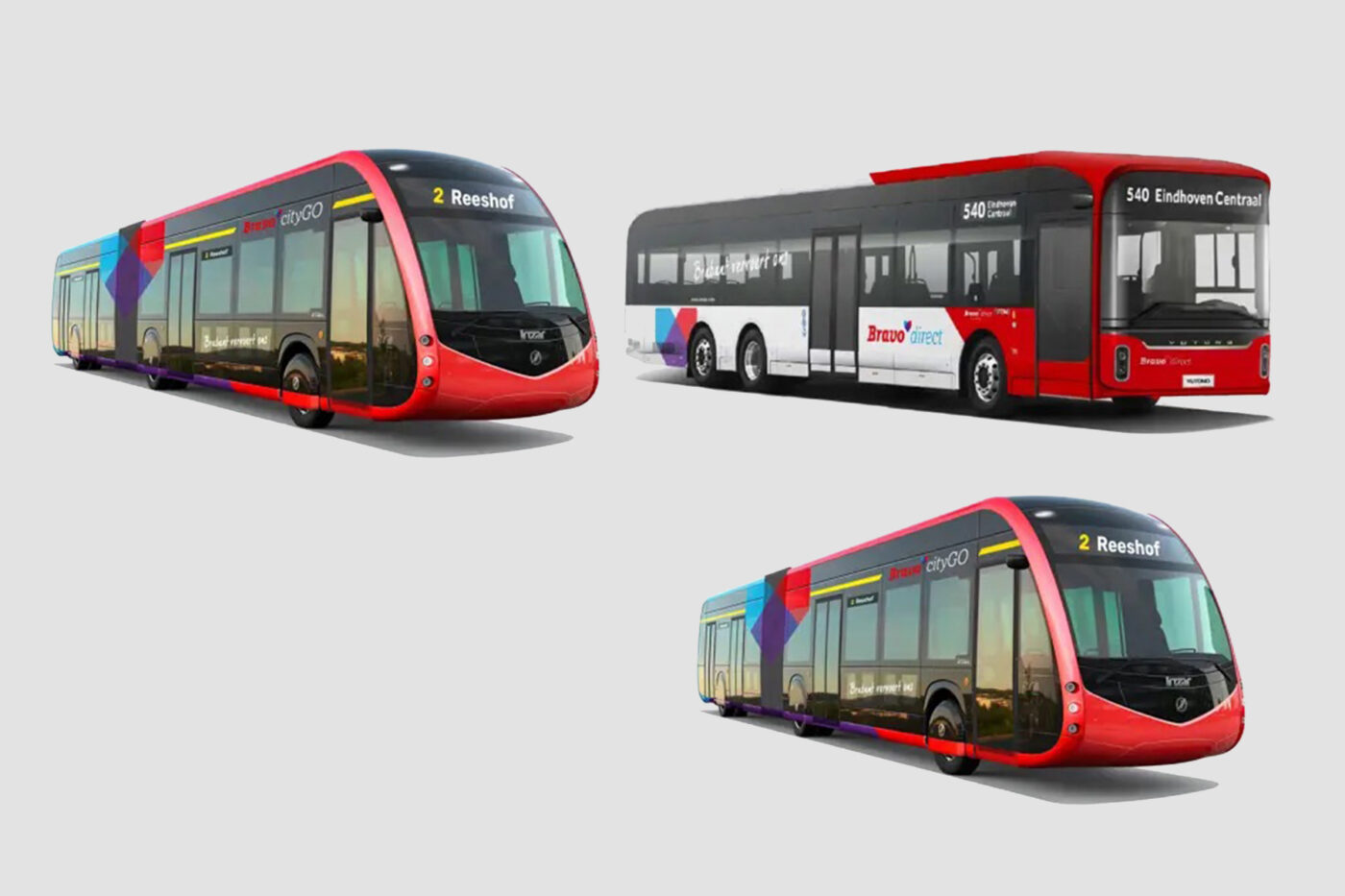
The new fleet will include 39 electric buses from Spanish manufacturer Irizar and 128 from China’s Yutong, Arriva said, adding that all vehicles will be battery-electric. The buses will be introduced when a new 12.5-year public transport contract with the East Brabant region comes into effect in December 2026.
Arriva’s Dutch unit earlier ordered 39 Irizar ie tram models, designed to resemble light-rail vehicles, to operate mainly on urban routes in Tilburg and ’s-Hertogenbosch. The order includes 21 articulated 18-metre buses for Tilburg and 12-metre solo buses for ’s-Hertogenbosch, where narrower streets in the historic city centre limit vehicle size.
The operator has now confirmed an additional order of 128 battery-electric buses from Yutong in multiple configurations. Of these, 44 buses measuring 13 or 15 metres will be used on high-traffic Bravodirect intercity routes, while 40 low-floor 12-metre buses will be deployed on regional services. The new vehicles will supplement 83 electric buses from VDL and Volvo already operating under the current concession.
“We are pleased that, now all formalities are complete, we can finally announce which buses we will deploy for the East Brabant concession,” said Jan Pieter Been, regional director at Arriva. “Part of the current bus fleet will remain in service, but the most significant expansion involves the procurement of 128 Yutong and 39 Irizar buses.”
Despite the large-scale electrification, Arriva said the regional fleet will not be fully electric. The company has also ordered 32 six-metre city buses based on the Mercedes-Benz Sprinter platform with internal combustion engines, citing technical and regulatory constraints. “This type of bus is not yet available as a battery-electric model for economical operation,” Arriva said. “As soon as this becomes technically and/or legally feasible, the transition to electric community bus services will also be considered.”


