
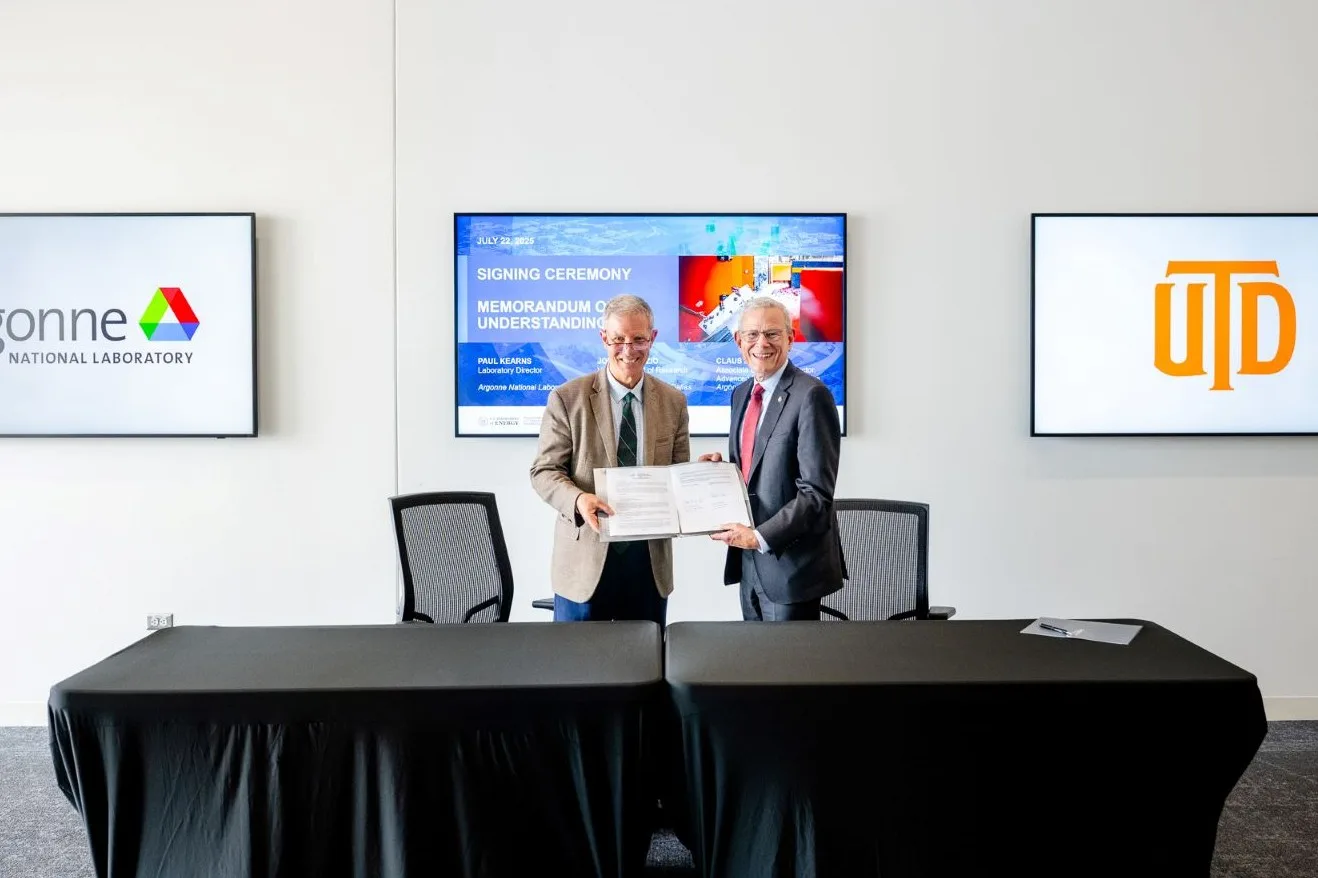
The US Department of Energy’s Argonne National Laboratory and the University of Texas at Dallas (UT Dallas) have signed a memorandum of understanding (MOU) aimed at advancing battery science, bolstering domestic critical materials supply chains, and expanding workforce development in the energy storage sector.
The collaboration will connect researchers from Argonne’s Advanced Energy Technologies (AET) directorate with UT Dallas’s Batteries and Energy to Advance Commercialization and National Security (BEACONS) Center, which was established in 2023 with a $30 million award from the US Department of Defense. The initiative seeks to bridge technology gaps in energy storage, promote domestic sourcing of critical materials, and enhance the US battery manufacturing ecosystem.
“Together, Argonne and UT Dallas will work toward an abundant supply of domestic critical materials, which will be important to strengthen the future of battery manufacturing and energy security in the US,” the institutions said in a joint statement.
Under the agreement, UT Dallas students will also gain opportunities for professional development to help build a skilled workforce for the battery and critical materials sectors. “By working together, we can collaborate on multiple areas like creating and upscaling the development of critical materials and optimising battery systems,” said Jianlin Li, Director of Energy Storage and Conversion at Argonne. “All of this will contribute to establish a more stable and competitive energy storage supply chain within the US.”
Claus Daniel, Associate Laboratory Director for Argonne’s AET directorate, said: “This partnership will further enhance the strong connection between our two institutions and allow our people to work together with the common goal of furthering scientific breakthroughs in areas critical to U.S. competitiveness and national security.”
Paul Kearns, Director of Argonne National Laboratory, added: “We have been working with UT Dallas on meaningful research for many years, and today’s MOU is the next step in expanding this collaboration. With our complementary strengths in science and engineering, we have the great potential to make an even greater impact on US prosperity and security driven by pivotal discoveries and transformative innovations.”