
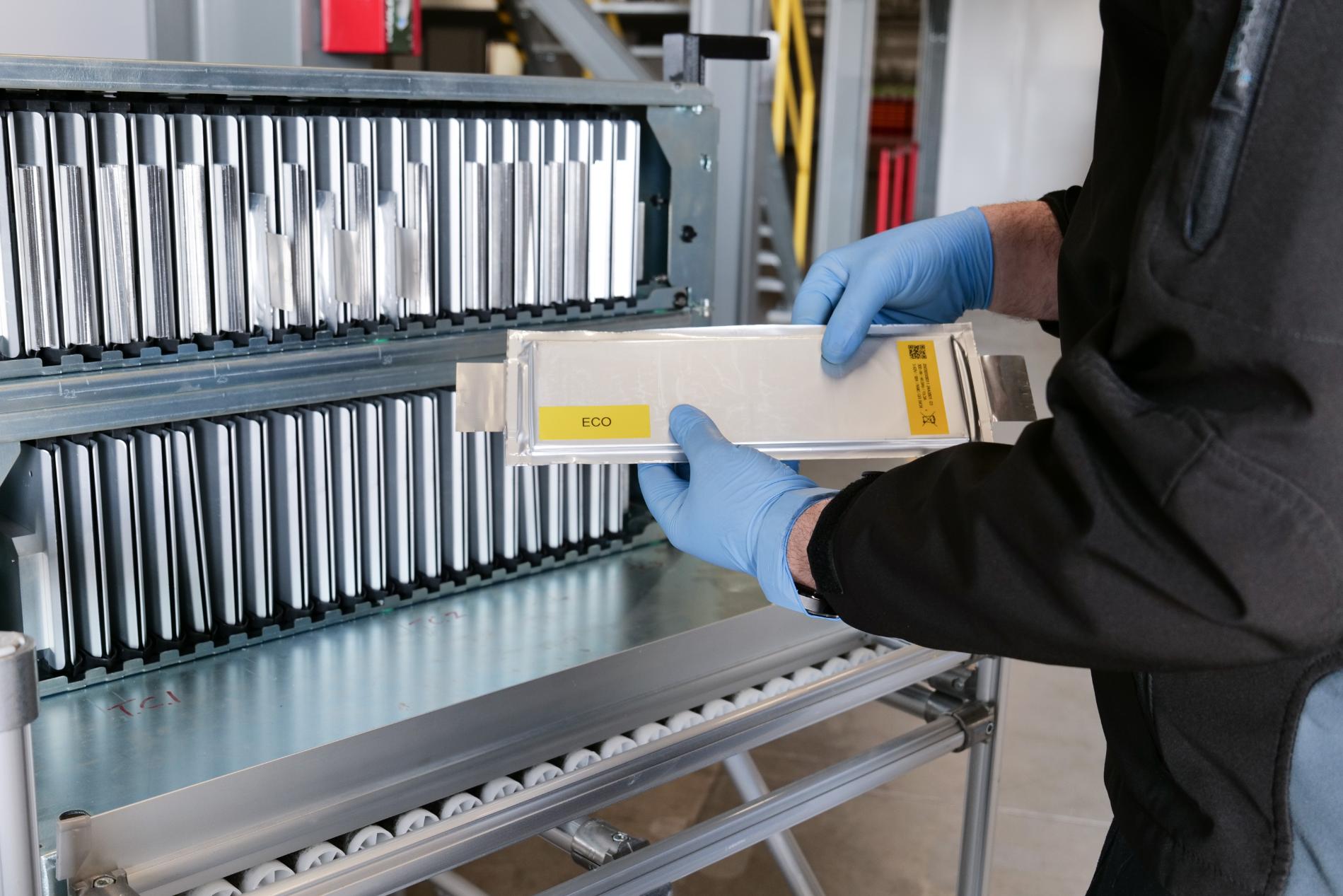
Altilium and Jaguar Land Rover (JLR) have unveiled the UK’s first electric vehicle battery cells produced with recycled cathode materials at the Cenex Expo 2025. The project, supported by the Advanced Propulsion Centre UK, is intended to advance the development of a domestic battery recycling ecosystem and demonstrate the use of recovered materials in high-performance automotive applications.
The multilayer NMC 811 pouch cells were manufactured using cathode active materials recovered from end-of-life EV batteries via Altilium’s EcoCathode™ process. According to the company, the concentration of recovered cobalt, lithium and nickel meets the 2036 recycled content targets set by new EU Battery Regulations. Initial testing showed performance comparable to conventional materials, and the cells are undergoing further validation at JLR’s battery facilities. “This is a major technical breakthrough and a vote of confidence in the UK’s ability to lead in battery recycling,” said Dr Christian Marston, COO and co-founder of Altilium.
A lifecycle assessment conducted by UK consultancy Minviro reported greenhouse gas emissions could be reduced by 32% when using 100% recycled cathode material compared with cells using virgin materials. The study also found reductions in particulate matter formation, freshwater ecotoxicity and mineral resource use. JLR said the project reinforces its sustainability strategy, with Dr David Sellick noting, “Our clients expect uncompromising performance, and this collaborative initiative demonstrates that sustainable practices and innovation can go hand in hand.”
The project supports compliance with incoming EU regulations on recycled content and aims to strengthen the UK’s domestic supply chain. Altilium said its EcoCathode™ technology can recover over 95% of cathode metals and more than 99% of graphite from waste batteries, providing the basis for large-scale reuse in new cells.