



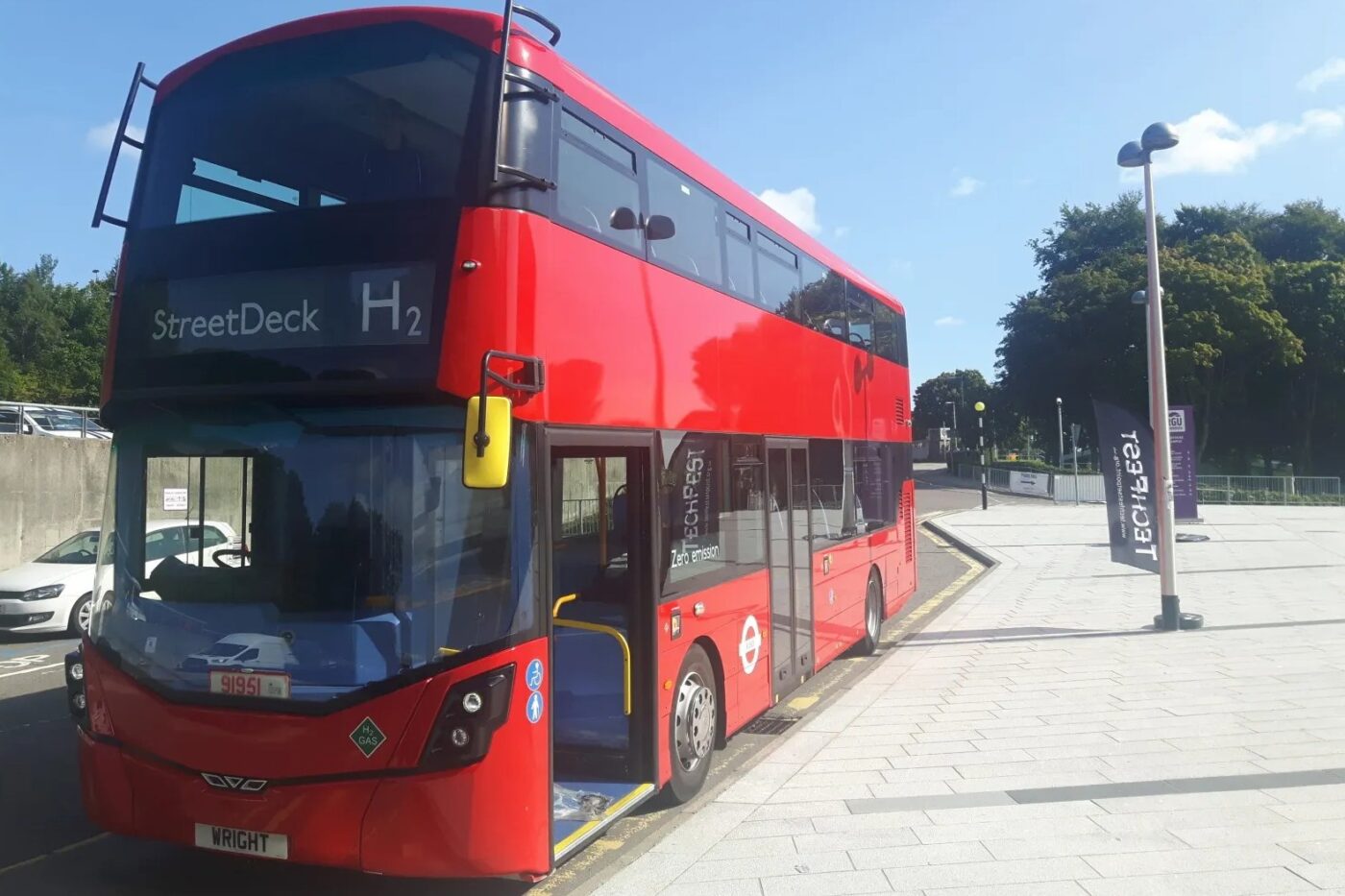
Aberdeen plans to dispose of its fleet of hydrogen-powered double-decker buses and pivot its public transport strategy toward battery-electric vehicles and charging infrastructure, according to local media reports.
The fleet of 25 hydrogen buses has been out of service since late 2024 due to delays in repairing hydrogen refuelling stations in Kittybrewster and Cove. The vehicles, operated by First Bus, have remained parked at the operator’s depot since operations were halted.
See also: Wrightbus Expands Rapidly as Electric Buses Lead, Hydrogen Finds Targeted Role
The buses are the StreetDeck FCEV model produced by Wrightbus. Aberdeen ordered 15 units in early 2019 and an additional 10 vehicles in August 2020. The fleet entered service in 2021 as part of a project aimed at demonstrating large-scale deployment of hydrogen fuel cell buses in urban transport.
The programme cost around £8.3 million and received support from local and European funding. Each bus represented an investment of roughly £500,000. Hydrogen fuel for the fleet was intended to be produced at a former landfill site through a joint venture between Aberdeen City Council and BP.
See also: Wrightbus Partners with Kazenmaier Leasing to Boost Zero-Emission Bus Adoption in Germany
However, the council has now decided to withdraw from the partnership and revise its transport strategy. In a statement, Aberdeen City Council said discussions with BP had been prompted by “significant advancements in electric vehicle technology.” The authority added that “as manufacturers and operators increasingly favour EVs, demand for hydrogen in transport has diminished.”
The council said the move will support the development of local charging infrastructure and accelerate a transition toward electric buses in the city’s public transport system.


