
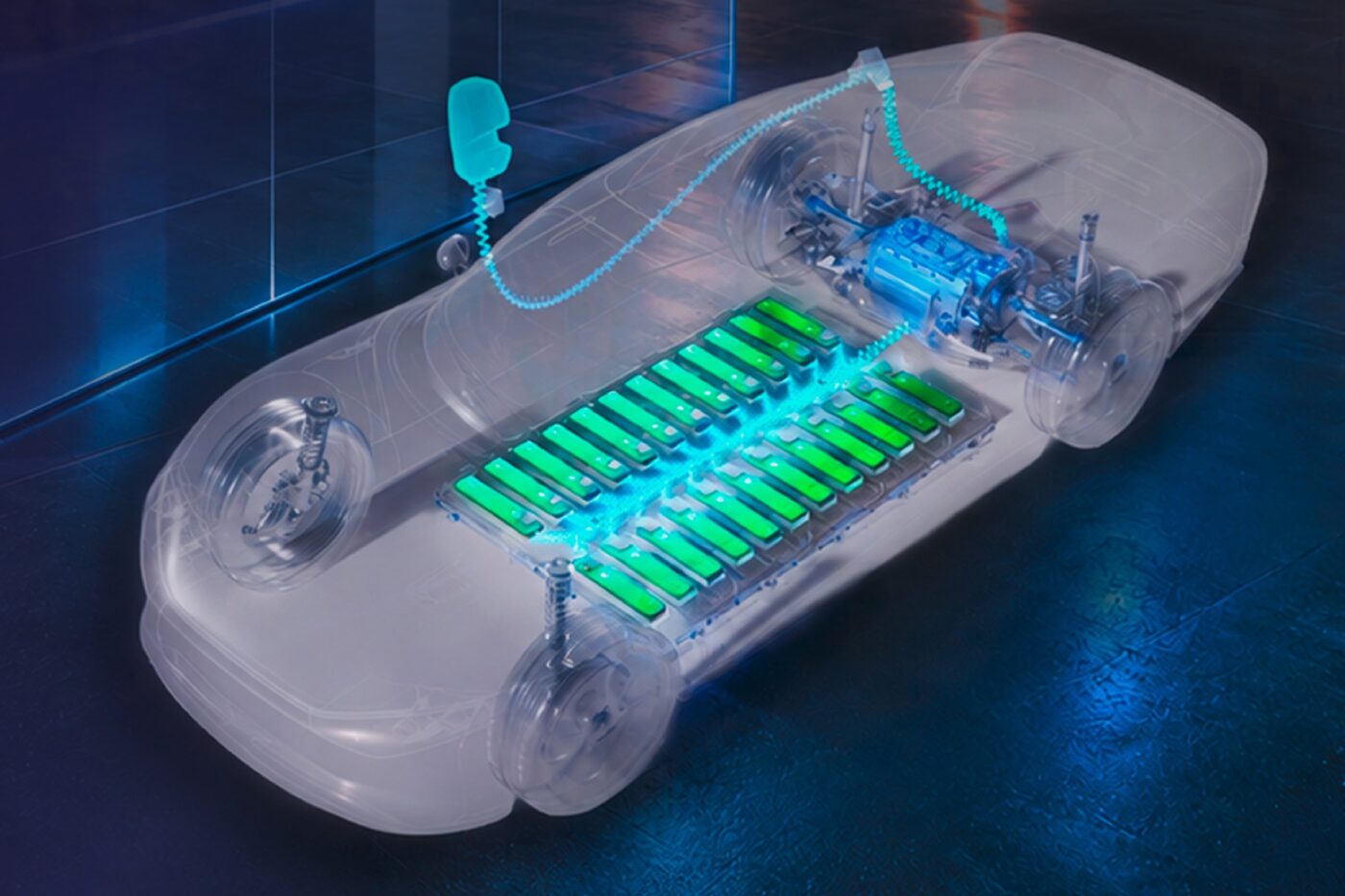
Mercedes-Benz is developing a new electric vehicle power architecture designed to maintain a constant 800-volt supply regardless of battery state of charge. The technology uses decentralised microconverters, known as Power Converters, to regulate energy flows from individual battery cells or cell groups and reduce the impact of voltage fluctuations on vehicle performance.
The approach addresses a limitation in conventional electric vehicle architectures, where system voltage is closely linked to battery charge levels and the condition of individual cells.
Decentralised Microconverters Stabilise Battery Voltage
In conventional electric vehicles, the overall battery voltage depends on the number of cells connected in series. As the battery discharges, its voltage decreases, while ageing or weakened cells can affect the performance of the entire battery pack.
Mercedes’ Power Converter architecture replaces this conventional arrangement with individual microconverters that manage the electrical output of separate cells or cell clusters.
Multiple converters operate in parallel and coordinate energy flows to maintain a stable high-voltage direct current (DC) supply. The control system can also selectively reduce the load on weaker battery cells, helping improve the overall efficiency of the system.
Each converter has a power output of up to 3 kW. The technology is designed to support AC and DC charging, as well as bidirectional charging functions.
Integrated Conversion Technology Could Reduce Vehicle Weight
Another potential benefit comes from combining functions that are traditionally handled by separate electrical components.
The microconverters can manage AC and DC voltage conversion, potentially eliminating the need for a conventional onboard charger (OBC). Removing this separate component could reduce vehicle weight, packaging requirements and manufacturing costs.
The architecture also allows the traction inverter to receive a consistent 800-volt input instead of having to accommodate changing battery voltage levels.
This could improve inverter efficiency and simplify the development of shared powertrain components across different electric drivetrain configurations.
Software Updates Could Enable Additional Charging Functions
Mercedes’ decentralised converter system could also create opportunities to introduce additional vehicle functions through software.
Because the hardware is designed to support bidirectional charging and control charging performance, some capabilities could potentially be activated or adjusted through over-the-air (OTA) updates.
This could give Mercedes greater flexibility in introducing software-based features and digital services throughout a vehicle’s lifecycle, including potentially offering additional functions through paid software unlocks.
However, the commercial approach has not been confirmed.
The more complex electronics integrated into the battery system could also introduce additional repair and maintenance considerations. How the architecture will affect servicing requirements, component replacement and long-term reliability remains to be established.