
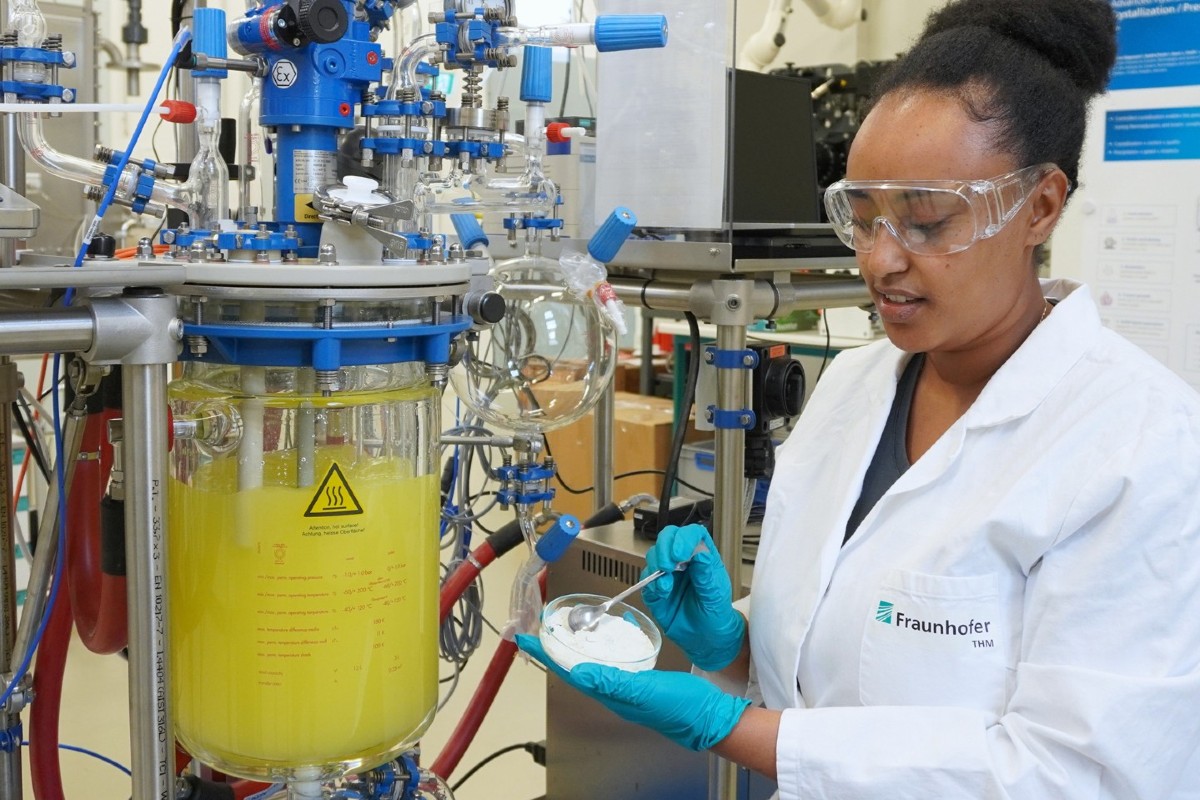
Researchers from the Fraunhofer Institute for Ceramic Technologies and Systems (IKTS) and TU Bergakademie Freiberg are developing new recycling technologies to recover rare earth elements, including neodymium, from discarded magnets used in electric vehicles, wind turbines and electronic products.
The research is part of the European Union-funded NEO-CYCLE project, which brings together 23 partners to develop processes for recovering valuable raw materials within Europe. The initiative aims to reduce reliance on imported rare earth materials by converting waste magnets into high-value resources for industries including chemicals, pharmaceuticals, fertilisers and the hydrogen economy.
Recycling Neodymium to Reduce Supply Chain Dependence
Neodymium is a critical material used in permanent magnets because of its strong magnetic properties. Combined with iron and boron, it forms neodymium-iron-boron magnets, which are widely used in electric vehicles, wind turbines, speakers, smartphones and hard drives.
According to Fraunhofer IKTS, approximately 90% of neodymium processing takes place in China, creating supply chain dependencies for industries that rely on the material. Global demand for permanent magnets is also increasing, with annual growth estimates reaching up to 8.3%.
Recovering neodymium within Europe could help secure access to these materials while reducing the need for primary raw material imports.
Currently, used magnets collected in Europe are often sent to China for reprocessing. However, producing new magnets from recovered neodymium requires materials with a very high level of purity, making recycling technically challenging.
NEO-CYCLE Tests Two Magnet Recycling Processes
The NEO-CYCLE researchers are concentrating on magnets recovered from discarded hard disk drives (HDDs) found in old computers and laptops.
The project is evaluating two approaches: solid-state chlorination and electrochemical processing. Both methods are being investigated to determine their effectiveness in extracting valuable materials from magnet waste.
“We aim to recover rare earth elements from electronic waste and use them in high-value products such as green fertilisers and in the production of pharmaceuticals. This will close the materials loop, protect the environment and help reduce global dependence on strategic resources,” said Dr Sandra Pavón, head of the Hydrometallurgical Recycling and Raw Material Chemistry group at Fraunhofer IKTS.
In the solid-state chlorination process, TU Bergakademie Freiberg uses ammonium chloride instead of conventional hydrochloric acid to process the neodymium-iron-boron material. The thermal treatment converts the material into metal chlorides and a high-purity ammonia solution.
The method has already been patented and applied to fluorescent lamp recycling. Researchers are now assessing its suitability for recovering materials from permanent magnets.
Initial findings indicate that the process can dissolve metal chlorides more efficiently from magnet waste, achieving almost complete metal extraction while requiring relatively low chemical consumption.
Electrochemical Processing Recovers Additional Materials
The second approach involves introducing powdered magnet waste into an electrochemical cell. A diluted sulphuric acid electrolyte provides the reaction medium for the extraction process.
The researchers first recover a boron-containing solution from the magnets, which can subsequently be concentrated for further applications. The recovered material could serve as a feedstock for the chemical and pharmaceutical industries.
Fraunhofer IKTS is responsible for further separating and refining the materials obtained through both recycling methods. Its researchers apply selective hydrometallurgical processes to extract neodymium and iron before converting them into purified metal salts.
The recovered substances can then be processed further by project partners and supplied to several industrial sectors, including chemicals, pharmaceuticals, fertiliser production and the hydrogen economy.
EU Project Targets Pilot Plant Development
The NEO-CYCLE project is supported by the European Union through its Horizon Europe programme and is scheduled to run for four years.
One of its expected outcomes is the development of a pilot plant to demonstrate the recycling processes and their potential for industrial application.
The initiative aims to establish a European recovery pathway for valuable materials from end-of-life products, creating additional sources of raw materials for multiple industries.
“The procedure starts with products that have reached the end of their life cycle. At its end, we can supply four different industries with valuable recycled raw materials,” Pavón said.