
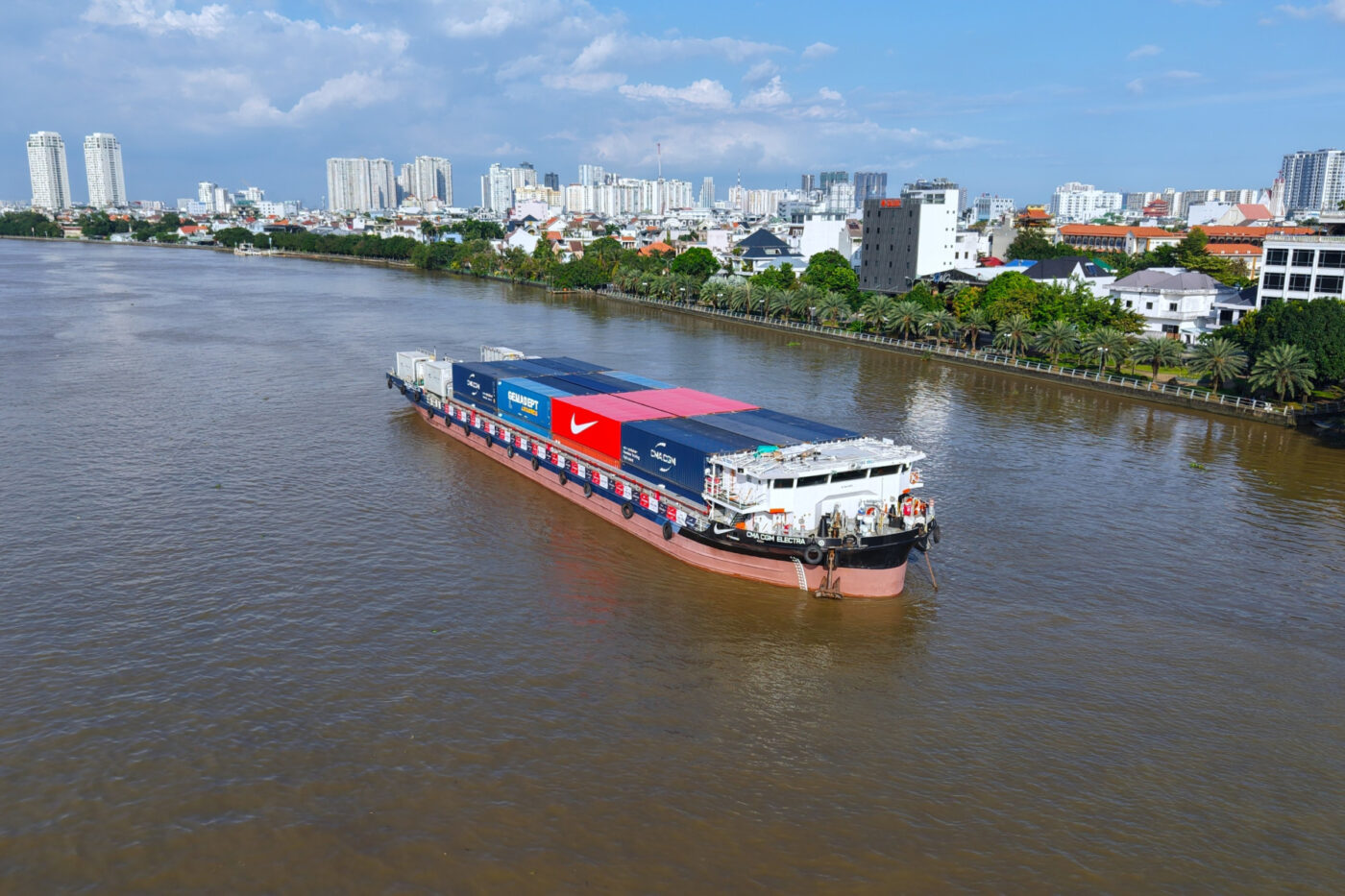
CMA CGM, Nike and Vietnamese port operator Gemadept have launched what the companies describe as Vietnam’s first fully electric inland vessel, introducing battery-powered container transport between Ho Chi Minh City and the Gemalink deep-sea port in Cai Mep.
The vessel will serve a fixed route linking a Nike transhipment hub in Ho Chi Minh City with Gemalink, from where cargo is shipped to international markets. The transport system is designed to handle more than 50,000 twenty-foot equivalent units (TEU) annually.
The electric round trip covers more than 160 kilometres, according to Nike, although other project sources put the distance at approximately 180 kilometres. The partners have not disclosed the vessel’s container capacity per voyage.
The project is expected to avoid approximately 778 tonnes of CO₂ emissions annually. The vessel produces no direct greenhouse gas emissions during operation, although the companies have not specified the methodology or baseline used to calculate the projected annual savings.
CATL Supplies Battery Technology
Chinese battery manufacturer CATL is supplying the battery technology for the vessel. The overall vessel solution was developed by CMA CGM’s research and newbuild departments.
A full battery recharge is expected to take approximately four hours. However, the project partners have not disclosed the battery capacity or installed charging power.
The charging infrastructure uses certified renewable electricity, including power from a dedicated solar installation built for the project at the Gemalink Terminal. The proportion of the vessel’s total electricity demand covered by the solar plant has not been specified.
Nike Targets Lower Supply Chain Emissions
For Nike, the project forms part of its wider efforts to reduce emissions from transportation and other activities across its supply chain.
The sportswear company aims to reduce greenhouse gas emissions across its extended supply chain by 35% by 2030, compared with its 2020 fiscal year.
Nike reported that emissions from inbound and outbound freight fell by 56% in fiscal 2025 compared with 2020. The company attributes the reduction to several measures, including lower reliance on air freight, the use of lower-emission marine fuels and greater adoption of electric vehicles.
Fixed Route Offers Potential for Wider Deployment
The Ho Chi Minh City–Gemalink connection provides operating conditions suited to battery-electric shipping. Its predictable route allows the charging infrastructure and vessel operations to be coordinated around a regular transport schedule.
CMA CGM views the project as a potential model for other inland and port connections. The company plans to work with its partners to assess opportunities to apply the approach in additional regions.
However, the commercial scalability of the system remains to be established. The partners have not released investment costs, battery specifications or charging infrastructure capacity, making it difficult to assess the economics of deploying similar vessels on other routes.