
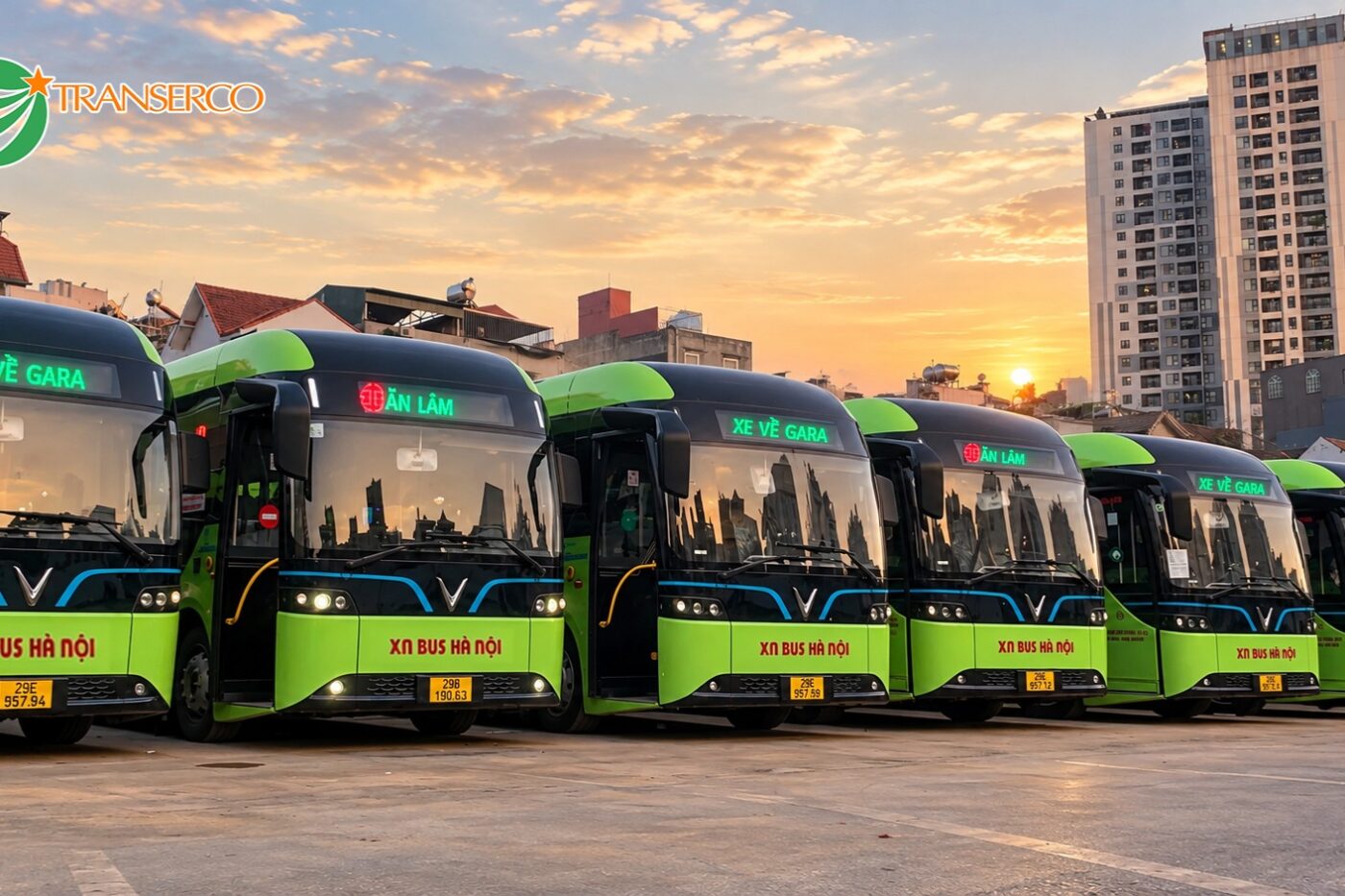
Hanoi Transport Corporation (Transerco) has replaced the diesel fleet operating on bus route 40 with 15 VinFast electric buses, adding another service to the Vietnamese capital’s expanding zero-emission public transport network.
The new vehicles entered service on 1 November, connecting Thong Nhat Park in central Hanoi with Van Lam in neighbouring Hung Yen province. Manufactured in 2026, the 15 buses replace an equivalent number of diesel vehicles, maintaining the route’s existing fleet size. Of the 15 buses, 13 are scheduled for regular operation.
VinFast EB8 Buses Join Hanoi’s Public Transport Network
The route 40 fleet consists of VinFast EB8 electric buses featuring green Hanoibus livery. Each vehicle can accommodate up to 60 passengers and includes low-floor access and facilities for passengers with disabilities, alongside other passenger amenities.
The EB8 is an 8.6-metre midibus powered by a 200 kW electric motor and equipped with a 359 kWh lithium iron phosphate (LFP) battery. According to the supplied specifications, the vehicle has a driving range of more than 290 kilometres and supports DC fast charging at up to 120 kW.
Transerco Accelerates Fleet Electrification
The latest conversion follows a series of electrification initiatives by Transerco and its subsidiaries. During October, the operator converted six other routes and introduced a new service, bringing the total number of electric buses deployed through those changes to 94.
Earlier in October, Transerco introduced 53 VinFast electric buses on routes 22A, 22B, 30 and 50, replacing diesel vehicles across the four services. In April, the company also added 120 electric buses to seven routes in Hanoi.
Transerco aims to increase the share of environmentally friendly buses in its fleet to more than 51% by the end of 2026.
Transerco Deploys 53 VinFast Electric Buses Across Four Routes in Hanoi
Hanoi Expands Zero-Emission Transport
The conversion of route 40 forms part of Hanoi’s broader efforts to reduce emissions from public transportation and expand electric vehicle deployment across its bus network.
By replacing existing diesel fleets while maintaining established routes and service capacity, the latest deployment adds to the city’s transition towards cleaner public transport operations.