
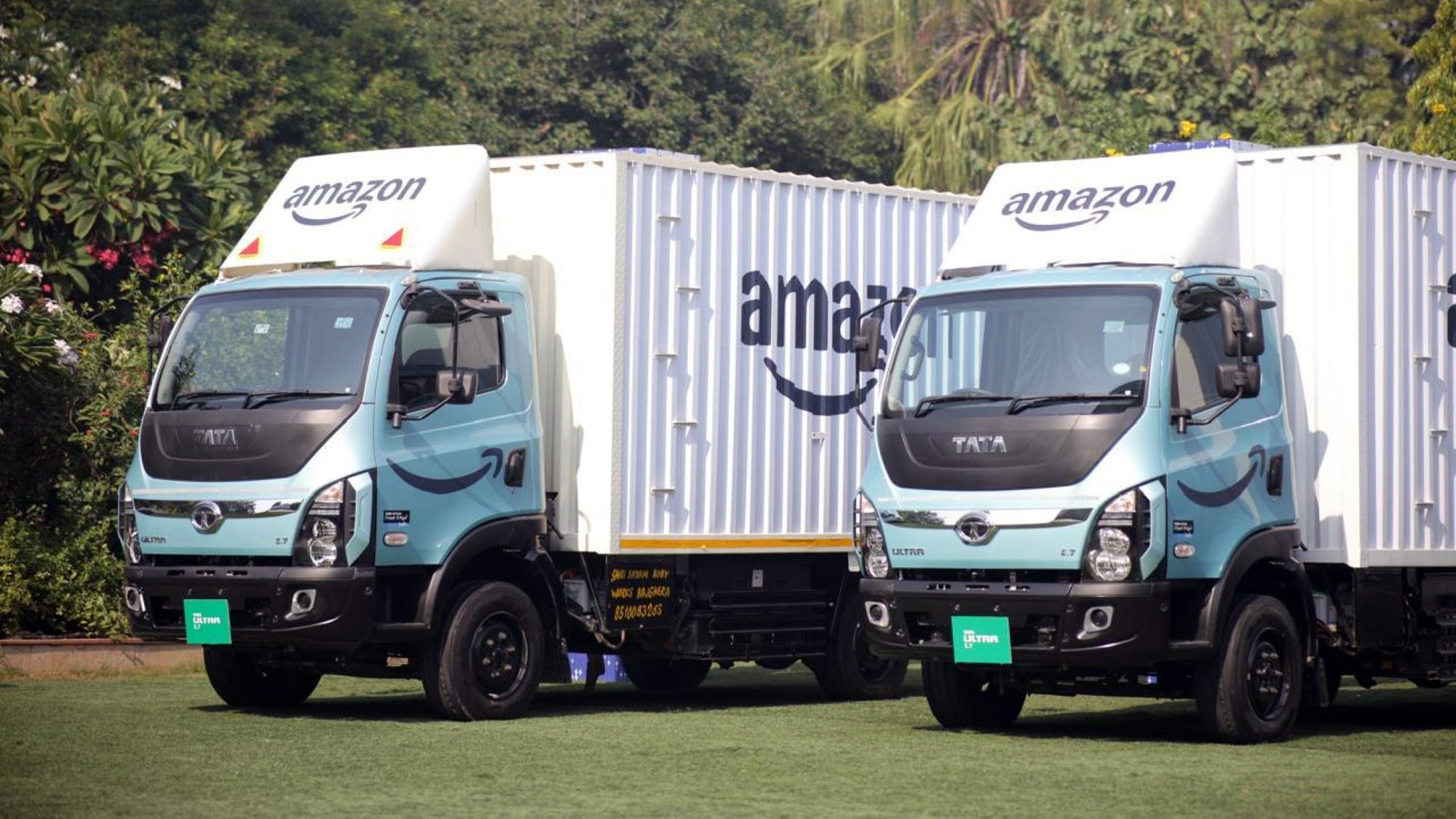
Amazon plans to deploy 3,000 electric trucks supplied by Tata Motors across its middle-mile logistics network in India, beginning in Delhi before expanding to a major highway corridor connecting Delhi, Bengaluru and Chennai. The company describes the initiative as the largest electric truck deployment by an e-commerce company in India.
The rollout will include light- and medium-duty electric trucks, including Tata Motors’ Ultra E.7. Amazon’s logistics carrier partners will own and operate the vehicles, allowing the company to expand electric freight capacity through its existing transportation network.
The next phase will target the approximately 2,800 km Delhi-Bengaluru-Chennai corridor along National Highway 48 (NH48). Charging infrastructure will be expanded to support operations on the route.
Charging Infrastructure Supports Highway Operations
Yahhvi, which has developed 10 charging yards for Amazon, will add charging hubs for the highway expansion. The additional infrastructure is intended to support electric truck operations across longer distances and facilitate charging along the corridor.
The first vehicles were flagged off in Delhi by H.D. Kumaraswamy, India’s Minister for Heavy Industries and Steel, as freight demand increases during the festive season.
Amazon’s use of carrier-owned vehicles means its logistics partners will manage the trucks while Amazon incorporates them into its transportation network. This approach allows the company to expand electric freight operations without directly owning the entire fleet.
Delhi Policy Creates an Early-Entry Incentive
Delhi’s 2026 electric vehicle policy includes provisions for the first 1,000 medium-duty electric trucks privately owned and registered within a three-month period to receive access to the city at any hour for 10 years.
The provision could benefit early operators by easing restrictions that affect conventional freight vehicles during designated entry-ban hours. Such access may improve delivery scheduling and vehicle utilisation for participating fleets.
For electric truck operators, the combination of charging infrastructure and regulatory access could influence the economics of operating in and around the capital. The practical benefits will depend on implementation of the policy and the operating requirements of individual fleets.
Amazon Expands Beyond Electric Last-Mile Delivery
Amazon already operates more than 15,000 electric vehicles across over 500 Indian cities. The planned truck deployment represents a larger move into middle-mile freight, which connects fulfilment centres, distribution hubs and delivery stations before parcels reach customers.
Electric trucks could help reduce direct vehicle emissions from these transport operations, although the overall environmental impact will also depend on electricity sources, vehicle utilisation and charging arrangements.
The expansion also reflects growing efforts to electrify commercial transport in India, where fleet operators are assessing vehicle costs, charging availability and operating range when considering alternatives to diesel trucks.
Tata Motors Highlights Fleet Economics
Tata Motors said greater localisation of electric truck production could improve affordability and strengthen the business case for commercial operators.
“Electric trucking in India is moving beyond the pilot stage and entering a phase of wider adoption. With deep localisation driving affordability and a compelling total cost of ownership, zero-emission trucks are becoming a practical business proposition for fleet operators across segments,” said Rajesh Kaul, vice president and business head for trucks at Tata Motors.
The deployment will test the integration of electric trucks into Amazon’s freight network at a larger scale, with the planned highway expansion placing additional emphasis on charging availability and operational reliability.