
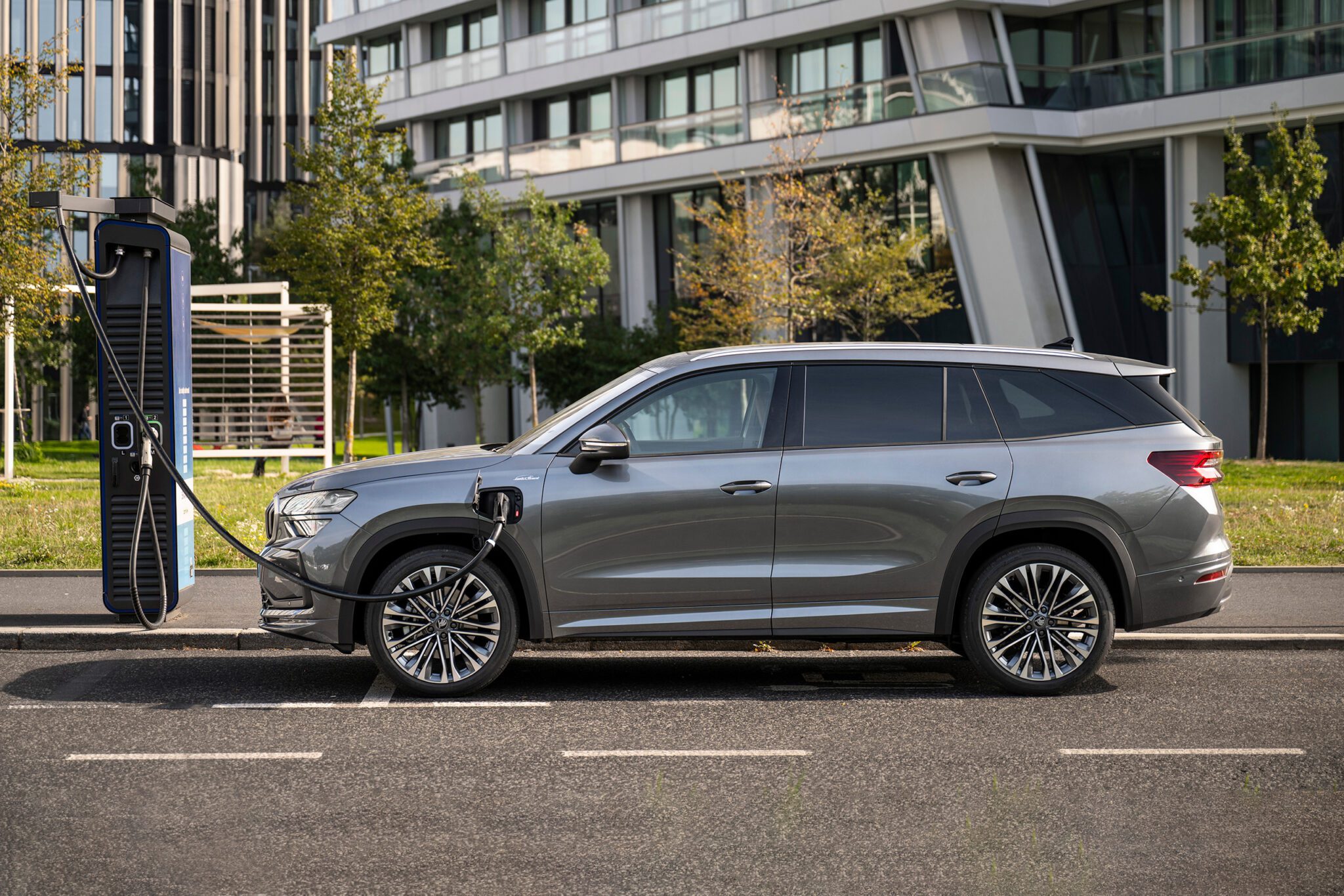
Skoda has increased the system output of the Kodiaq plug-in hybrid to 200 kW, adding 50 kW through engine improvements and a powertrain control software update. The changes arrive as the SUV marks its tenth anniversary, alongside the introduction of a new Laurin & Klement flagship trim.
The updated plug-in hybrid combines a 130 kW 1.5 TSI four-cylinder gasoline engine with an 85 kW electric motor. The system’s revised output improves performance without requiring Skoda to introduce an entirely new drivetrain.
The Kodiaq first launched in 2016 and has since attracted 1.2 million customers across 70 markets, according to the automaker.
Software and Engine Changes Increase Output
The latest update demonstrates how powertrain calibration and engine improvements can increase performance within an existing hybrid system. The current-generation Kodiaq plug-in hybrid originally launched with a system output of 150 kW and an electric driving range exceeding 100 km.
Its battery has a gross capacity of 25.7 kWh and a usable capacity of 19.7 kWh. The vehicle also supports DC charging at up to 50 kW, allowing drivers to recharge during longer journeys.
Skoda has not introduced a completely new drivetrain for the output increase. Instead, the combination of hardware refinements and software changes allows the company to enhance the existing plug-in hybrid system.
Laurin & Klement Adds Premium Equipment
The new Laurin & Klement trim becomes the top specification in the Kodiaq lineup. It can be paired with several powertrain options and adds a range of styling and comfort features.
Equipment includes massage seats, silver roof rails, body-coloured bumpers and side sills, distinctive alloy wheels, and dedicated Laurin & Klement badging inside and outside the vehicle.
The trim expands the Kodiaq’s positioning at the premium end of the large SUV segment, offering additional equipment without limiting the specification to a single powertrain.
Second-Generation Kodiaq Approaches 330,000 Units
Production of the second-generation Kodiaq began at Skoda’s Kvasiny plant in January 2024. Output has since approached 330,000 units, compared with 866,100 vehicles produced during the first generation’s run from 2016 to 2024.
Around 60% of first-generation buyers selected all-wheel drive. Germany, the United Kingdom and the Czech Republic were the model’s largest European markets.