
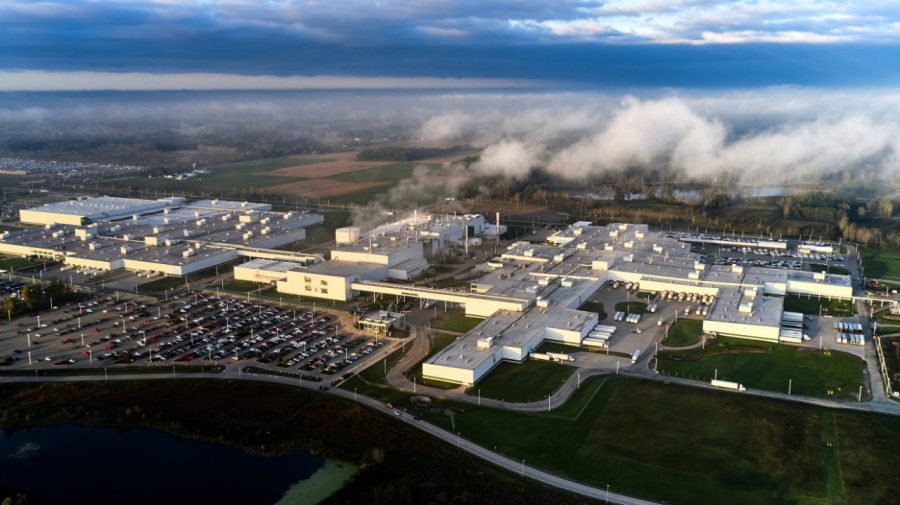
General Motors plans to invest $1.25 billion in its Lansing Delta Township Assembly plant in Michigan to prepare for future vehicle production, including hybrid-electric models, as the automaker adjusts its powertrain strategy in response to changing consumer demand.
The investment forms part of a broader plan to spend more than $2 billion across the Lansing region over the next several years, GM said on Tuesday. The company did not provide a production timeline or identify which models would be built at the facility.
GM is working with the U.S. Department of Energy to restructure a previously awarded Domestic Manufacturing Conversion Grant and redirect the funding toward future hybrid production at the Lansing factory.
“Lansing’s strength starts with its people. Their skill and experience are why we continue to invest here,” said Mike Trevorrow, senior vice president, Global Manufacturing. “We’re building on what this team does well today while preparing for what customers will need in the years ahead. That means investing in our people, our facilities, and the ability to build a broad range of vehicles.”
The automaker had been awarded $500 million under the Biden administration to support the conversion of a different Lansing-area factory for electric vehicle production. The proposed program covered hybrid, battery-electric, plug-in hybrid and hydrogen fuel-cell vehicles. GM said the funds were never released.
Hybrid Versions of Existing SUVs Reportedly Planned
The Lansing Delta Township plant currently produces gasoline-powered versions of the Buick Enclave, Chevrolet Traverse and GMC Acadia. The factory built a record 291,000 vehicles in 2025.
GM has not confirmed which models will receive hybrid powertrains. However, reporting by TechCrunch, citing industry insiders, indicated that the company is preparing hybrid vehicles across multiple brands rather than limiting the rollout to a single model line.
Reuters, citing anonymous sources, reported that hybrid versions of the Chevrolet Traverse, Buick Enclave and GMC Acadia are planned for production at the facility. GM has not publicly confirmed those specific models.
Introducing hybrid variants of existing SUVs would allow the company to expand its electrified lineup while retaining vehicles with established positions in the U.S. market.
Competition in the Hybrid Market Intensifies
Hybrid vehicles have gained popularity in the United States as consumers weigh fuel costs, vehicle prices and the availability of different electrification options. Automakers have expanded their hybrid and plug-in hybrid offerings to serve buyers who want improved fuel efficiency without relying entirely on battery charging.
Toyota leads U.S. hybrid sales, followed by Honda, while Ford has also increased its presence in the segment. Ford sold approximately 228,000 hybrid vehicles in 2025, highlighting the scale of demand that GM is seeking to address.
GM has been slower than several competitors to expand its hybrid portfolio. Until recently, its only hybrid vehicle was the Chevrolet Corvette E-Ray, introduced for the 2024 model year. The company sold 2,444 E-Ray vehicles in 2025, and the model has since been discontinued.
GM began delivering the hybrid Corvette ZR1X in March and plans to launch a hybrid Corvette Grand Sport X in 2027.
GM Adjusts Its Electrification Strategy
GM previously committed billions of dollars to transitioning much of its gasoline-powered portfolio toward battery-electric vehicles, with hybrids playing a comparatively limited role in its strategy.
That approach has shifted as demand for electric vehicles has grown more slowly than expected and the Trump administration ended the federal EV tax credit. The automaker is now placing greater emphasis on offering powertrain options that reflect different customer preferences.
GM has not abandoned battery-electric vehicles. Its current lineup includes models such as the Chevrolet Equinox EV and Blazer EV, as well as the Cadillac Escalade IQ.
The planned Lansing investment signals a broader adjustment in the company’s manufacturing priorities. By preparing the facility for hybrid production, GM is positioning itself to offer more electrified options while continuing to manufacture vehicles with conventional powertrains.
The timing, model mix and production volumes for the planned hybrid vehicles have yet to be disclosed.