
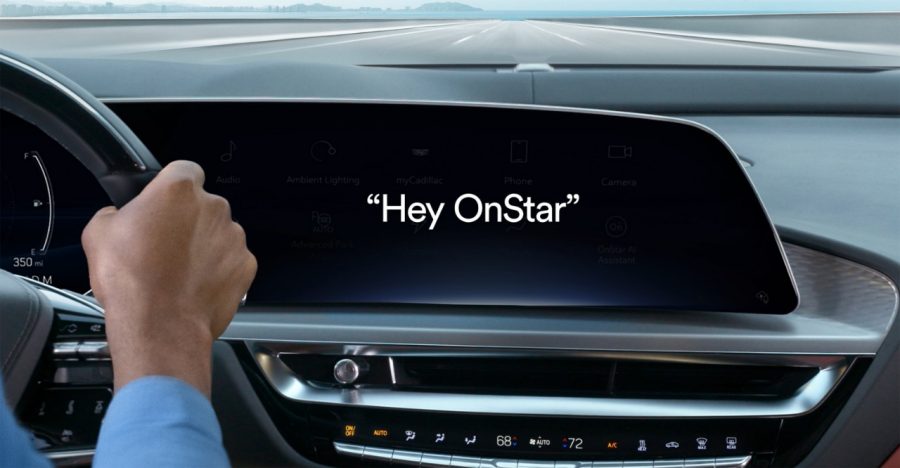
General Motors is introducing an in-house AI assistant to its OnStar connected vehicle service, beginning with the 2027 Cadillac Lyriq EV in the coming months. Announced at the company’s GM Forward event in New York, the update forms part of a broader effort to modernize its software and connected vehicle technologies.
OnStar AI Assistant Debuts in Cadillac Lyriq
The OnStar AI Assistant will initially launch in the 2027 Cadillac Lyriq, with additional GM vehicles expected to follow. The assistant will allow drivers and passengers to use voice commands to control selected vehicle functions, including climate settings, and ask questions about vehicle features.
GM is also connecting vehicle cameras to the software to support live viewing and the capture of safety-related events. Users will be able to configure cameras to activate automatically when the vehicle detects a potential incident, such as an aggressive horn honk, and upload recordings to the OnStar app.
New OnStar App to Replace Existing Apps
GM plans to introduce a new OnStar mobile app in 2027. It will synchronize with the in-car software and replace the existing OnStar Guardian app, launched in 2020, along with separate vehicle-brand apps for Buick, Cadillac, Chevrolet and GMC.
The move consolidates connected services into a more unified digital experience across GM’s vehicle portfolio.
GM Shifts Toward In-House AI Development
The new assistant represents a shift toward developing more of the connected-car experience internally. GM previously used Google Cloud’s Dialogflow conversational AI to recognize spoken requests and expanded its capabilities in 2023 to provide responses to common questions, including navigation assistance.
The automaker also announced last year that Google Gemini would be introduced in its vehicles in 2026. The new OnStar AI Assistant is a separate in-house initiative designed to provide a more personalized, interactive experience.
GM has been targeting $25 billion in subscription revenue by 2030 as it expands its connected services business. The latest changes come as automakers increasingly compete on software, artificial intelligence and integrated digital features.
The company’s broader technology strategy also involves adopting AI development tools and introducing a new electrical and centralized computing architecture to support more advanced vehicle software.